
In 202 BCE, in the southern city of Uruk, an administrator named Anu-uballiṭ (Kephalon, in the Greek name he also used) renovated a temple to the sky god Anu and had bricks stamped with an inscription saying the building had been raised by Adapa, the sage who lived before the flood. The temple, called Bīt Rēš, was not ancient. Another member of his family, also named Anu-uballiṭ and known in Greek as Nikarchos, had built it in 244 BCE, forty-two years earlier, and the scribes who wrote the brick inscription handled the temple’s earlier building history with the same techniques found in older royal inscriptions, which they were able to read because Babylonian scribes were trained on such texts.
Two assumptions sit underneath how most readers picture religious education in the ancient world, and a study of first-millennium BCE Babylonian schools by Shana Zaia of Vrije Universiteit Amsterdam, published this year in Iraq,1 cuts against both. The first is that teaching children about the gods requires a religion class, with a scripture at the center and clergy running the school. Babylonia had no separate unit on religion or theology, no text functioning as holy scripture, and no seminary equivalent, and even the schools located in temple complexes were not primarily religious institutions. The second assumption is that ancient religion, being ancient, was handed down intact. Zaia agrees that Mesopotamian religious conventions were by and large conservative, but her cases show trained scribes and priests breaking from them whenever the break could be presented as a continuation of something older.
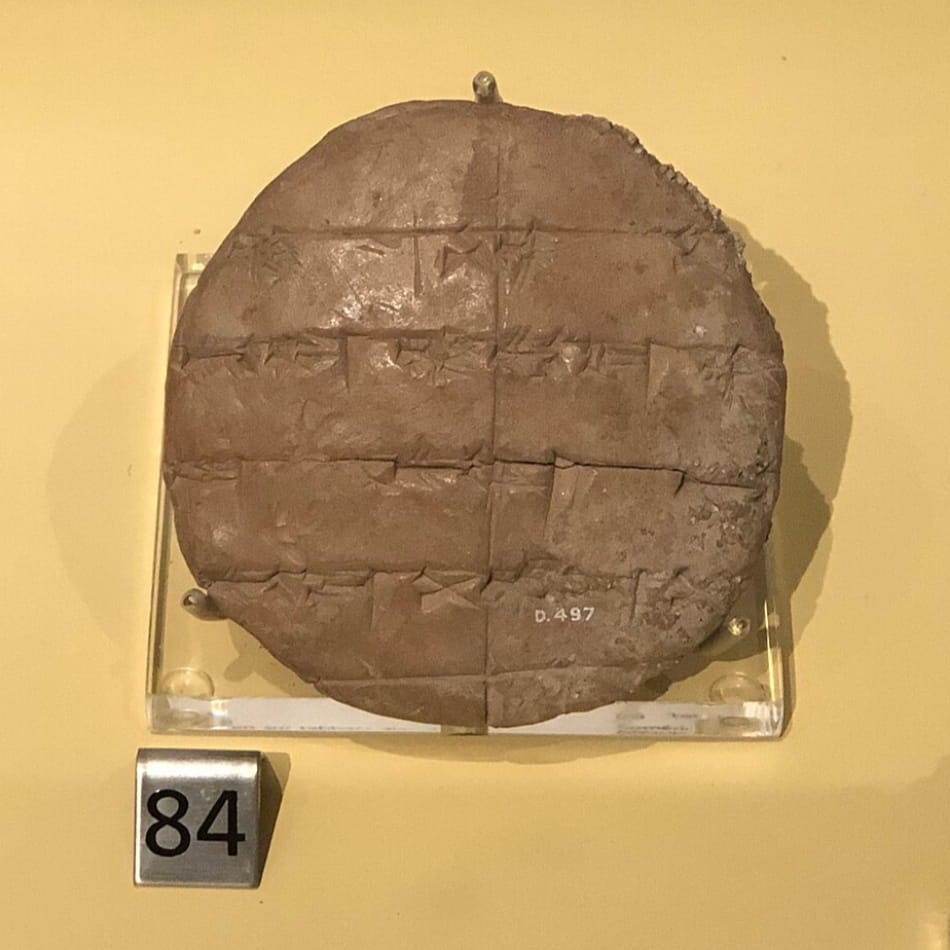
The schooling was private and household-based, with adult professionals as instructors, often the father of one or more of the boys in the class, and pupils drawn from elite or upwardly mobile families (Zaia notes that evidence for women’s scribal education is limited). Elementary students began with basic signs, lexical lists, proverbs and a few literary works; the second stage added harder lists, bilingual incantations, prayers, hymns and, in the north, a text called Tintir that catalogs the names, shrines, gates and streets of Babylon. Those headed for exorcism, divination, cultic singing or healing then entered a specialist phase resembling an apprenticeship.

