

On 30 October 2019, about 250 meters inside the Cova de la Font Major in Catalonia, one of the two archaeologists who went on to publish the site noticed that several lines among the modern graffiti looked Paleolithic. The galleries in question, the Gatoneres de Cal Palletes, had been part of a tourist circuit called the Adventure Route since 1993, and the cave’s entrance had stood open since 1957. They now hold the highest known concentration of Paleolithic cave art in Catalonia. “For more than six decades, thousands of visitors passed directly in front of the engraved surfaces, and in some cases inscribed names and dates over them, without the Paleolithic origin of the figures being recognized,” co-author Josep Maria Vergès Bosch of the Catalan Institute of Human Paleoecology and Social Evolution (IPHES-CERCA) said in a statement released by Antiquity.1
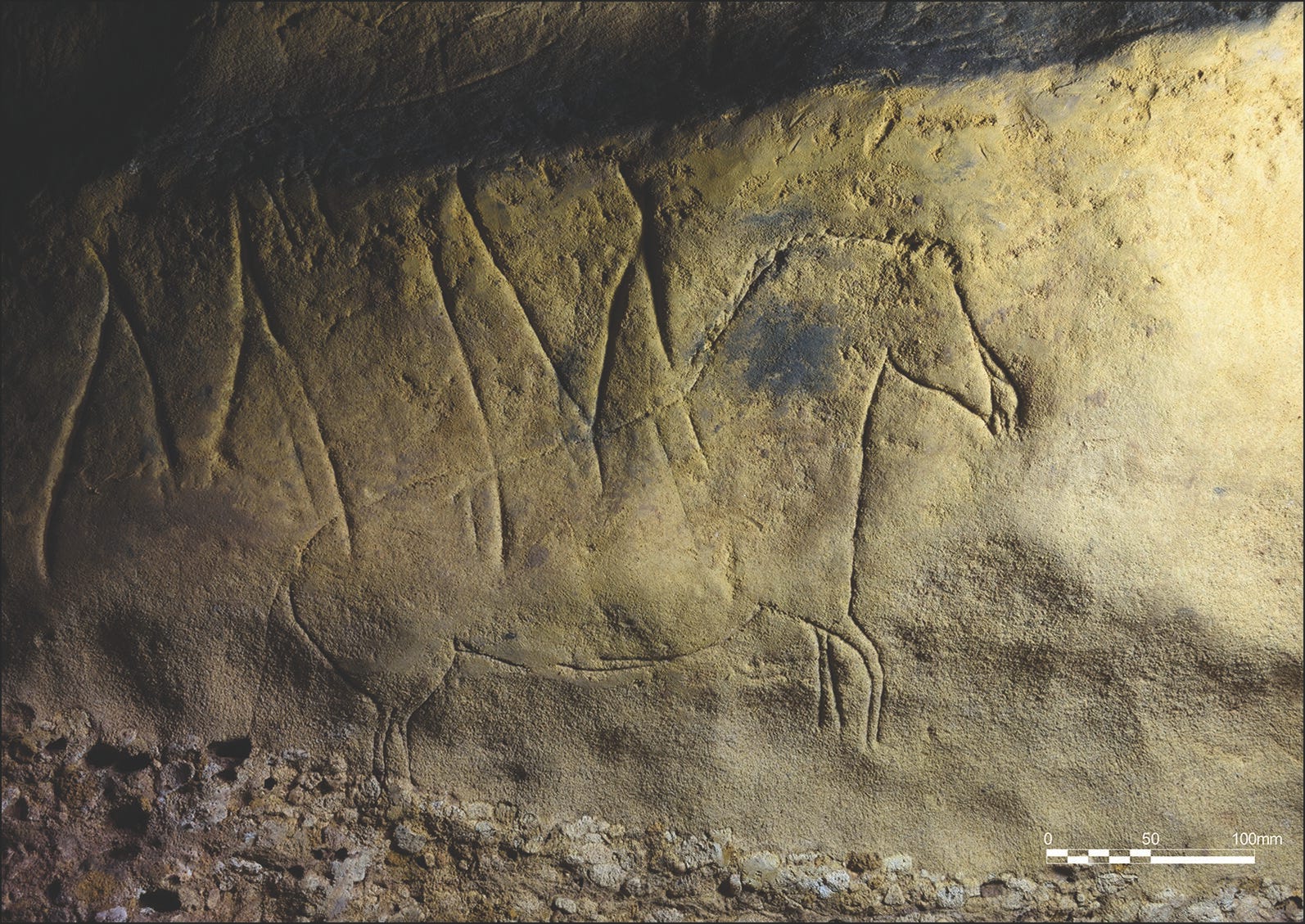
Anyone who knows Iberian cave art knows the map has a hole in it. Cantabria and the Basque Country in the north and Andalusia in the south are dense with decorated caves, while Catalonia had produced two wall images attributed to the Upper Paleolithic. One, a black-painted bovid from the Cova del Tendo, was stolen shortly after its discovery and survives only in photographs and a tracing. The other, a possible deer in the Cova de la Taverna, may not be human work at all. The usual explanation tied the missing art to missing people, on the view that the region had few pre-Magdalenian occupations. Pre-Magdalenian is the paper’s label for the part of the Upper Paleolithic before the Magdalenian culture, running from 43,000 or 40,000 to 19,000 cal BP (calibrated radiocarbon years before present).
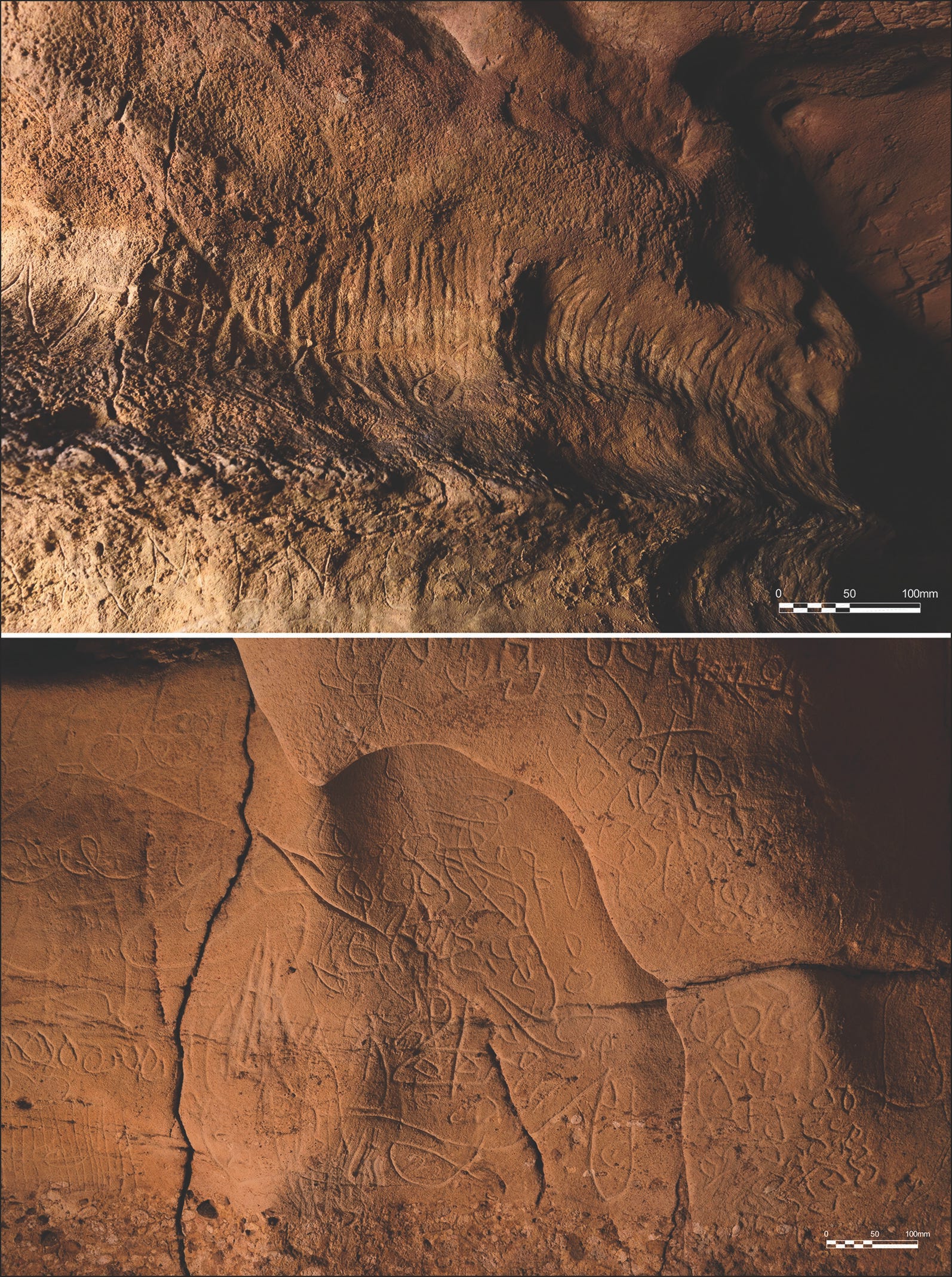
In a 22-page paper in Antiquity, Josep Maria Vergès Bosch and Míriam Salas-Altès describe 280 engraved graphics in those galleries. Fifty-five are animals, and non-figurative marks make up most of the rest: parallel lines in groups of two to four, longer rows of 15 to 40, and less common circular and quadrangular shapes. The animals carry the headline claim. From the Pyrenees to Gibraltar, about 75 percent of known assemblages on Iberia’s Mediterranean side hold five animal figures or fewer and more than 90 percent hold 20 or fewer, and only Ardales and La Pileta, at the peninsula’s southern end, have more animals than Font Major. I think that count redraws the map, while the age of the art is much less settled than the press release suggests.


