
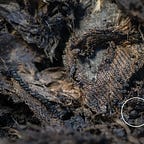
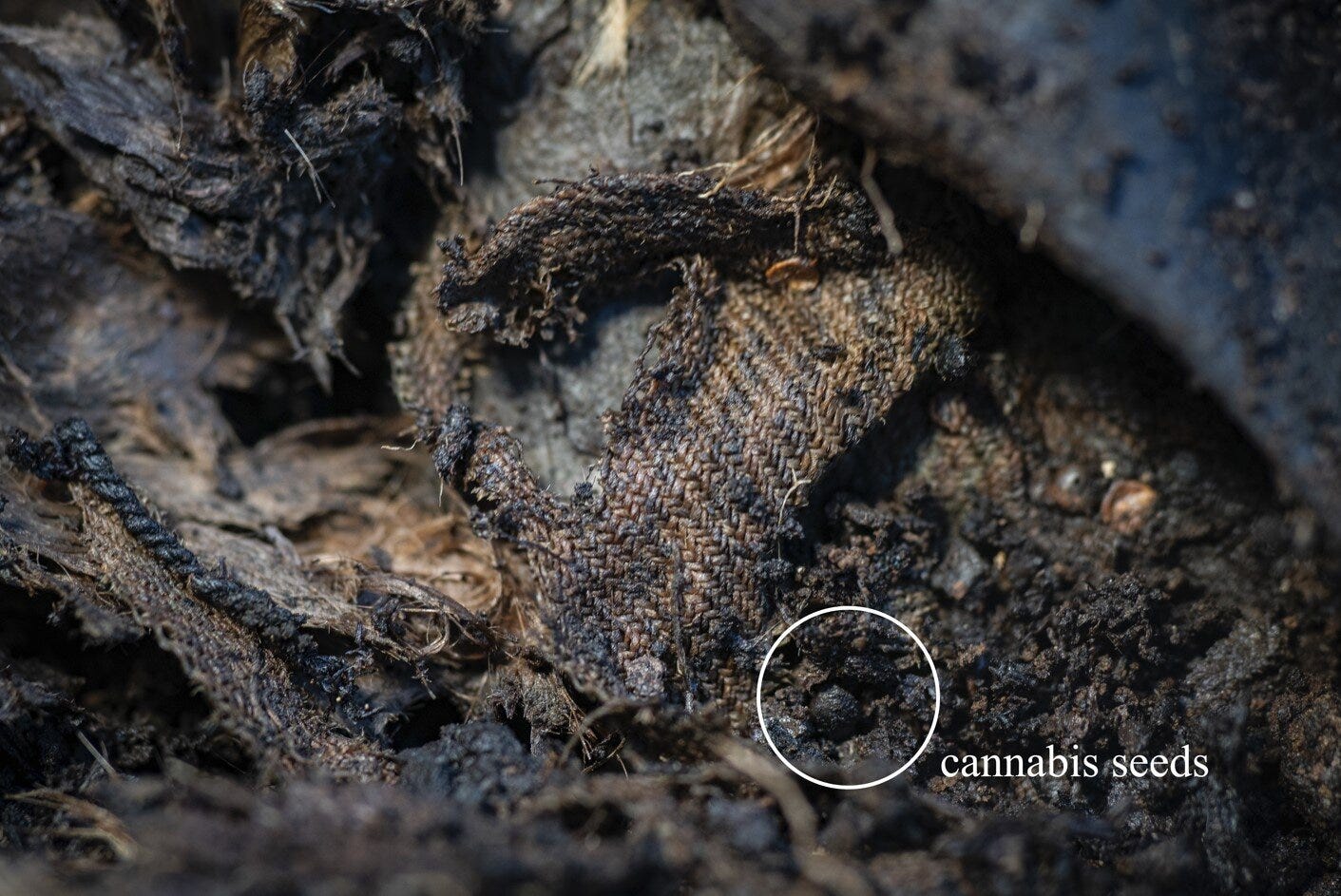
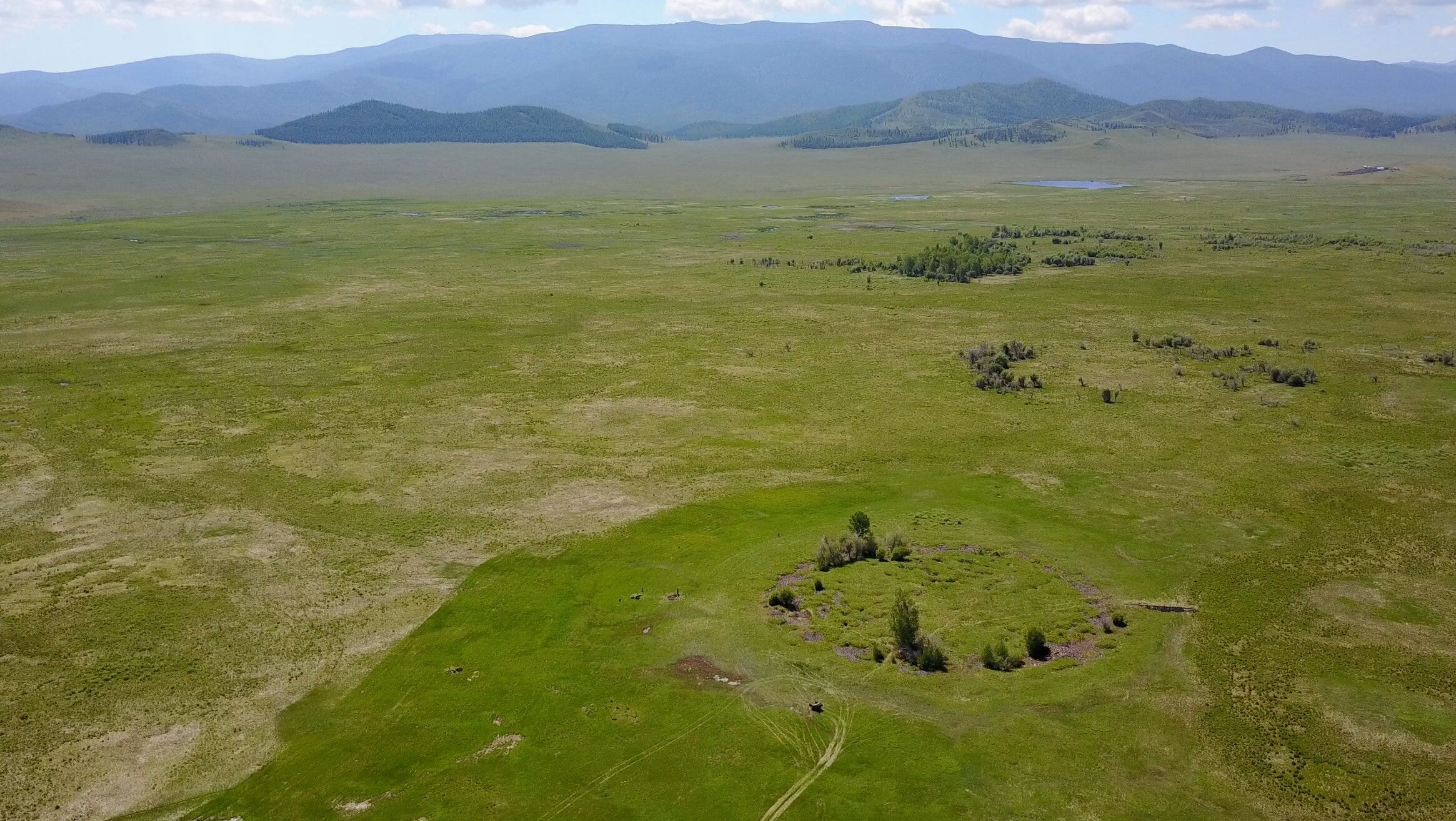
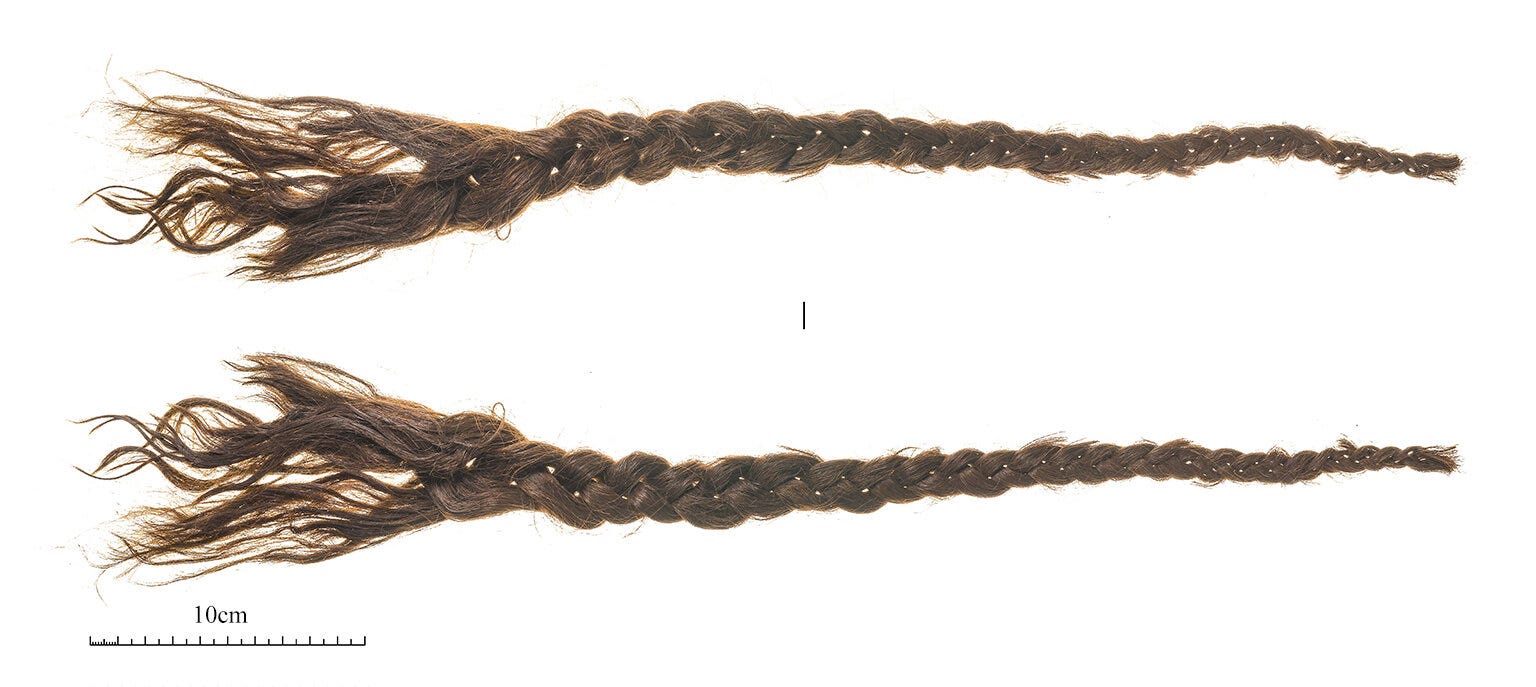
In the central burial chamber of a princely tomb in Tyva, in southern Siberia, human hair survived for roughly 2,800 years, and several samples give clear chemical signals consistent with cannabinol, a compound that can form when the main intoxicant in cannabis oxidizes. The tomb belonged to high-ranking members of Scythian society, the horse-riding culture of the Eurasian steppe, and it also held about 1,000 cannabis seeds. A new paper in Science1 presents these finds as the earliest direct evidence of ancient cannabis use.
The belief this tests is one many of us hold without much scrutiny, that cannabis in an ancient grave means someone was getting high. People have often suggested as much, but the evidence is awkward. Cannabis also supplied oil and fiber, so seeds in a burial don’t prove intoxication, and residues on vessels and heated stones from later Central Asian sites point to inhalation while recording an object rather than a person. Hair could close that gap because it comes from a body.
The study’s lead author is Dr. Gino Caspari, an archaeologist at the Institute of Archaeological Sciences of the University of Bern and the Max Planck Institute of Geoanthropology. He and eight coauthors, including Timur Sadykov and Daria Fomicheva, conclude that cannabis consumption dates back at least 2,800 years. In the press release issued with the paper, Caspari takes the next step: “The molecular traces in the hair and the cannabis seeds come from the same grave and suggest that cannabis was used for its intoxicating properties.”
I should say exactly what I read. The full text is behind Science‘s paywall, and for this post I worked from the abstract, the editor’s summary, and the release, without the methods or the supplement and its eight figures and seven tables. When I call a detail missing below, I mean missing from those documents. On that evidence, I think the case that people in this tomb used cannabis in some form is good, and the case that they used it to get high is weaker.
How do you find cannabis in 2,800-year-old hair?
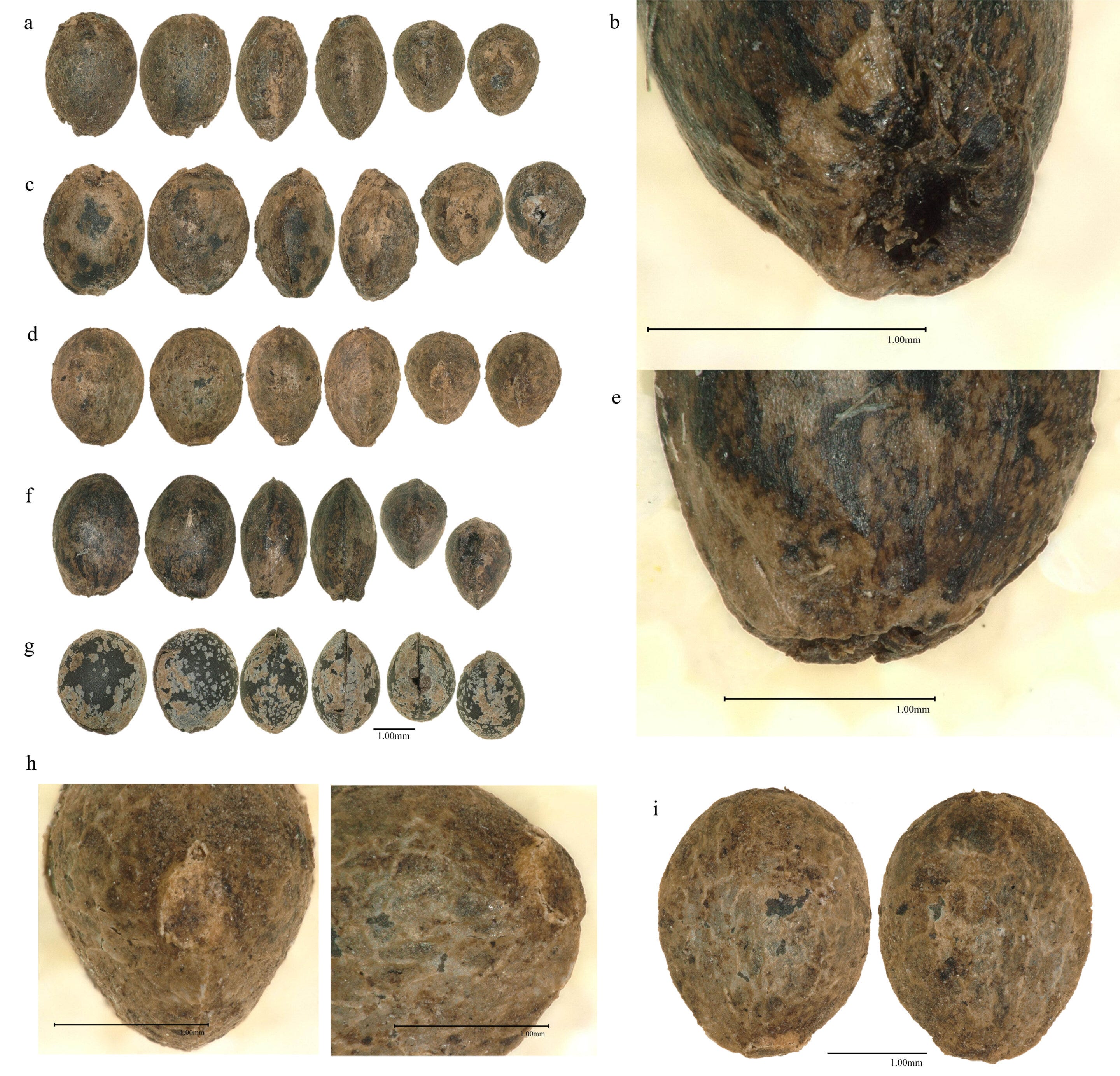
The date comes from the seeds. Radiocarbon dating measures the decay of carbon-14 in once-living material, and six seeds were dated directly. I consider this the firmest part of the study because the date belongs to the cannabis itself and not to something found near it. Together with other dating results, those measurements put the seeds in the grave in the early eighth century B.C., which matches the 2,800 years in the paper’s title. The error ranges, and what the other dates were taken on, are missing from what I read.
The chemistry comes from the hair, and it is easier to follow once you know the two compounds involved. Tetrahydrocannabinol, or THC, is the main intoxicating compound in cannabis. Cannabinol, or CBN, is one of the things THC becomes when it oxidizes, which makes it a sensible target in very old material. The team used high-resolution mass spectrometry, among other methods; the technique sorts molecules by mass precisely enough to match a signal to a candidate compound. Several samples gave clear signals consistent with CBN, and the team also saw weak signals whose mass is consistent with THC. I can’t tell you how many samples were tested, how many people they came from, or those people’s ages and sex.
Does cannabis in ancient hair prove people got high?
The step I’d slow down on runs from the hair to the word “psychoactive,” because “direct evidence” fits the presence of a compound better than it fits anyone’s state of mind. I also trust the CBN more than the THC. The CBN signal is described as clear, although the release says THC oxidation is only one way CBN forms. The THC signal is described as weak and rests on mass, and a mass match says a molecule of the right weight was present without settling which molecule of that weight it was. The editor’s summary, which says the team identified psychoactive compounds in the hair, is firmer than the release’s own language.
Quantity is the larger problem, because intoxication depends on how much a person took in, and the release says the hair can’t give a reliable amount. These seeds likely came from wild plants, and people had other uses for cannabis, so I can’t rule out from what I read that a person with no interest in an altered state could carry a similar trace. Caspari’s word, “suggest,” seems right to me, and it is more careful than the paper’s title.
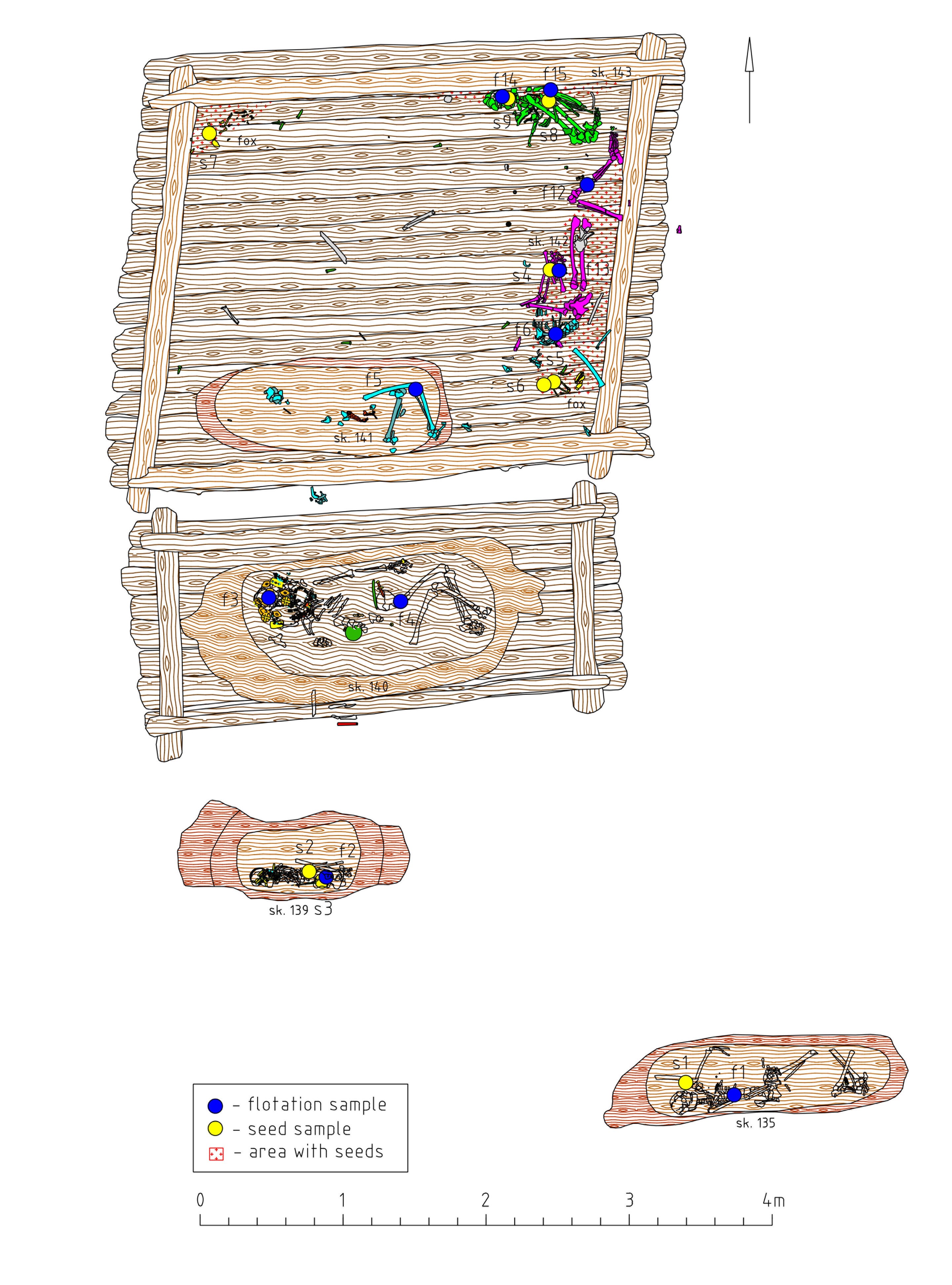
The ritual reading has a similar gap. An earlier paper by the team described 18 horses arranged on the burial mound, and several dozen more horse sacrifices have turned up since, along with scattered human bones. Caspari says the burials were accompanied by “most likely, human sacrifices as well.” I accept that the seeds belong to that funerary setting. Hair records a person’s body, though, and nothing I read says whether the cannabis signal reflects a funeral or the years before death, so the editor’s summary’s “ritualistic psychoactive use” joins two findings that may describe different moments.
What the Scythian tomb study can’t tell us
The gap I’d most like closed is contamination, which the materials I read don’t address. The release says the team can’t determine how the compounds entered the body, which assumes they did enter it. This hair lay for about 2,800 years in a tomb containing cannabis offerings, and if anything was burned at the funeral, smoke could have settled on it too. A test separating compounds taken up by the body from compounds sitting on the hair is the first thing I’d look for in the supplement, along with control samples from the surrounding sediment.
The date and the chemistry also attach to different objects. The release calls this the oldest directly dated evidence of intoxicating use, but the direct dates it describes are on seeds, and it gives no separate date for the hair. The two are linked by coming from one grave, and in a tomb with more than one burial and scattered human bones, I’d want that association spelled out.
On potency and reach, the abstract says more than the release does. It floats the idea that specific wild populations might have had naturally higher levels of active compounds, while the release says the findings allow no conclusions about the plants’ THC content. The abstract also says the findings suggest use across Eurasia and that they anchor current debates over cannabis in law, public health, and other fields. On the evidence I could see, one tomb in Tyva can’t carry those last two claims, and I would have cut them. The release’s headline has its own problems. It says flatly that cannabis “was used as an intoxicant,” where the abstract says the findings “suggest” psychoactive use. It also says “as early as 2,800 years ago” where the abstract says “at least 2800 years”; the first reads like a starting point, and the second leaves room for an older practice.
What would settle the question of ancient cannabis use?
My verdict is that the study is partly convincing. It adds a human body to evidence that, in the documents I read, otherwise comes from plants and objects, and the direct dates tie the seeds themselves to the early eighth century B.C. If the supplement deals properly with contamination, I’d accept that people in this tomb had taken in cannabis by about the early eighth century B.C. Intoxication seems to me the likeliest explanation, given the funerary setting and the later evidence of inhalation, but it remains an inference from context, so my confidence there is moderate at best.
Sequencing is the next result to watch. Caspari says, “We have already begun sequencing some of the plant samples,” and adds that “DNA preservation is excellent in this case.” He expects the work to speak to domestication and spread. I’d want it to answer a narrower question as well, which is whether these plants differ from other cannabis in any way that bears on THC production, since that is what the abstract’s idea about wild populations predicts.
The test I most want to see is hair from a steppe burial of the same period with no cannabis in the grave, if such hair has survived, run through the same instruments. A CBN signal there could not have come from offerings lying beside the body, and it would be much harder to explain without people taking in cannabis during life. A clean result could mean contamination in the first tomb or simply people in the second who didn’t use cannabis, so the comparison is worth running only with enough individuals to make an absence mean something.
Caspari G, Sadykov T, Fomicheva D, et al. Direct evidence for psychoactive cannabis use 2800 years ago. Science 394(6824): 649-653 (2026). https://doi.org/10.1126/science.aeg3800


