

At Cueva de los Murciélagos in Albuñol, southern Spain, a piece of 7,000-year-old goat leather turned up beneath a block in a stone wall built by 19th-century miners. A mining company was after galena in the cave by 1857, and its workers pulled out partly mummified human remains, clothing and baskets from what archaeologists now interpret as a prehistoric burial place. So this hide reached modern researchers with its original position lost.
It also reached them with DNA in it, which goes against what a reader of the ancient DNA literature would expect. Old skin is supposed to keep its genome in permafrost or at high altitude, and warm climates usually destroy it. Most of the new paper’s comparisons fit that rule: the leather of the Tyrolean Iceman, dated to ~5,300 BP (years before present), gave up its mitochondrial DNA in a glacial setting. This cave sits at 450 m, just 7 km from the Mediterranean, and the authors credit desiccation for what survived.
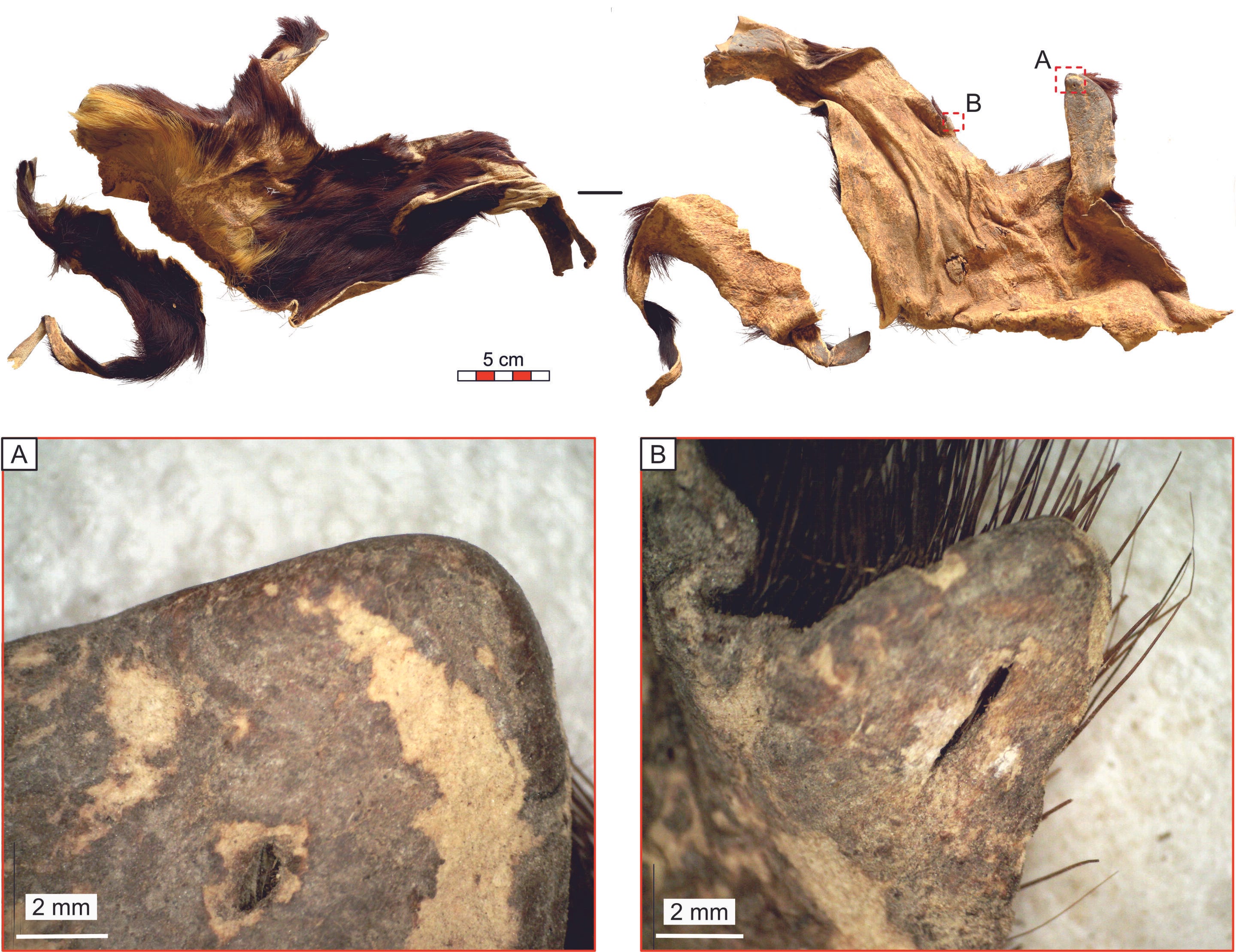
The study, by Jolijn A. M. Erven, Zoé Robinet Guyet and colleagues in PLOS One,1 identifies the hide, which they call Murciélagos1, as a female domestic goat (Capra hircus) radiocarbon dated to 7,246 to 7,008 cal BP, meaning calibrated years before present. The team describes this as the first nuclear genetic data from domestic goats in Iberia, nuclear DNA being the main genome of the cell. Among the modern breeds tested, the hide sits closest to the Bermeya of northern Spain, and it shows no lean toward African goats. I think the identification is secure and the population history built on it is much less so, because all of that history rests on one animal sequenced very thinly.


