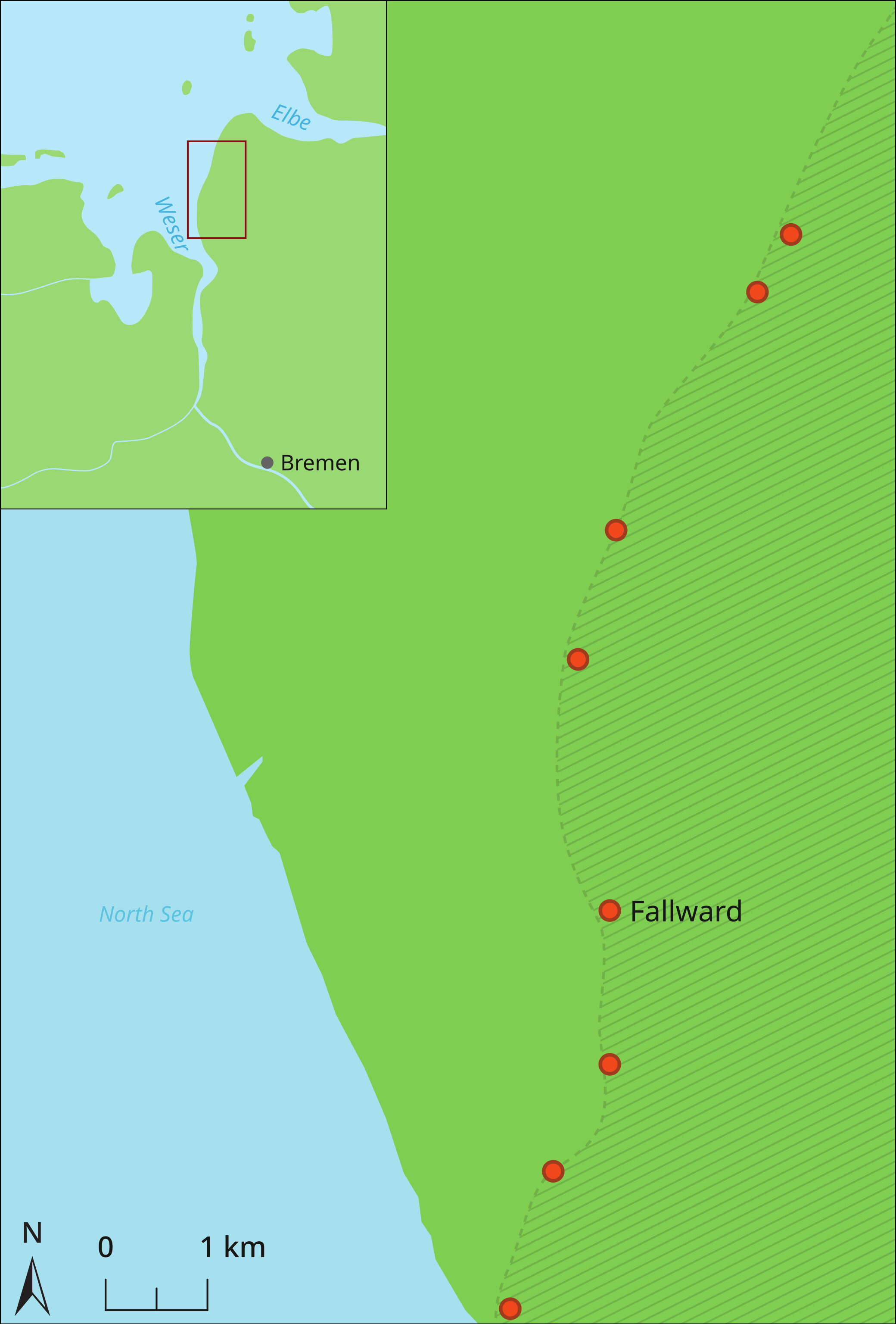
The man in grave 265 at Fallward, on the North Sea coast of what is now Lower Saxony, was buried in an oak (Quercus) boat more than four meters long. He lay on a reed mat inside it, and the boat was sealed beneath a roof-like structure of wooden panels. He was about 50 when he died, in the second quarter of the fifth century CE, and he was carrying leprosy, though nothing in his skeleton says so. The diagnosis comes out of ancient DNA recovered from his heel bone and one of his molars: a near-complete genome of Mycobacterium leprae, the bacterium that causes the disease.
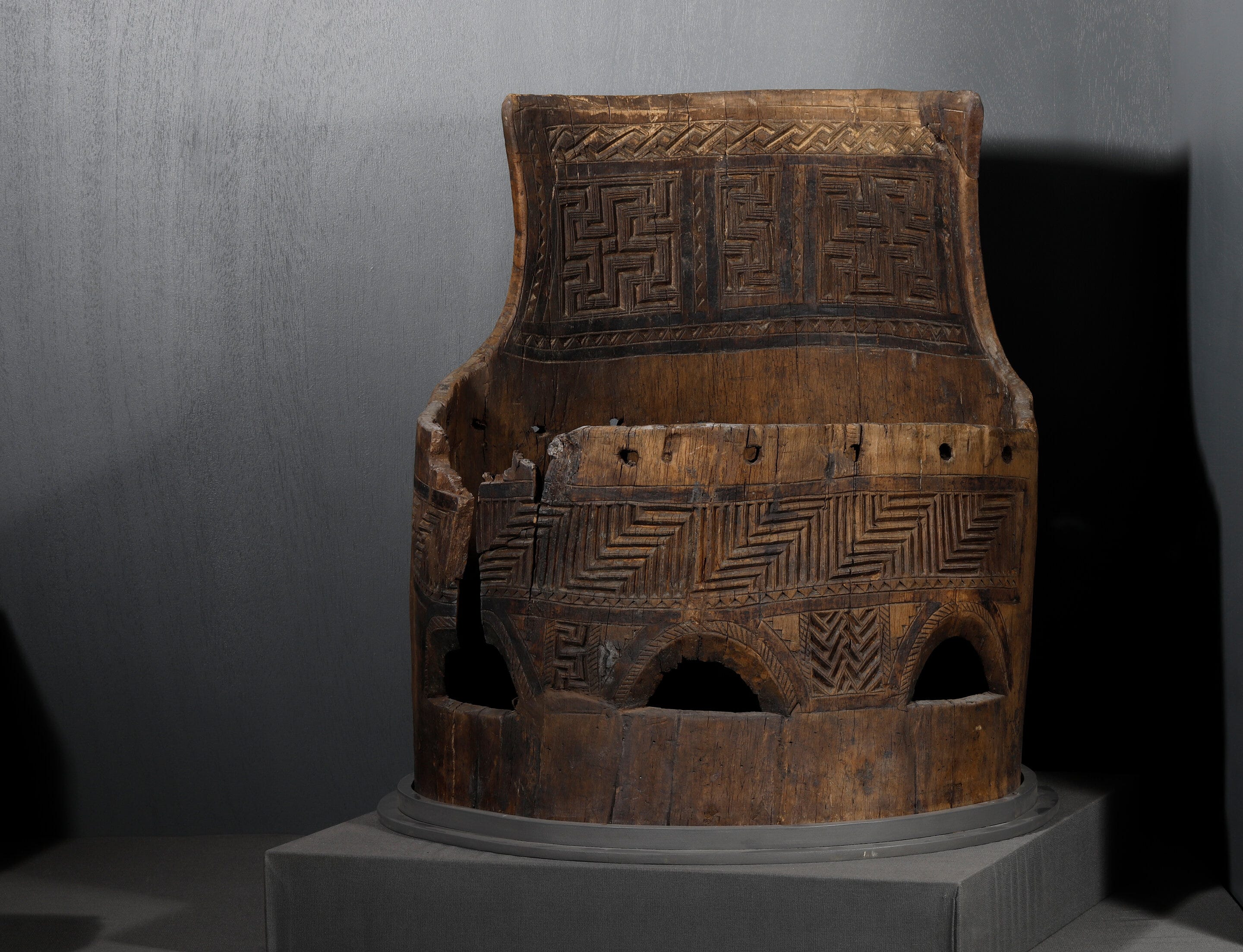
Around him was the kind of assemblage that makes Fallward one of the better-documented Migration Period sites in central Europe. Outside the boat stood a block chair cut from an alder (Alnus) trunk, notched with carvings and presumably once painted, the sort of object excavation reports call a throne. At his feet was a maple (Acer) stool worked with a hunting scene. He had a game table, a bronze basin, a ceramic vessel, several fish bones scattered inside the boat, and a late Roman military belt. Most readers carry leprosy in their heads as a medieval European disease, a matter of leprosaria and the big hospital cemeteries of the eleventh to fifteenth centuries, diagnosed from the skeleton by the eroded nasal aperture and the resorbed bones of hands and feet that osteologists have used for a century to identify it. This man has none of that damage and had the infection anyway.
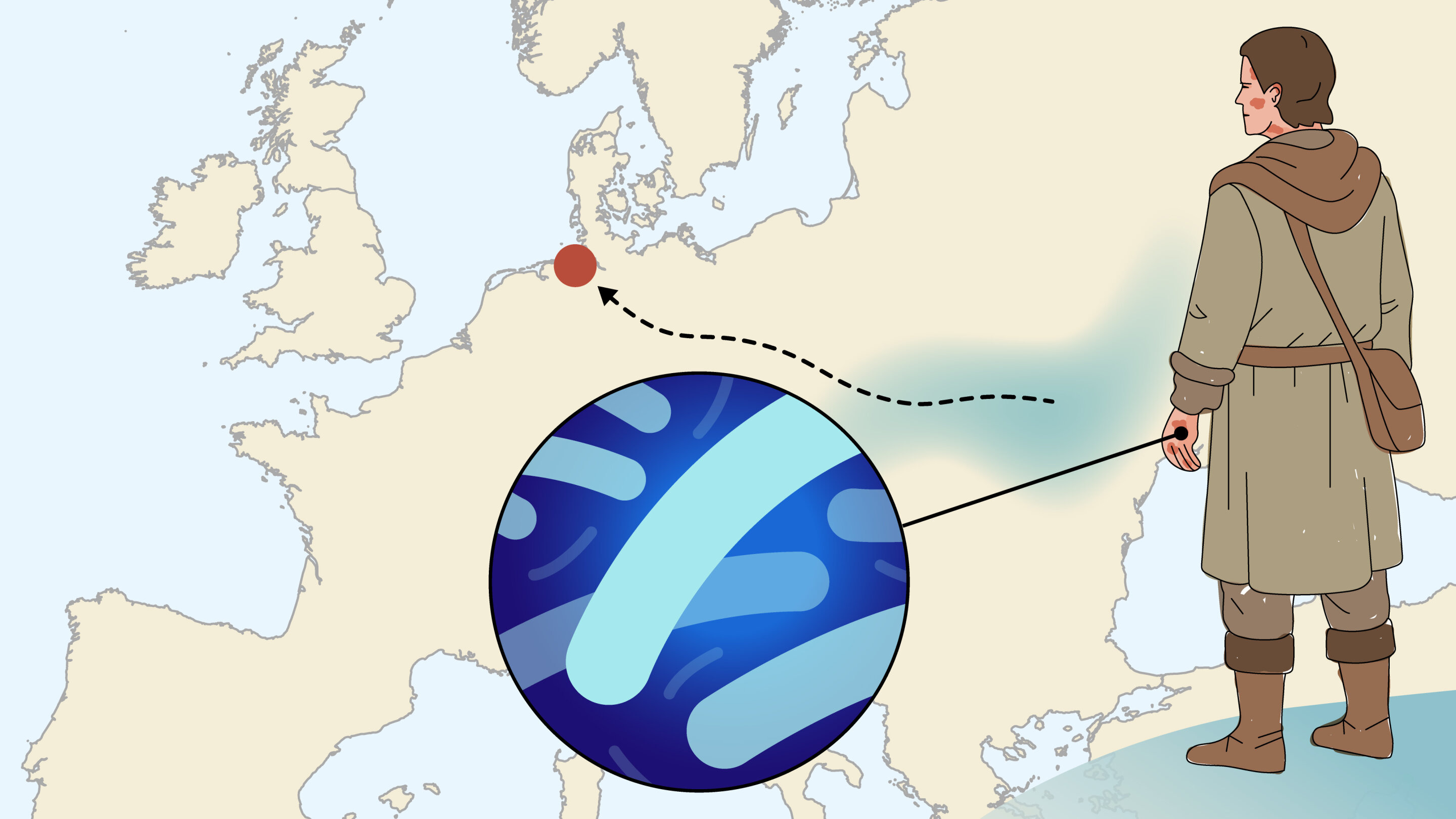
Daniel Anton Myburgh, Ben Krause-Kyora and colleagues at the Institute of Clinical Molecular Biology at Kiel University, working with Hauke Jöns of the Lower Saxony Institute for Historical Coastal Research, report the result in iScience1 in November 2026. They took 12 skeletal samples from 11 individuals buried near the Fallward dwelling mound, shotgun sequenced them, and screened the reads for pathogens. M. leprae appeared in two samples from a single man, the occupant of grave 265, called G265 in the paper. The genome they recovered covers more than 99 percent of the M. leprae reference at fourfold depth or better, with a mean depth of 58.3. On a maximum likelihood tree built from 3,124 informative SNP positions across 44 ancient and 185 modern strains, G265 sits at the base of branch 4, one of the main lineages of the species, ancestral to all the branch-4 diversity sequenced so far with one exception: a strain from an Egyptian mummy dated 342 to 117 BCE, published by Neukamm and colleagues in 2020.
The same 11 skeletons also produced a small human dataset, and that is where the study’s second claim comes from. Three individuals yielded enough DNA for population genetics. Two of them fall where you would expect for fifth-century northwestern Germany. The third is G265, and he does not.