

A phalanx, the finger or toe bone of an antelope, holds almost no marrow, yet the hunter-gatherers who used Hora 1 rock shelter in northern Malawi cracked nearly all of them open, including those of animals in the 5 to 23 kg range. Twenty-three of the 233 phalanges carry percussion marks, and fewer than 4 percent of their fractures have the right-angle or transverse outlines typical of dry breakage after burial, so the authors conclude that people did the opening on purpose. Zooarchaeologists read that kind of effort through the patch choice model, which says low-return tissue is worked only when the surrounding environment offers little better.
The effort matters because of a long-running expectation about territory. The Economic Defendability Model predicts that foragers living on dense, predictable resources will defend territories, while foragers on sparse or unpredictable ones range widely and leave the land open. The archaeological tests so far come from aquatic settings; Marean (2016) applied the model to marine foragers on the southern South African coast about 110 ka, and the earliest evidence of intergroup conflict the authors cite also comes from sites that relied on aquatic food. The belief I would expect most readers to carry is that boundary-making arrived with rich shorelines and that inland foragers stayed open and mobile. Hora 1 tests that belief away from the water.
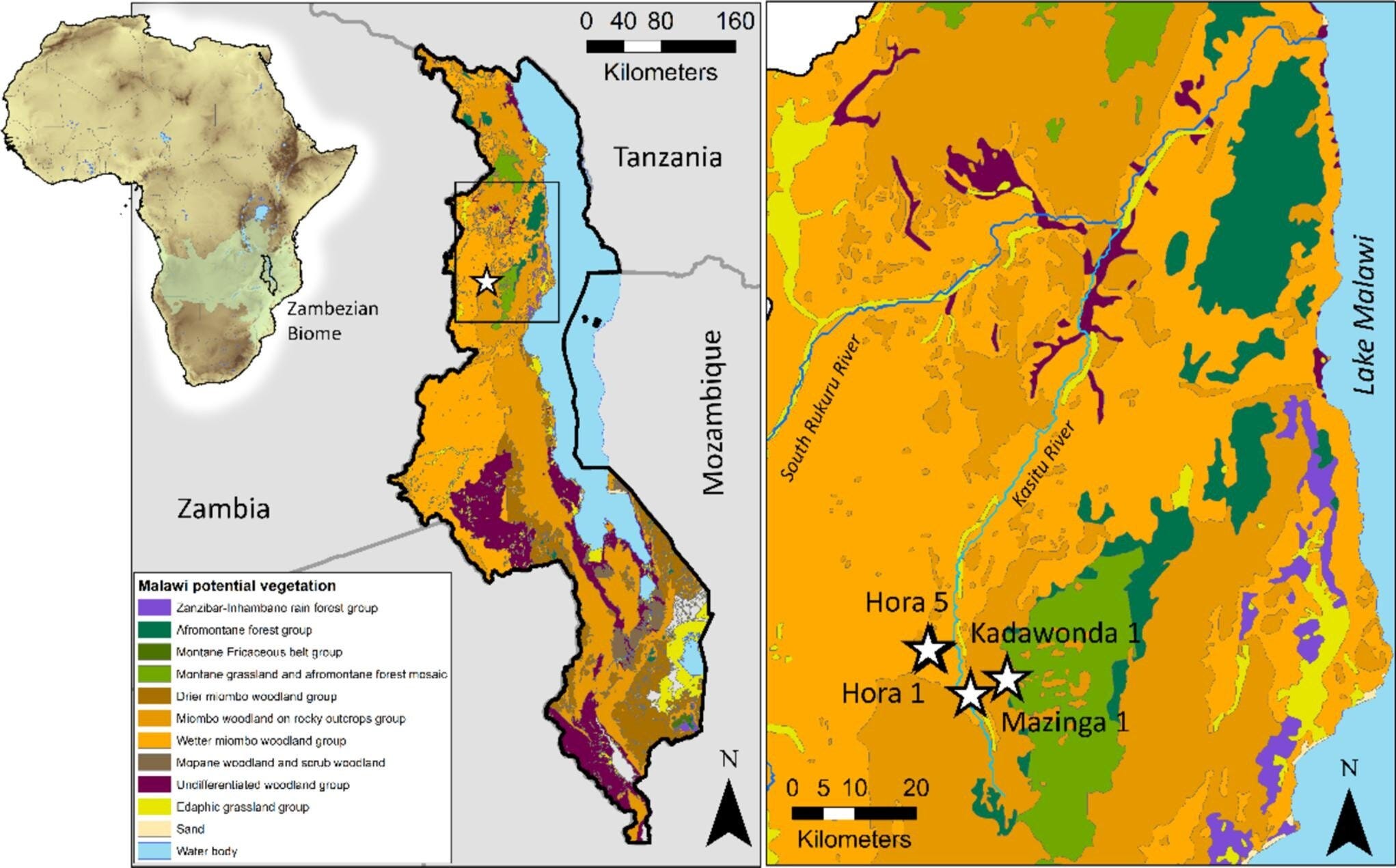
What did the Hora 1 animal bones show?
Alex Bertacchi (Yale University), Potiphar Kaliba (Department of Museums and Monuments, Malawi) and Jessica C. Thompson (Yale University and Arizona State University’s Institute of Human Origins) report in the Journal of Anthropological Archaeology1 that the fauna fits the model’s Scenario B: a home range with limited mobility and limited contact with other groups, whether friendly or hostile. They read the foragers as not strongly territorial. The assemblage does not fit Scenario A (defended territory on dense, predictable food) or Scenario D (undefended territory with frequent intergroup contact).
I class this as added detail rather than a reversal. The study extends the model to an inland woodland and finds a result the model has a slot for. This post is about how much social inference those bones can carry, and my answer is less than the abstract implies.


