

In Nevada, at a site that Lisa-Marie Shillito’s new review calls Crypt Cave, someone put the remains of around 1,000 Rocky Mountain locusts (Melanoplus spretus, counted by minimum number of individuals) into a pit that Pellegrini and colleagues interpreted as a cache. The deposit dates to 14,305 to 14,067 cal yr BP. Stored edible insects from the end of the Pleistocene are about as direct as evidence for food planning gets, and Shillito’s complaint is that finds like this rarely make it into the wider narratives of subsistence.
The assumption she is working against is a familiar one. Early foragers are usually pictured as organized around large game, with plants and small animals as supplements, and insects as a famine food or an accident of storage. Shillito argues that this picture was built from the evidence that survives best and gets looked for most.
What does the review claim about insects in the past?
Shillito, a professor in the Department of Archaeology at Durham University, published “Edible insects as heritage foods: towards an archaeology of alternative proteins for food sustainability” online in World Archaeology on 27 October 2026.1 It is a synthesis, and I think readers should know that up front: it reports no new excavation, sample or measurement. It makes two arguments. The first is that insects’ marginal place in archaeological syntheses reflects taphonomic filters (what preserves), methodological priorities and interpretive habits, and does not reflect absence in the past. The second is that archaeology is well placed to reframe insects as heritage foods in current sustainability debates, because it can show that Western disgust is historically contingent.
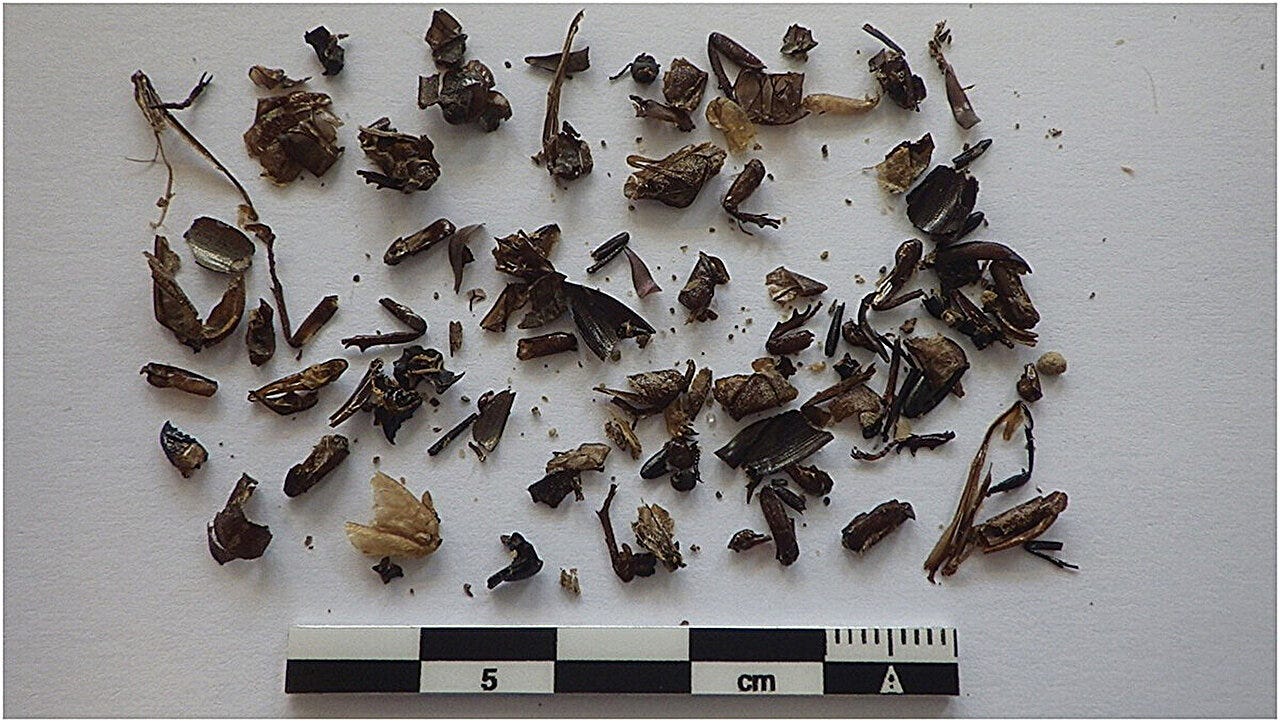
The one number that carries the most weight is a meta-analysis of over 9,000 human coprolites from 52 sites across the Americas, covering the late Pleistocene to the recent precontact period. It suggests that roughly a third of assemblages contain evidence for intentional insect consumption (Julison and Haas 2024).


