

Hawaiʻi and Rapa Nui (Easter Island) lie roughly 7,000 kilometers apart, and each is more than 3,000 kilometers from the nearest inhabited island, according to the news coverage of a new Polynesian founder effect study in Science. Yet the genomes make these two each other’s closest relatives among the populations sampled, a little closer to each other than either is to Mangareva, the island the authors identify as their earlier ancestral source.
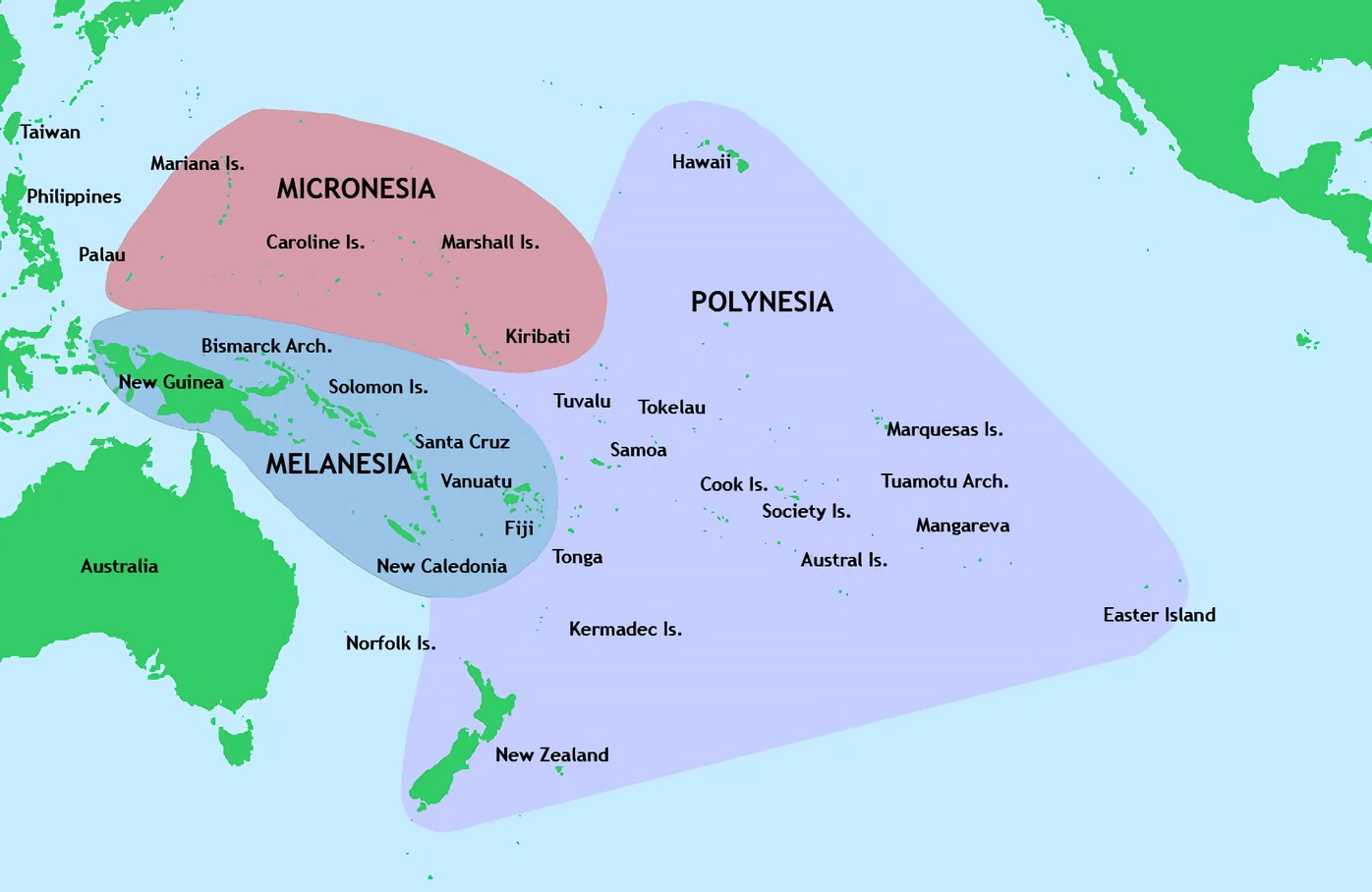
I suspect most readers assume that genetic relatedness in the Pacific should decay with distance, so that the two most remote islands would look the most different. The data point the other way. The authors also describe cumulative founder effects an order of magnitude stronger than those documented in European-descent groups such as the Finnish and Amish.
What did the Science paper find?
The paper is “Message in a bottleneck: Nested founder effects from French Polynesia to Rapa Nui and Hawaiʻi,” by Cole Shanks, Edward C. Huang, Christophe Thomassin and colleagues, with Alexander Ioannidis of Stanford University as co-senior author (Science 394, pp. 216–221, 8 October 2026).1 Using whole-genome sequences from across Polynesia, they report that Hawaiʻi and Rapa Nui are two of the most bottlenecked populations, that the two are the most closely related pair, and that both were likely settled by the same ultravoyagers with earlier ancestral roots in Mangareva. The editor’s summary adds that the intensity of the effect rose with each successive migration, which fits the idea of nested events in the title.

The paper also reports a loss-of-function mutation in the gene FAN1 (a change that knocks out the gene’s working product) at a frequency above 1% in Eastern Polynesia. The variant is entirely absent from gnomAD, a large public aggregate of human genomes and exomes.


