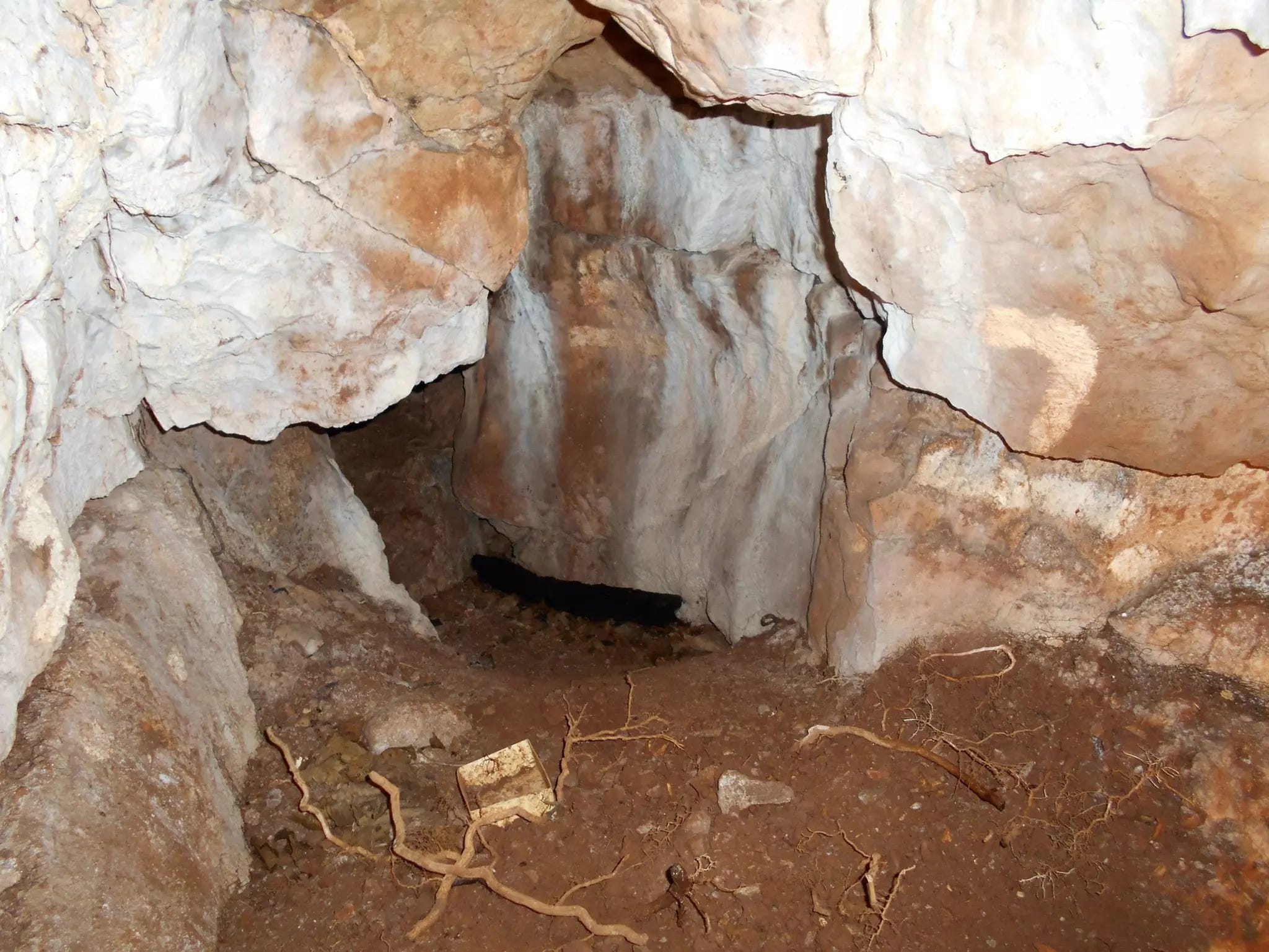
The cave sits just north of Great Urswick on the Furness peninsula, a small limestone system with a narrow horizontal entrance that opens into a main chamber roughly the size of a modest bedroom. On the east side, the chamber develops into a vertical shaft rising five meters to connect with the surface above. It is unremarkable to look at. But sometime around 9,000 BC, people lowered a child’s body into that shaft, probably along with a handful of small perforated shells, and left her there.
She is now called the Ossick Lass. “Ossick” is the local vernacular for both Great and Little Urswick, a place-name worn soft by dialect. Martin Stables, the self-taught archaeologist from the village who led the excavation starting in 2016, wanted her name rooted in the landscape where she had been buried for eleven millennia. The name fits. She is the earliest known person from northern Britain.
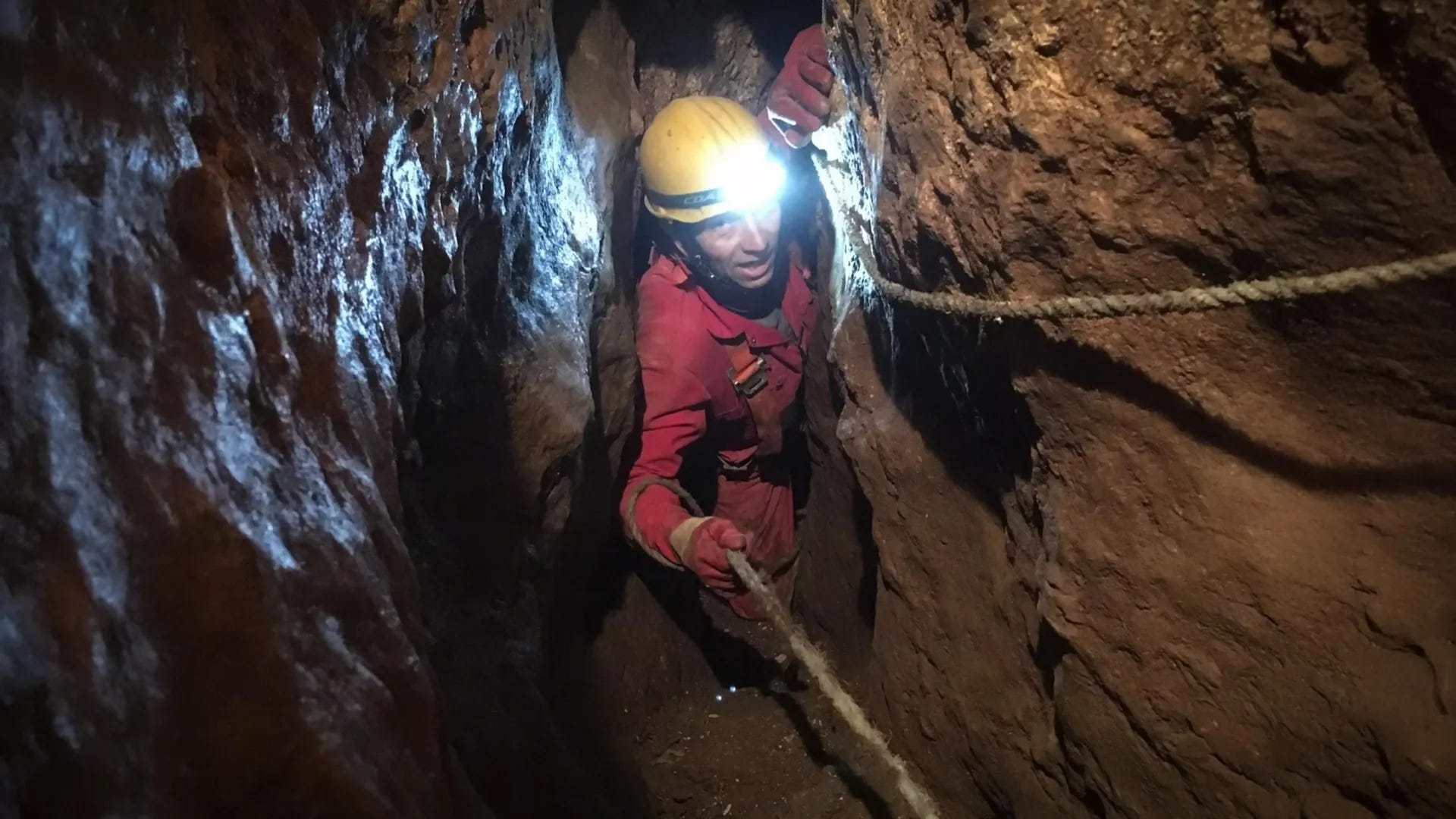
Stables is not a professional archaeologist. He began digging Heaning Wood Bone Cave out of personal fascination with his village’s prehistoric past. The project eventually drew in specialists from the University of Lancashire, the Francis Crick Institute’s Ancient Genomics Laboratory, and the University of Nevada. What started as local curiosity became something with a publication in the Proceedings of the Prehistoric Society1 and a place in the wider story of post-glacial Europe.
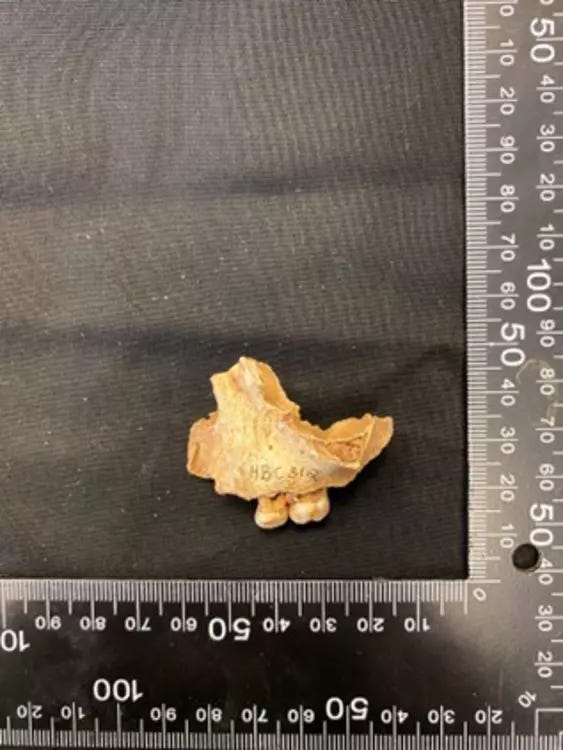
The bones themselves are fragmentary. All fragments belonging to Individual F, as she is designated in the research, are cranial. A molar tooth crown, part of the upper jaw, the left cheekbone. The taphonomy is consistent with a whole-body burial placed in the cave shortly after death, the skeleton gradually disarticulating as the sediment shifted over thousands of years. There is no evidence of gnawing, no sign the body had been exposed elsewhere first. She was buried here, in this shaft, by people who treated her death as something requiring a deliberate response.
Radiocarbon dates on her bone collagen place her death between 9290 and 8925 cal BC. A perforated periwinkle shell bead from the same layers dated to 9135-8645 cal BC, overlapping closely enough that it was likely placed with her. Five of these beads in total were recovered from the cave, all of them flat periwinkle (Littorina obtusata) with single perforations, small and fragile. The researchers note that surviving examples are almost certainly a fraction of what was originally deposited. Perforated periwinkle beads appear at other Early Mesolithic burial caves in Britain, including Aveline’s Hole and Gough’s New Cave in Somerset, though the records from those sites are not precise enough to link the beads directly to burials. At Heaning Wood, the radiocarbon dates make that link explicit.
Osteological analysis put her age at 2.5 to 3.5 years. The DNA from her remains was poorly preserved, which is typical of material this old recovered from cave sediment. Three samples were taken from her maxilla. Two produced unreliable sex estimates flagged for possible contamination. The third, while still degraded, yielded a reliable result: XX. She was female. It is the first time a child’s biological sex has been confirmed for remains this ancient from this part of the world.
Her stable isotopes are slightly unusual. The ratio of carbon-13 to carbon-12 and the elevated nitrogen-15 in her bone collagen sit higher than the seven other individuals from the cave. The research team considers two explanations: one is that she was still being breastfed or recently weaned, which can elevate isotopic values in young children; the other is that her diet included a marine component. If the marine explanation is correct, her radiocarbon date would actually be slightly younger than the raw figure suggests, because marine foods introduce older carbon. That would bring her date into closer alignment with the shell bead. The question cannot be resolved with current data.