

A male dingo died sometime around 1,000 years ago near the Baaka, the river colonists later called the Darling. He was old for his kind, between four and seven years. His molars were heavily worn. His ribs and right fibula had healed from fractures — injuries whose pattern and location look consistent with a forceful blow to the right side, possibly from a kangaroo kick. He had survived those injuries. Months later, he was dead.
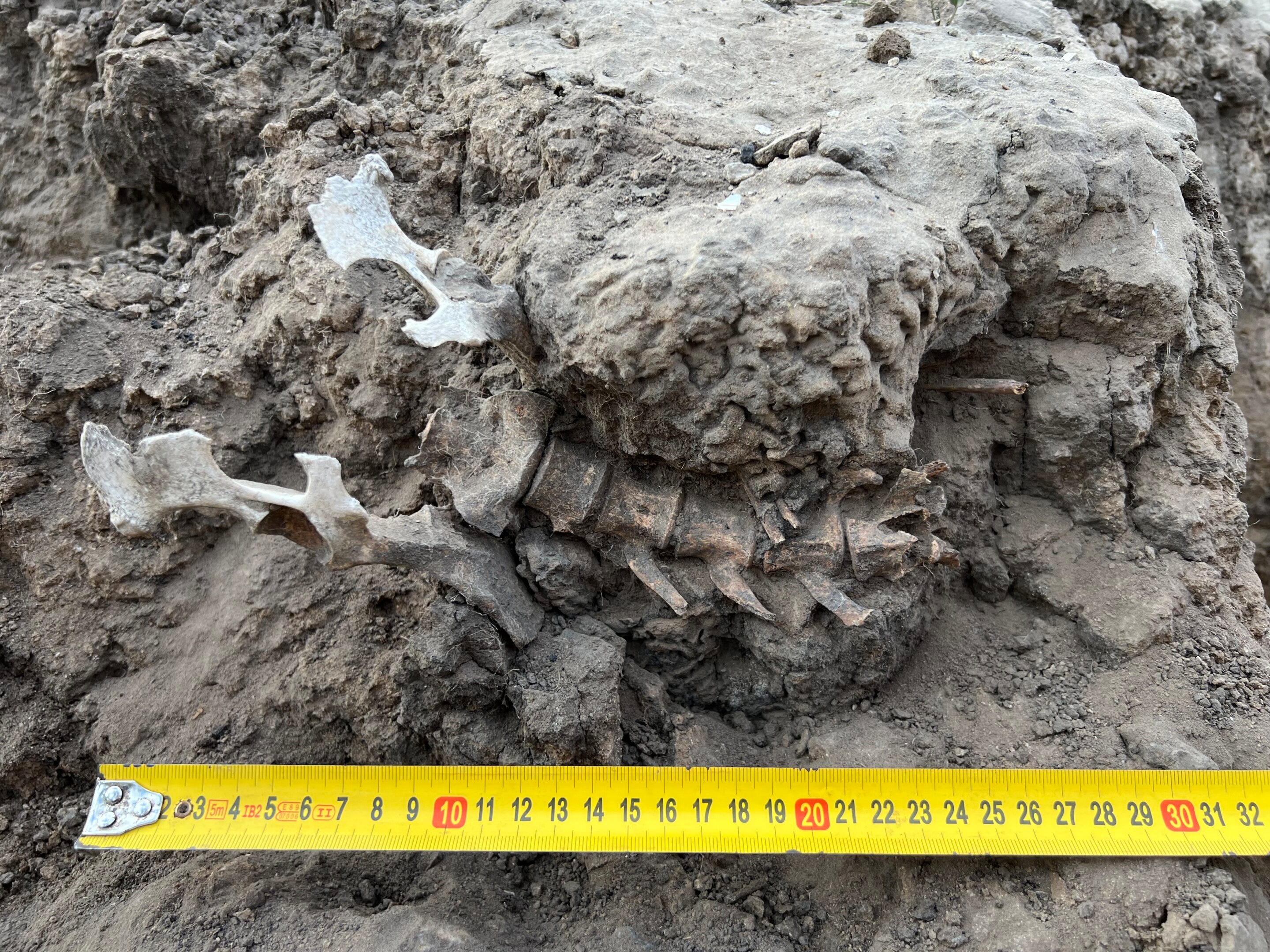
Then someone buried him.
The site is in Kinchega National Park in western New South Wales, about 100 kilometers southeast of Broken Hill, along a meander bend of the Baaka where a palaeochannel marks the river’s older course. The dingo — known as garliin Barkindji language — came to light in the early 2000s when roadworks cut into the edge of a riverside midden and erosion began exposing his skeleton. Barkindji Elder Uncle Badger Bates and National Parks and Wildlife Service archaeologist Dan Witter identified the remains. Subsequent flooding in 2021 dislodged the skull. In September 2023, a salvage excavation was carried out by researchers from the University of Western Australia, the Australian National University, the Australian Museum, and the University of Sydney, in close partnership with the Menindee Aboriginal Elders Council. Before the excavation began, Barkindji Elders conducted a smoking ceremony. Earlier this year, Garli was returned to Country.
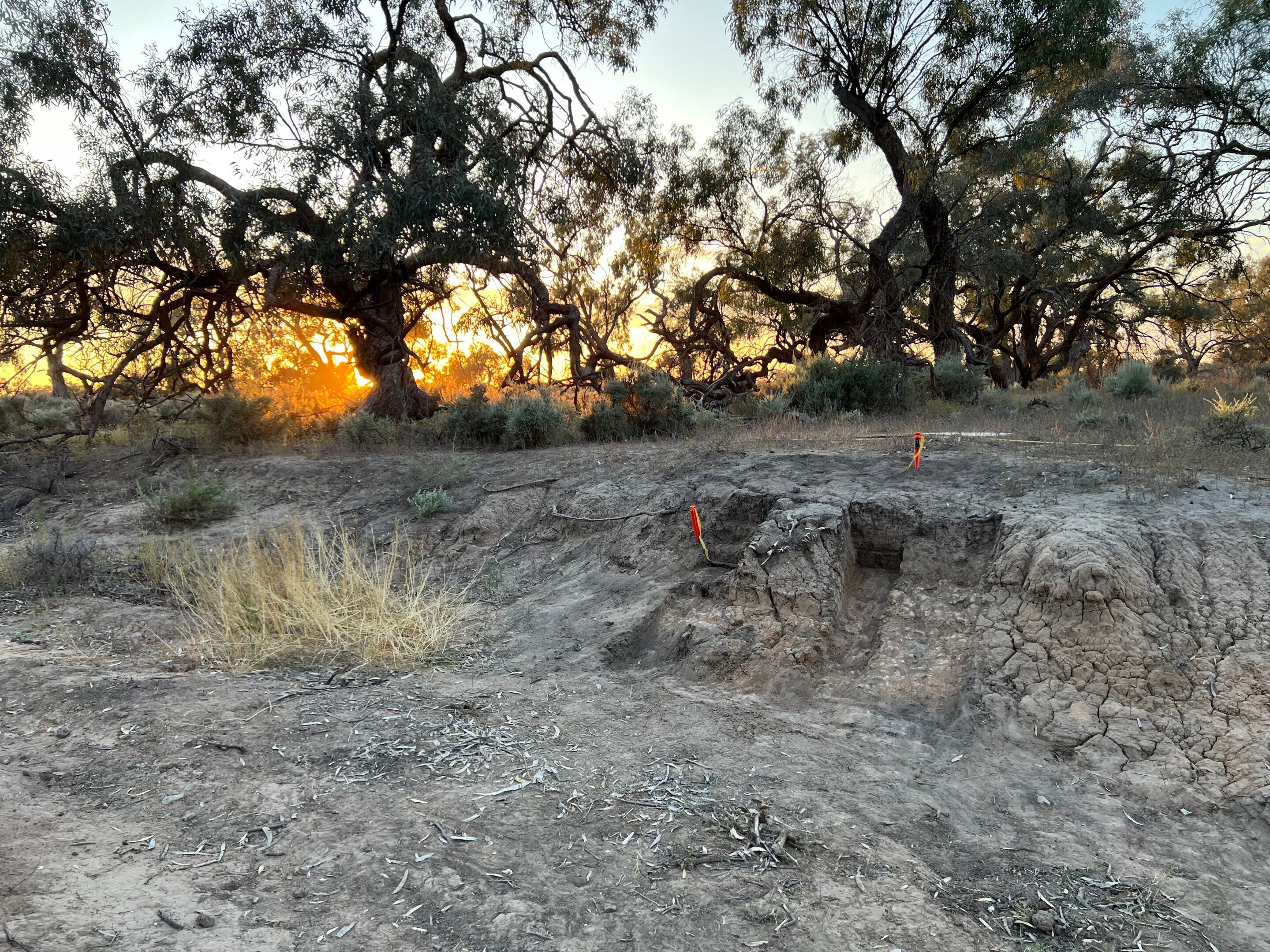
The results, published in Australian Archaeology1 in May 2026, are striking in several respects. Garli represents the first directly dated dingo burial from the Baaka system, pushing the known range of this practice further north and west than previously documented. Radiocarbon dating of a caudal vertebra placed his burial between 963 and 916 years ago. But what makes this case genuinely unusual is not the burial itself. It is what apparently happened afterward.
The midden in which Garli was interred continued to receive additions of freshwater mussel shells (Velesunio sp.) for roughly five centuries after his death. Radiocarbon dates on shells recovered from different parts of the midden are consistently and substantially younger than the dingo’s bones, some by several hundred years. The youngest shell dates cluster between roughly 542 and 495 years ago. Barkindji Elders interpret this sequence as a feeding ritual — an ongoing practice of honoring the buried garli as an ancestor, maintained across multiple generations. The research team believes this is the first time such a post-burial feeding practice has been identified archaeologically anywhere in the world.


