

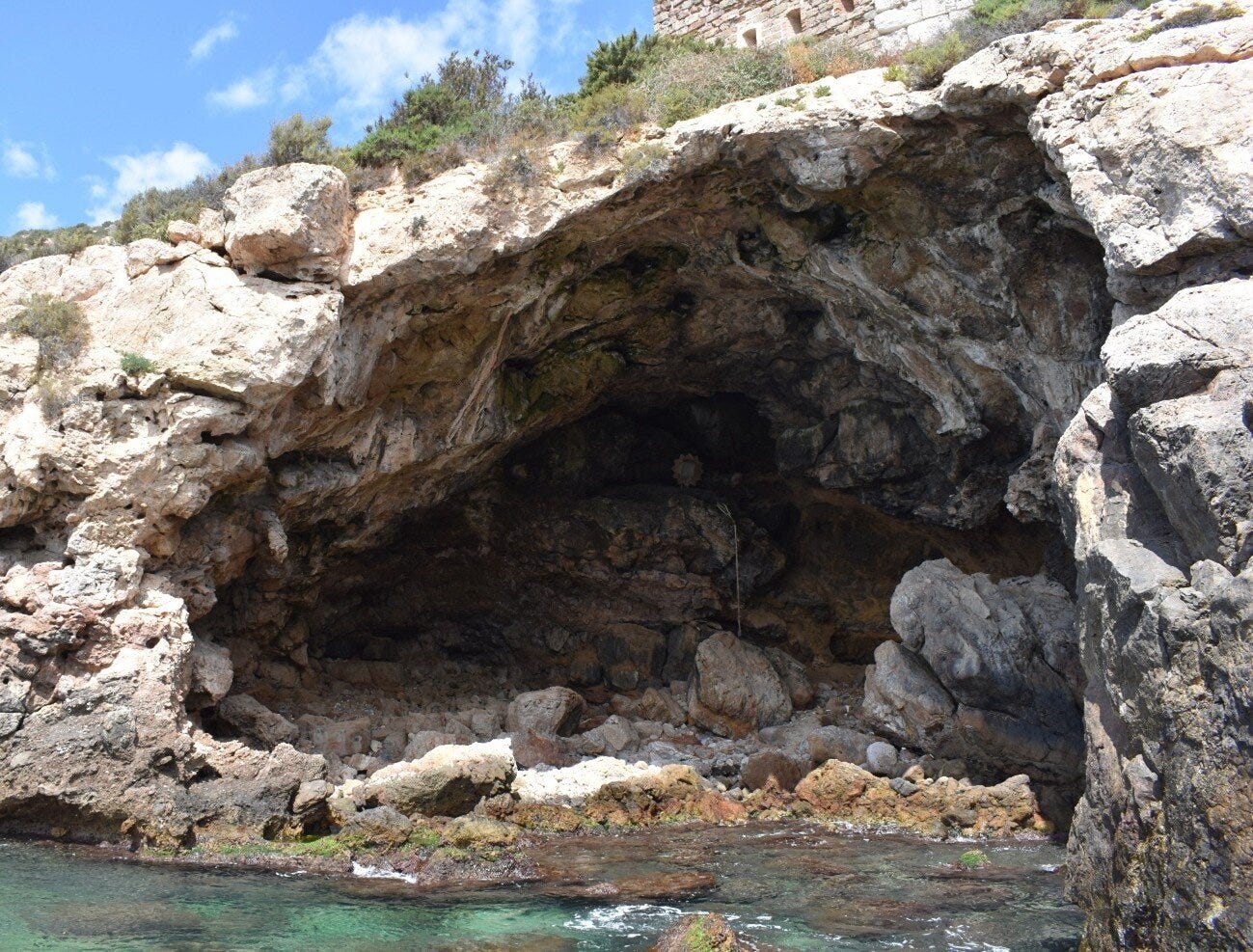
A cave called Los Aviones sits near Cartagena, on the southeastern coast of the Iberian Peninsula, where the land drops down to the Mediterranean. Neanderthals were there roughly 115,000 years ago, and they left behind shells. Not scattered randomly through the sediment the way debris accumulates, but in patterns. Gastropods. Limpets. The kind of thing you pull off rocks at the shoreline.
Researchers already knew this. What they didn’t know, until now, was when.
A new study published in Proceedings of the National Academy of Sciences1 addresses that question directly, using oxygen isotope analysis of the shells themselves. The chemistry is elegant in its logic: as a mollusk grows, it incorporates oxygen from surrounding seawater into its shell carbonate, and the ratio of heavier to lighter isotopes shifts with water temperature. Reconstruct that variation across the shell’s growth rings, and you get a record of seasonal temperature change. You get, in other words, a calendar.
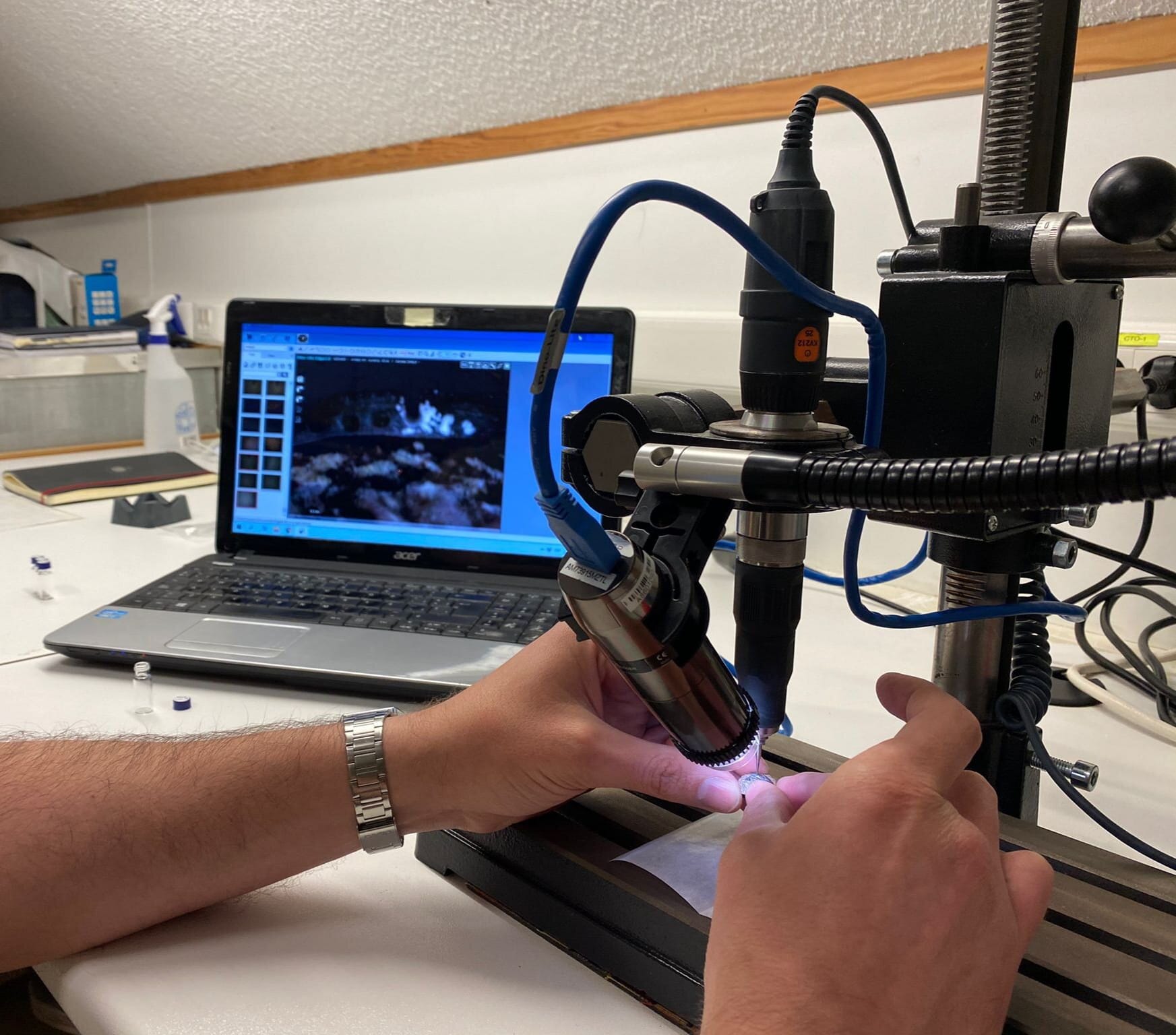
Lead author Asier García-Escárzaga and colleagues from the Universitat Autònoma de Barcelona, the University of Burgos, and the University of Cantabria applied this method to the Los Aviones assemblage at unusually fine resolution. What came back was not random. The shells told a story of deliberate, repeating behavior: collection concentrated in late autumn, winter, and early spring, with a falloff in the warmer months.


