
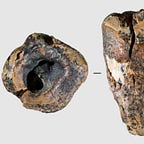
Somewhere in the Altai Mountains roughly 59,000 years ago, a Homo neanderthalensis sat still while someone drilled into their tooth with a pointed piece of jasper.
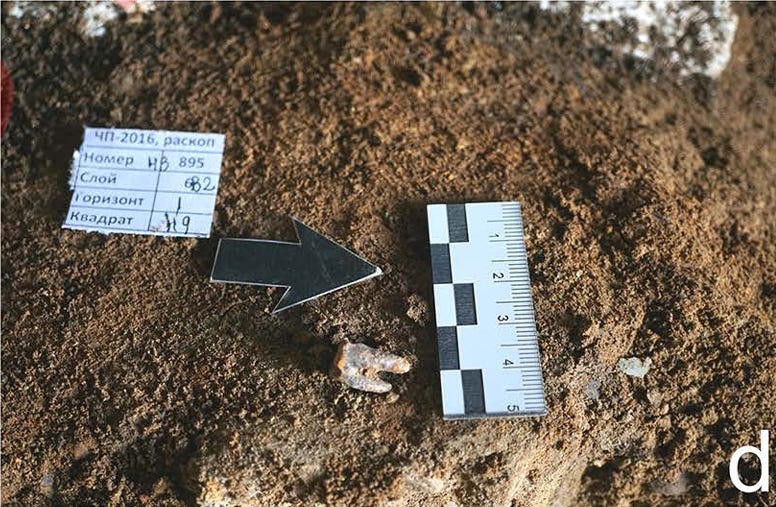
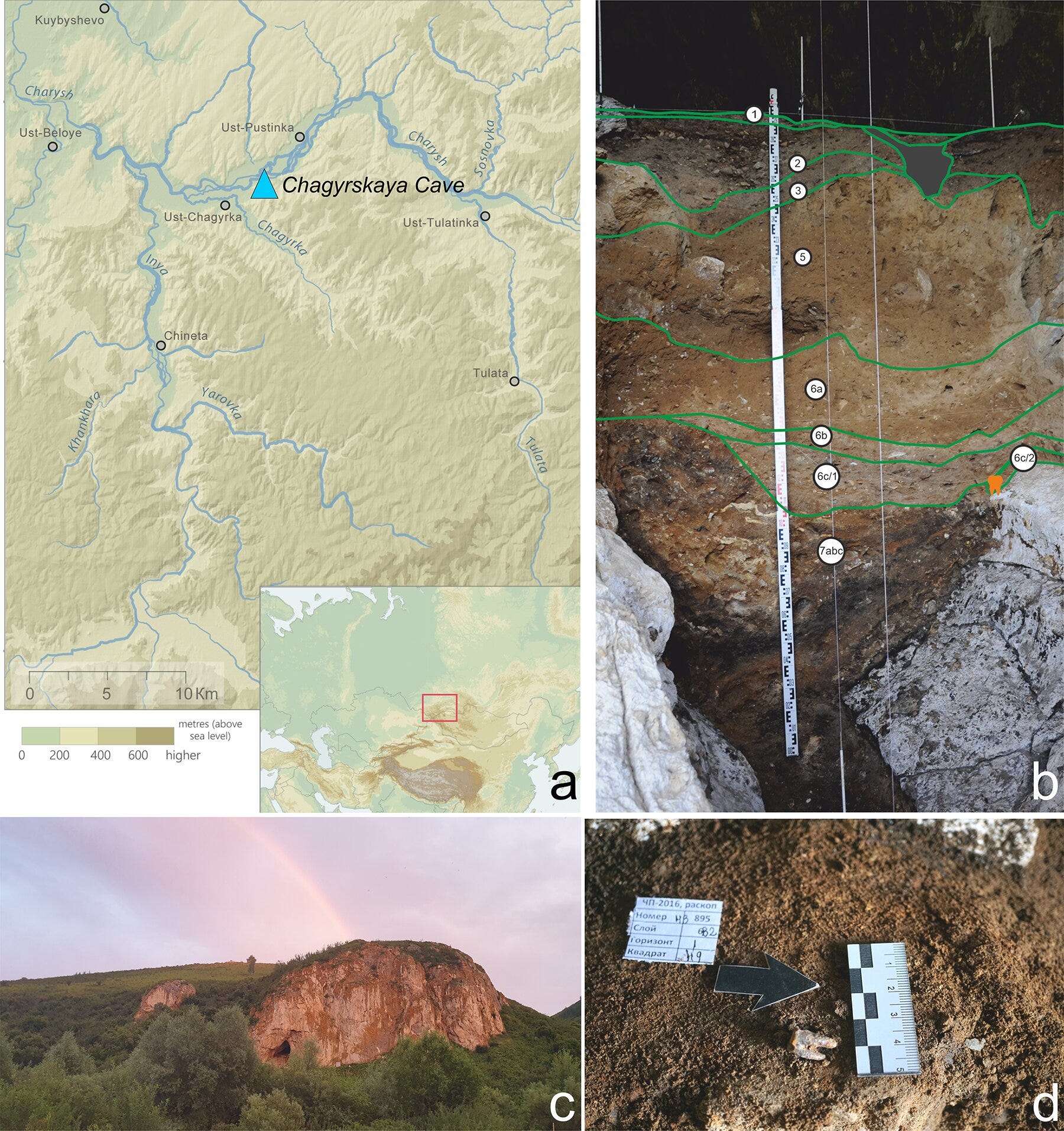
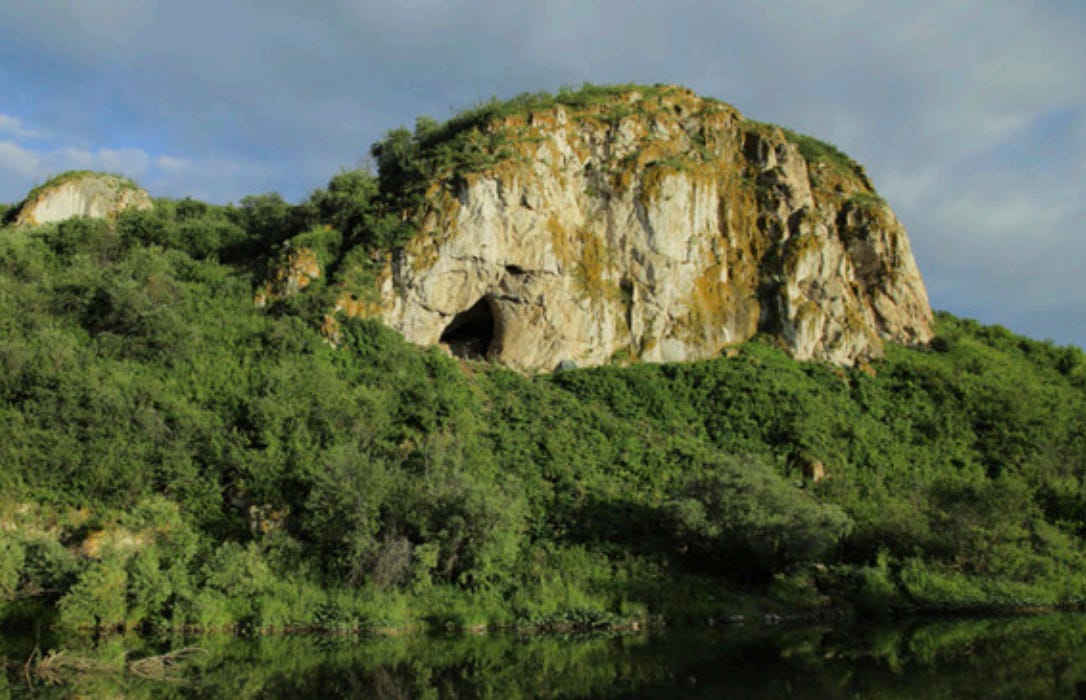
We know this because the tooth survived. It came out of Chagyrskaya Cave in southwestern Siberia as specimen Chagyrskaya 64, a lower second molar from an adult individual, and when paleoanthropologist Alisa Zubova of the Russian Academy of Sciences and her colleagues examined it, something was immediately wrong. There was a hole in it. Not a small one — a large, irregular concavity measuring 4.2 mm long, 2.8 mm wide, and 2.6 mm deep, positioned at the center of the occlusal surface and reaching all the way down to the floor of the pulp chamber. Around the edges, visible at magnifications up to 500x, were fine linear striations. The kind left by a rotating tool.
“We were intrigued by the unusual shape of the concavity on the tooth’s chewing surface,” said Zubova in a statement accompanying the study. “It differed from the normal morphology of the pulp chamber and did not match the typical pattern of carious lesions seen in Homo sapiens. Moreover, distinctly visible scratches suggested that the concavity was not the result of natural damage but of intentional actions.”
Their analysis, published May 13, 2026 in PLOS One,1 presents a compelling case that Chagyrskaya 64 carries the oldest known evidence of deliberate dental treatment in human evolutionary history — predating the previous record holder by more than 40,000 years.
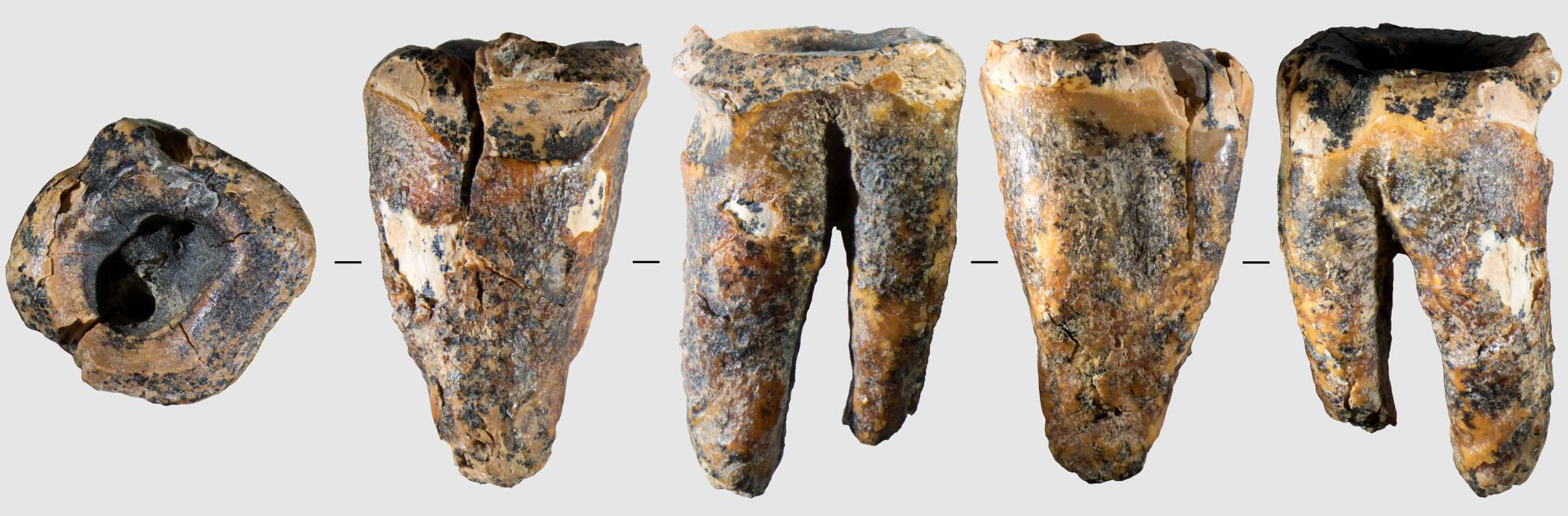
What the Tooth Actually Shows
Before accepting the drilling interpretation, the team had to work through the alternatives. A deep concavity in an old molar could plausibly result from severe wear, a fracture, or natural carious decay. None of these fit.
Dental trauma leaves sharp, fractured edges. The concavity walls in Chagyrskaya 64 are smooth and rounded. Extreme attrition can expose the pulp chamber, but it cannot widen it — and the upper portion of the concavity is broader than the pulp chamber below, which rules out wear as the cause. The comparison sample from the same stratigraphic layer, another Chagyrskaya molar recovered from identical sediment, shows intense occlusal wear but a completely flat chewing surface, no concavity, and uniformly mineralized dentin.
Micro-CT imaging told a different story for Chagyrskaya 64. The tooth showed pervasive demineralization of primary dentin, corresponding to Grade 4 or 5 on the Downer diagnostic scale — severe, deep caries extending into both inner and outer dentin. The absence of secondary dentin in a heavily worn tooth is itself anomalous; normally, the pulp responds to attrition by laying down reparative tissue. Here it hadn’t, because the infection had already destroyed it. There was no secondary dentin to form.
The morphology of the concavity also doesn’t match anything caries produce naturally. Bacterial decay works by chemical demineralization, creating soft tissue breakdown and irregular cavities. It does not excavate clean, sub-rounded depressions with parallel microstriations on the walls. Those striations, analyzed under scanning electron microscopy, are oriented parallel to the concavity walls and exhibit a corrugated, ridged structure consistent with a rotating tool edge. They appear in at least two discrete locations, at slightly different depths, suggesting the tool was worked from multiple angles.
And critically: over the striations, there is polish. Ante-mortem wear, from years of chewing after the procedure was done.
Drilling in the Dark
To test whether a jasper perforator could actually produce this kind of concavity, Zubova and colleagues ran a series of experiments on three modern Homo sapiens molars. Two came from undocumented Holocene archaeological collections. The third — an upper left third molar with an untreated cavity and no previous dental work — was contributed by one of the authors. The tools were fabricated from local jasperoid raw material, matching what was available at Chagyrskaya Cave.
The experiments were conducted by a single researcher experienced in Paleolithic stone knapping, with a small amount of water added to simulate the oral environment. The technique that worked was manual rotation — holding the pointed perforator between two fingers and drilling with a twisting motion, not scraping. Scraping spread force too broadly and produced only surface striations. The rotational method disrupted the tooth surface within seconds.
Penetrating through to the pulp chamber took between 35 and 50 minutes of continuous drilling. The research team notes this is probably a conservative estimate for the original procedure. Working inside a living person’s mouth, with limited visibility, constrained access, and an uncooperative patient, could easily double the time.
Neanderthals have thinner enamel than Homo sapiens, distributed over a larger volume of coronal dentin. The infection in Chagyrskaya 64 had already softened the dentin considerably. Both factors likely made the drilling faster. Still: somewhere between one and two hours of someone boring into your tooth with a sharp rock.
Raman spectroscopy of the tooth surface detected no residue of plant material, resins, or analgesics. The team notes this doesn’t rule out their use — if the individual lived and chewed on the tooth for years afterward, any herbal packing would long since have worn away. But it leaves open the possibility that no painkiller was used at all.
The experimental results matched the archaeological tooth closely. The groove profiles on both share a similar V-shaped morphology, with gently sloping outer walls. The width of the experimentally produced grooves (0.249 mm) closely approximates what’s preserved on Chagyrskaya 64 (0.294 mm). Macrotraces are more pronounced in the experimental specimens — expected, given that they hadn’t then spent 59,000 years in sediment with subsequent wear on top. Microtraces on the original molar are accordingly faint, but present.
The concavity itself is not a single depression. Micro-CT shows three partially overlapping depressions that together occupy the entire pulp chamber volume. Whether they were drilled in separate episodes or represent the practitioner widening the cavity as they worked isn’t clear from the preservation. The team’s experimental replication of a three-depression configuration suggests the smallest of the three was probably an early stage, with the two deeper ones expanded after initial penetration. One possibility is that the third depression targeted a separate area of carious tissue. Another is that it was an error — stone tools aren’t precision instruments.
The Broader Picture
Caries are rare among Neanderthals. Fewer than ten cases have been identified across the entire fossil record, from sites including Palomas, Bau de l’Aubesier, De Nadale, and Kebara. All the previously known cases involve minor lesions confined to enamel or upper dentin, none reaching the pulp chamber. Chagyrskaya 64 is in a class by itself.
The Chagyrskaya population appears to have been particularly susceptible. Another tooth from the same cave, Chagyrskaya 18, is a naturally shed deciduous molar from a Neanderthal child of about 9 to 11 years. It carries two carious lesions. The smaller of the two has already breached through the enamel into the upper dentin. The larger is still confined to enamel but actively demineralizing. Two caries cases in a small population is unusual for Neanderthals; the team suggests it may indicate the presence of specific cariogenic bacteria in the local oral microbiome rather than a dietary shift, since isotopic evidence from Chagyrskaya places these individuals squarely within the dietary range of other European Neanderthals.
Chagyrskaya 64 also carries a second ante-mortem modification: a pronounced interproximal groove on its distal surface, with microscopic parallel striations characteristic of Stage 4 toothpick use-wear. A nascent groove is also forming on the mesial surface. The same tooth was toothpicked on both sides and then drilled. The toothpick groove sits precisely where demineralization is concentrated in the cervical area — over a second, smaller carious lesion. The drilling concavity sits over the larger lesion on the occlusal surface. Two interventions, two lesions, two tools.
Toothpicking behavior predates H. neanderthalensis considerably. Interproximal wear grooves appear on teeth attributed to Homo habilis from Olduvai Gorge, and the same wear pattern has been documented in Japanese macaques (Macaca fuscata). The behavior itself isn’t cognitively remarkable. But drilling is something else. The rotational technique requires coordinated fine motor control, sustained application of force in a confined space, and — given the documented grain of the striations — deliberate adjustment of the tool’s angle during the procedure. The team notes that analysis of bone retouchers from Chagyrskaya Cave shows Neanderthals there typically held tools between two fingers during knapping, a technique already requiring significant digital precision.
The previous oldest evidence of dental intervention belongs to an individual from Ripari Villabruna in northeastern Italy, dated to around 14,000 years ago. That tooth, a third molar from a late Upper Paleolithic H. sapiens, shows traces of enamel scraping around a carious lesion. Micro-CT of the Villabruna tooth shows substantial retention of demineralized tissue — the scraping was superficial, limited largely to the enamel surface. It would not have relieved the pain of deep infection. Chagyrskaya 64 represents not just an earlier intervention but a more effective one, by a population whose tool-use repertoire apparently included the insight that drilling into the pulp chamber — deliberately and completely — would stop the pain by destroying the nerve.
Whether this constitutes knowledge in any formal sense, or something closer to problem-solving arrived at under extreme duress, is a question the tooth cannot answer. What it does answer is whether the capacity existed. The individual who drilled Chagyrskaya 64 identified a source of pain, selected an appropriate tool, executed a controlled invasive procedure, and their patient then went on to chew with the treated tooth for long enough to wear it smooth.
“What struck me, and continues to strike me, is what an incredibly strong-willed person this Neanderthal must have been,” said Lydia Zotkina, co-author of the study. “Now, every time I go to the dentist, I think about that guy.”
Further Reading
Oxilia G, Peresani M, Romandini M, Matteucci C, Spiteri CD, Henry AG, et al. Earliest evidence of dental caries manipulation in the Late Upper Palaeolithic. Scientific Reports. 2015;5:12150. https://doi.org/10.1038/srep12150
Kolobova KA, Roberts RG, Chabai VP, Jacobs Z, Krajcarz MT, Shalagina AV, et al. Archaeological evidence for two separate dispersals of Neanderthals into southern Siberia. PNAS. 2020;117(6):2879–85. https://doi.org/10.1073/pnas.1918047117
Mafessoni F, Grote S, de Filippo C, Slon V, Kolobova KA, Viola B, et al. A high-coverage Neandertal genome from Chagyrskaya Cave. PNAS. 2020;117(26):15132–6. https://doi.org/10.1073/pnas.2004944117
Skov L, Peyrégne S, Popli D, Iasi LNM, Devièse T, Slon V, et al. Genetic insights into the social organization of Neanderthals. Nature. 2022;610(7932):519–25. https://doi.org/10.1038/s41586-022-05283-y
Faux P, Ding L, Ramirez-Aristeguieta LM, et al. Neanderthal introgression in SCN9A impacts mechanical pain sensitivity. Communications Biology. 2023;6(1):958. https://doi.org/10.1038/s42003-023-05286-z
Estalrrich A, Alarcón JA, Rosas A. Evidence of toothpick groove formation in Neandertal anterior and posterior teeth. American Journal of Physical Anthropology. 2017;162(4):747–56. https://doi.org/10.1002/ajpa.23166
Zubova AV, Zotkina LV, Olsen JW, Kulkov AM, Moiseyev VG, Malyutina AA, et al. Earliest evidence for invasive mitigation of dental caries by Neanderthals. PLOS One. 2026;21(5):e0347662. https://doi.org/10.1371/journal.pone.0347662


