

At approximately 40 weeks of gestational age, an infant died and was buried alongside an adult woman estimated to be over 45 years old. The site is CA-ALA-11, a shell mound on the eastern shore of San Francisco Bay occupied across a span stretching from roughly 500 BCE to the early nineteenth century CE. The burial pair sat undisturbed for centuries. When researchers finally X-rayed the infant’s arm bones, they found Pelkan’s spurs: sharp bony projections at the edges of the humerus and ulna that are among the later-stage skeletal hallmarks of scurvy. The infant had been deficient in vitamin C for at least three months before death. That window, by any reckoning, places the deficiency entirely within the womb.
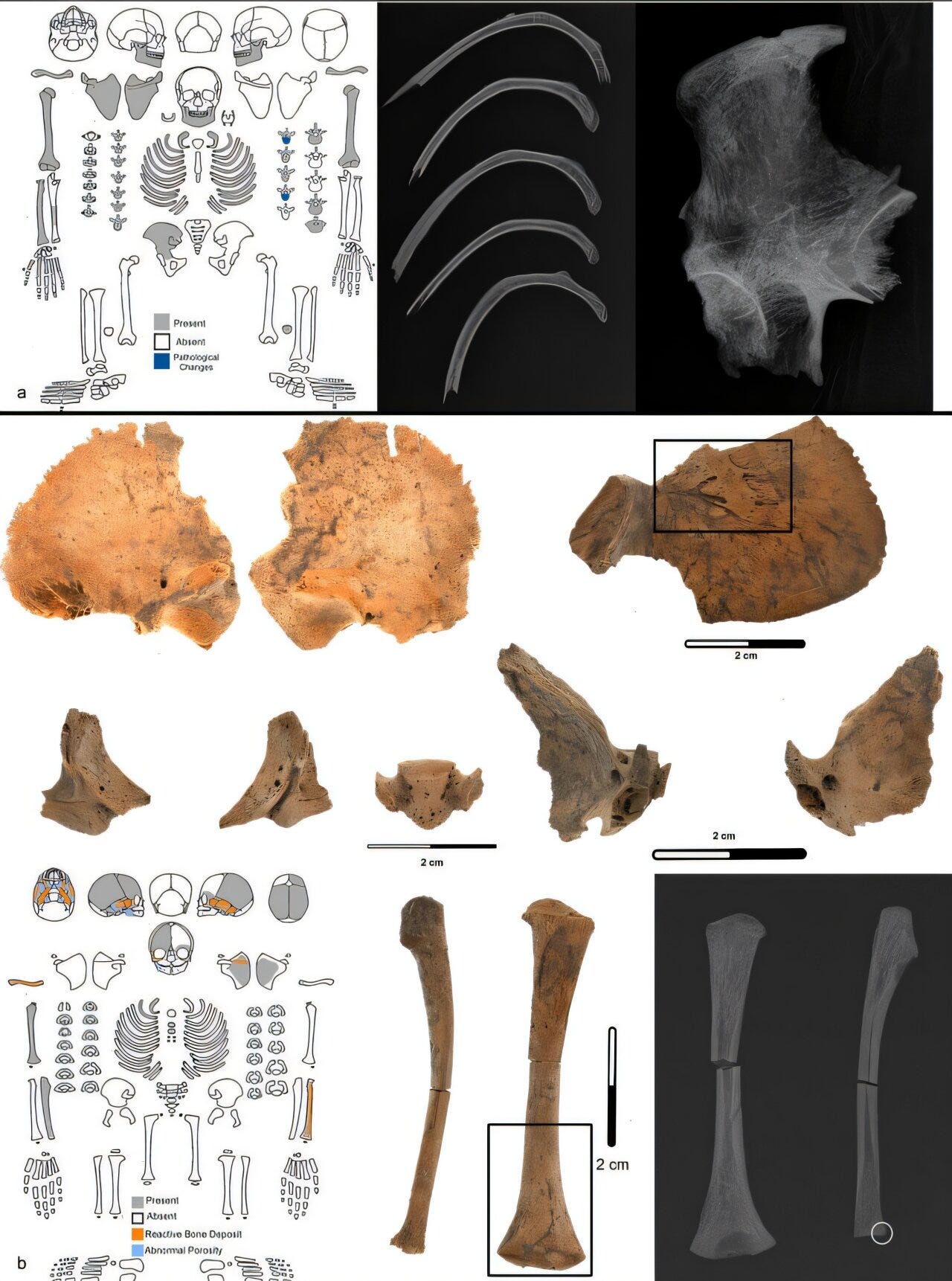
This is one of two double burials at the heart of a study published in 2026 in the International Journal of Osteoarchaeology,1 led by Alyson Caine and colleagues. The paper documents skeletal evidence of scurvy across multiple Late Holocene archaeological sites in California, and it is worth pausing on the specific strangeness of what it finds. California is not a place one associates with nutritional scarcity. The Bay Area and Central Valley supported extraordinarily diverse economies. Mussels and oysters line the margins of CA-ALA-11 itself. Berries, clover, tarweed, goosefoot, fresh fish, waterfowl, and deer were all available to the populations who lived there. And yet: scurvy. In infants who never drew an independent breath of air.
The puzzle is the point.


