
The assumption had been sitting in the literature for a long time: northern Sri Lanka was too dry, too rocky, too resource-poor for prehistoric people to bother with. No good stone for tools. Scarce freshwater. A semi-arid landscape with limited vegetation. The standard model held that serious human occupation didn’t arrive in the north until agro-pastoralists crossed from India sometime around the fifth century BCE. Before that, essentially nothing.
Velanai Island has other ideas.
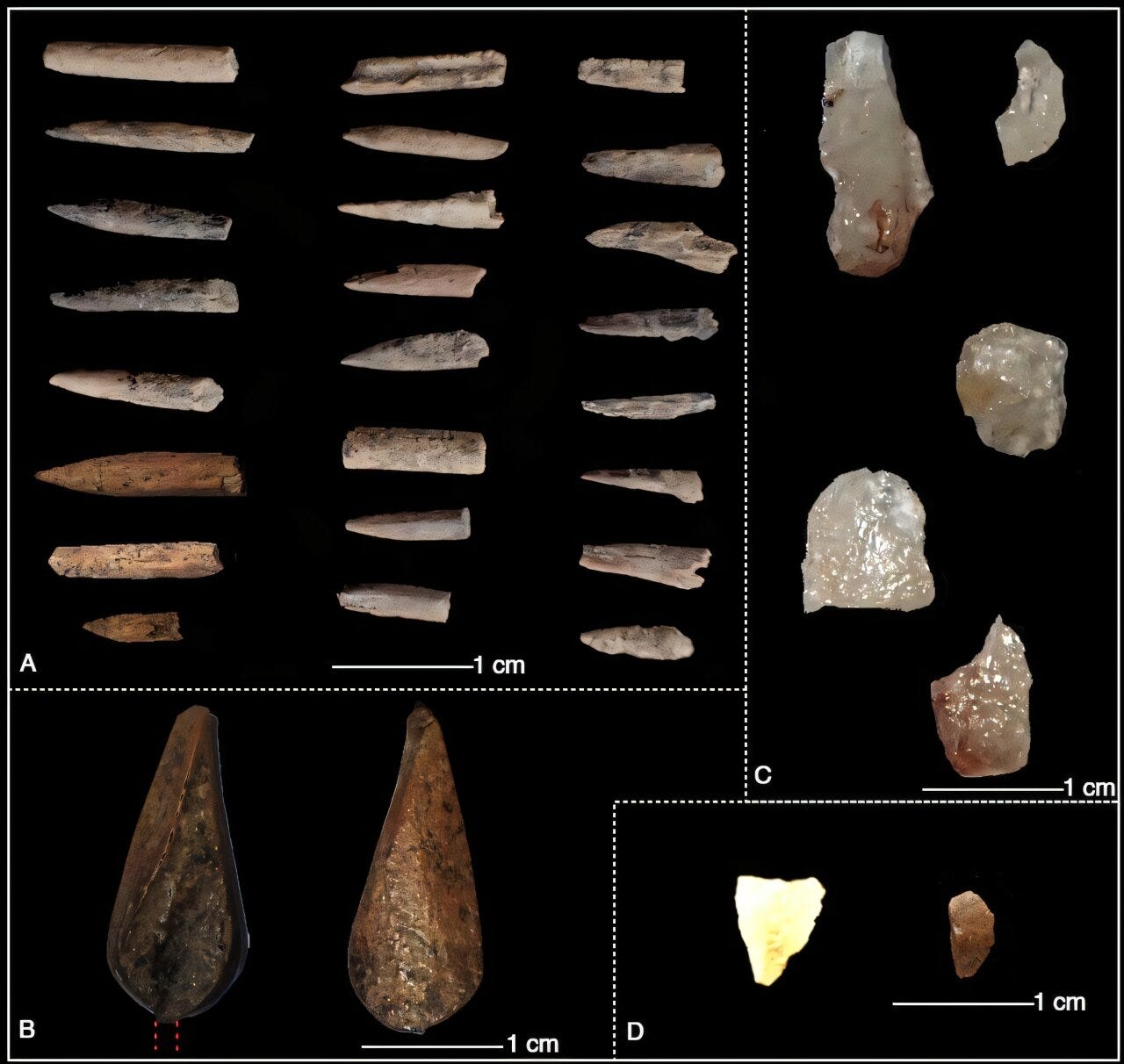
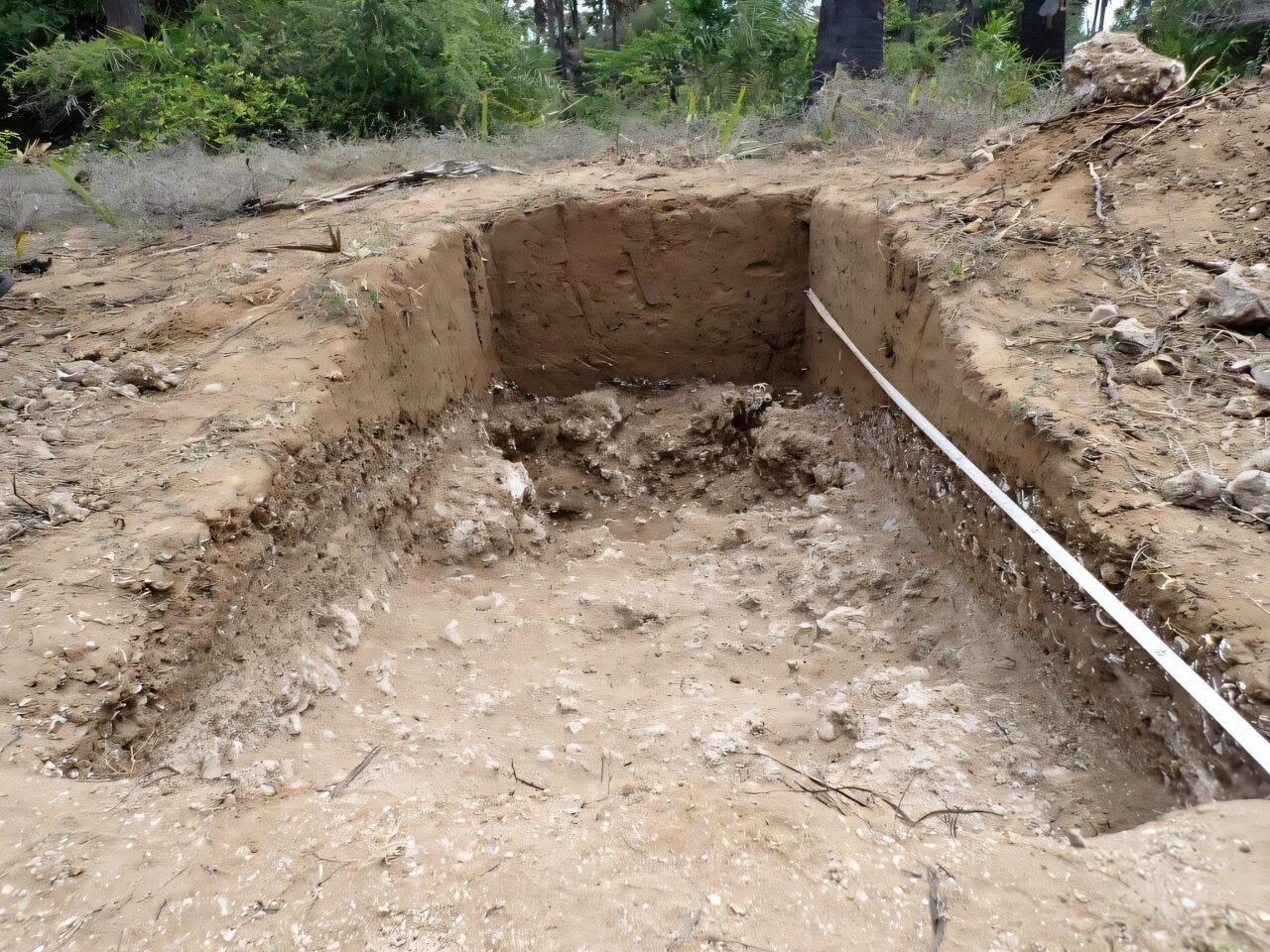
Velanai sits in the Jaffna lagoon, separated from the mainland by more than five kilometers of open water. It’s a small island in a peninsula that juts off the northernmost tip of Sri Lanka, the kind of place you might reasonably assume people only arrived at once they had a good reason. New excavations at a shell midden there, designated CB/Ex1, have produced the earliest scientifically confirmed1 prehistoric occupation in northern Sri Lanka, dated to around 3,460 cal BP, well over a thousand years before the agro-pastoral migrations the textbooks emphasize.
The people who left this deposit were coastal foragers. And what they left behind is more interesting than the date alone.


