

A single tooth can hold a geographic record. Enamel forms during early development and then stays fixed, a chemical snapshot of wherever an animal spent its first months of life. Bone, by contrast, is remodeled continuously, gradually taking on the chemistry of wherever an animal currently lives. This is what makes tooth enamel useful to zooarchaeologists trying to figure out whether an animal lived and died where its bones were found, or whether it was brought there from somewhere else.
For the dogs excavated from two Maya sites in highland Chiapas, the answer is mostly: somewhere else. Quite far somewhere else.
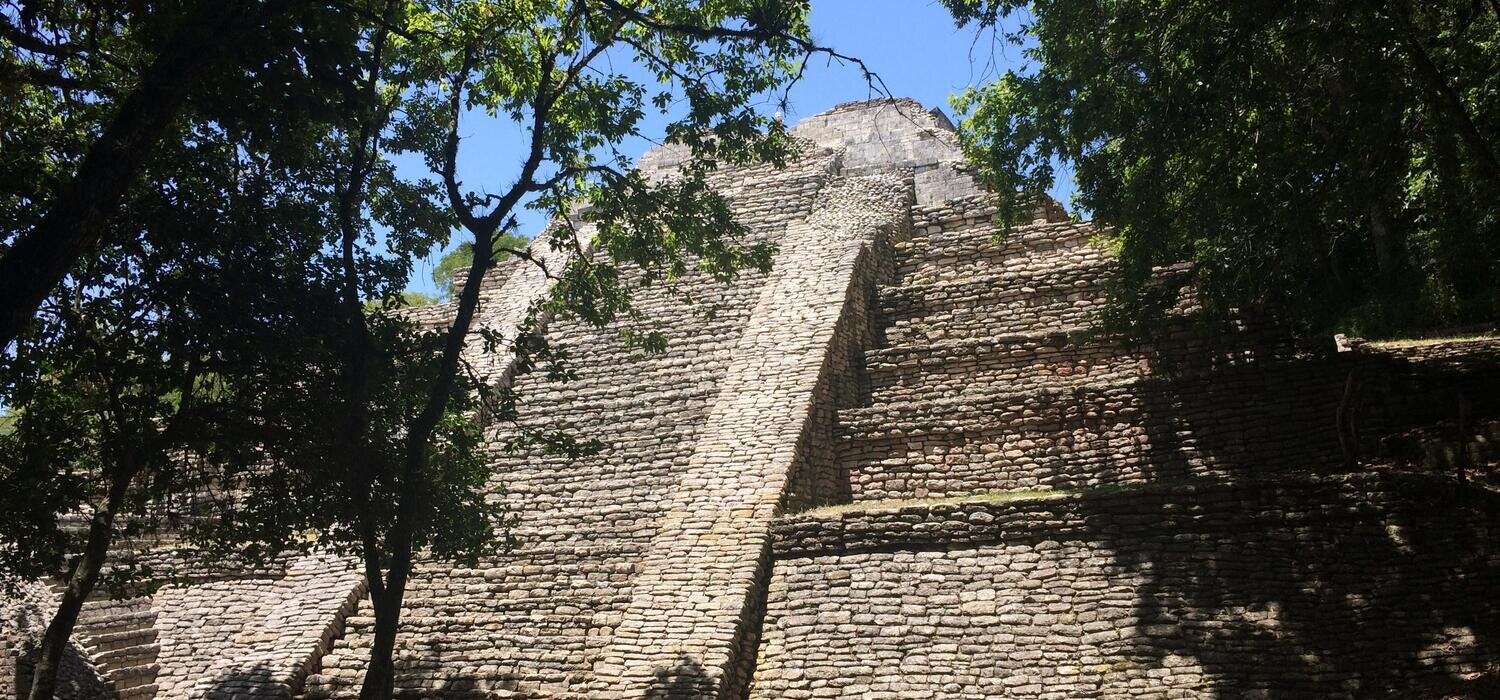
A study recently published in the Journal of Archaeological Science1 by Elizabeth Paris, Clement Bataille, and colleagues at the University of Calgary, Purdue University, Southern Illinois University, and partner institutions in Mexico examined faunal remains from Moxviquil and Tenam Puente, two sites on the western Maya frontier occupied during the Classic and Early Postclassic periods (roughly 500 to 1100 CE). The team analyzed strontium isotope ratios from tooth enamel and bone of dogs, deer, and other large mammals, then compared those values against a newly constructed strontium isoscape for the entire Maya region.
The contrast between species was immediate and striking. Deer and peccary from both sites showed strontium ratios consistent with the local geology. They were locally hunted animals. The dogs were not.


