
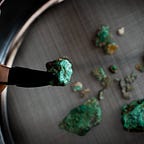
Getting to Cave 338 is not simple. You take a rack railway into the Vall de Núria, disembark at the monastery, then climb a steep slope for roughly 45 minutes until you reach the cave entrance, which faces north at 2,235 meters above sea level. There is no road. There is no shortcut. And yet, starting around 3,500 years before the Common Era, possibly earlier, people were making this journey regularly, carrying ceramics, stone tools, and something more unusual: chunks of vivid green rock.
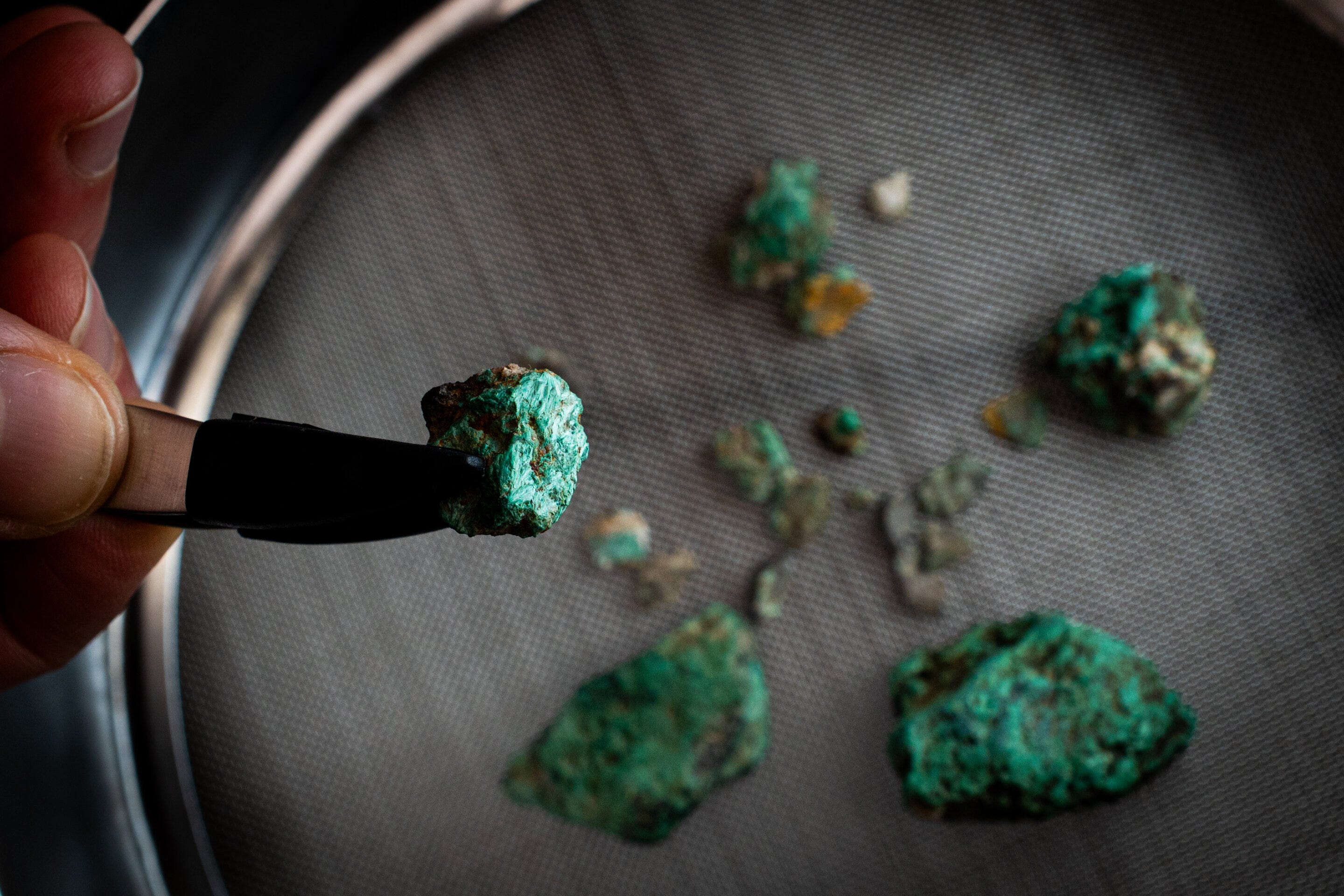
What those rocks were doing inside the cave, arranged around fire pits and crushed into small fragments, is the central question driving a new study published in Frontiers in Environmental Archaeology1 by Carlos Tornero of the Catalan Institute of Human Paleoecology and Social Evolution and colleagues. The answer they propose is striking: Cave 338, buried in the mountains between the Núria Valley and the summit of Puigmal, appears to be a high-altitude mineral processing site, possibly the earliest evidence of sustained, purposeful prehistoric occupation yet documented in the Pyrenees above 2,000 meters. Not a campsite. Not a refuge. A place people returned to for millennia because something up there was worth the climb.


