
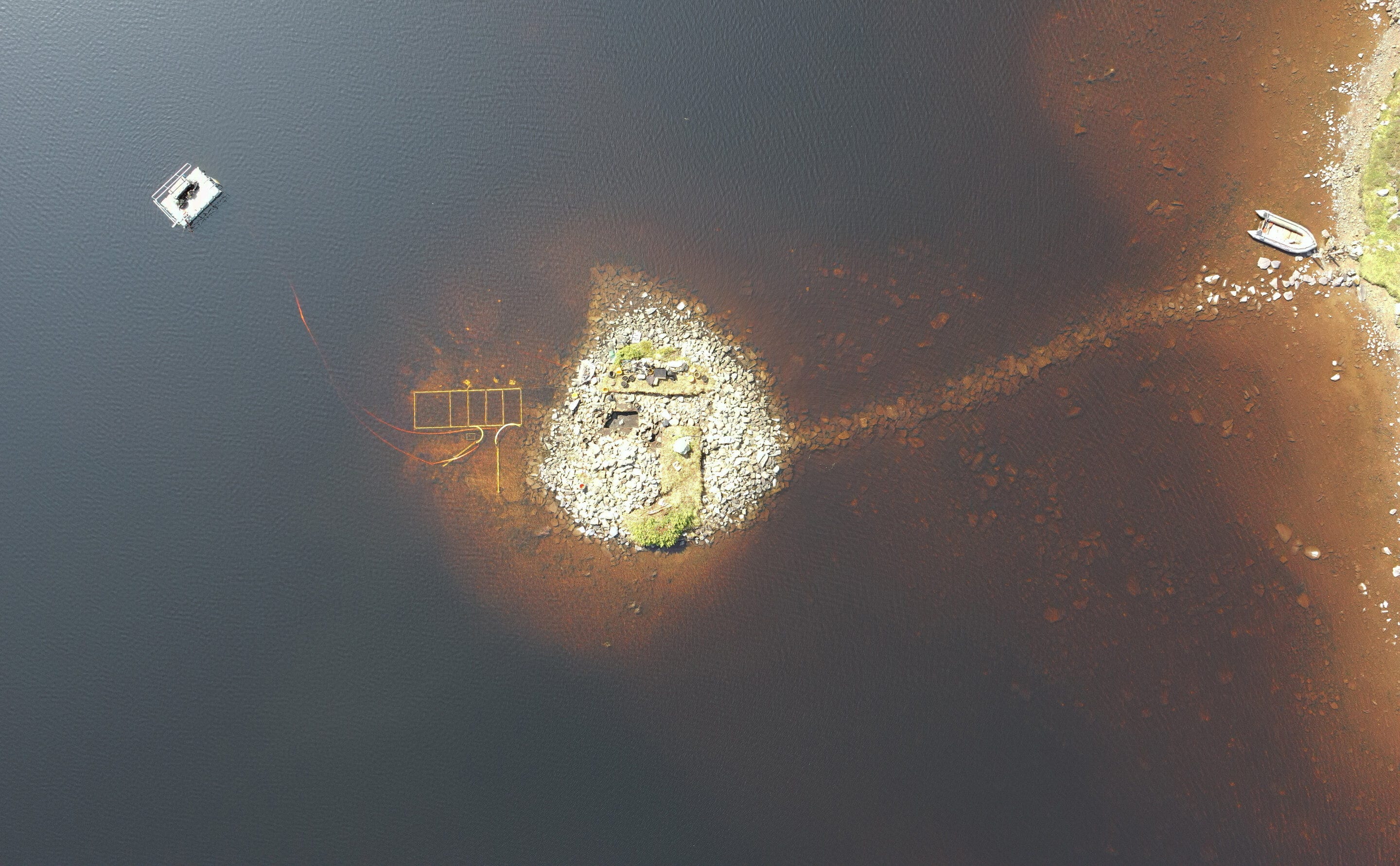
In the middle of Loch Bhorgastail, a small loch on the Isle of Lewis in the Outer Hebrides, there is an island. It looks like stone. It is stone, mostly, on the outside. But underneath the stone capping, and extending into the shallow loch bed around it, lie the remains of a circular timber platform roughly 23 meters across, built more than 5,000 years ago by Neolithic people who hauled wood and brushwood to this spot and assembled something that was, by any reasonable measure, a significant undertaking. The platform predates Stonehenge. It was later modified in the Middle Bronze Age, when another layer of brushwood and stone was added, and modified again during the Iron Age. A stone causeway runs from the loch shore to the island; it is now underwater. Hundreds of pieces of Neolithic pottery lie scattered across the surrounding loch bed, many of them still bearing traces of food residue.
Nobody is entirely sure what the site was for. The resources and labor required to build it suggest communities capable of coordinating complex collective work, and the pottery assemblage points to communal activities, cooking or feasting perhaps, but the interpretive picture remains open. What is clear is that people returned to this place, and kept returning, across more than a thousand years.
What makes Loch Bhorgastail newly interesting is not just the archaeology but what it forced a team from the Universities of Southampton and Reading to figure out in order to study it.1
Drone flyover at Loch Bhorgastail crannog, 2021. Credit: Islands of Stone project


