

The island of New Guinea hosts somewhere between 800 and 900 languages. Many of them are structurally unlike anything spoken elsewhere: different patterns of word order, different sound inventories, different ways of organizing the relationship between subjects, objects, and verbs. Across the island and surrounding region, languages diverge from one another at almost every structural level you can measure.
The population genetics of the same region tells a different story. New Guinea communities show relatively low genetic diversity at the individual level — the signature of long-term isolation, small effective population sizes, limited gene flow between groups. By the usual logic of biodiversity, you might expect genetic and linguistic richness to track together. They don’t.
A study published this month in PNAS1 makes that inversion its central argument. Analyzing 333 structural features across 4,257 languages alongside genetic data from 5,737 individuals across 650 populations, a team led by Anna Graff and Balthasar Bickel at the University of Zurich demonstrates that genetic diversity and structural linguistic diversity are inversely correlated at a global scale — and that the signal is robust across geographies, datasets, and analytical approaches.
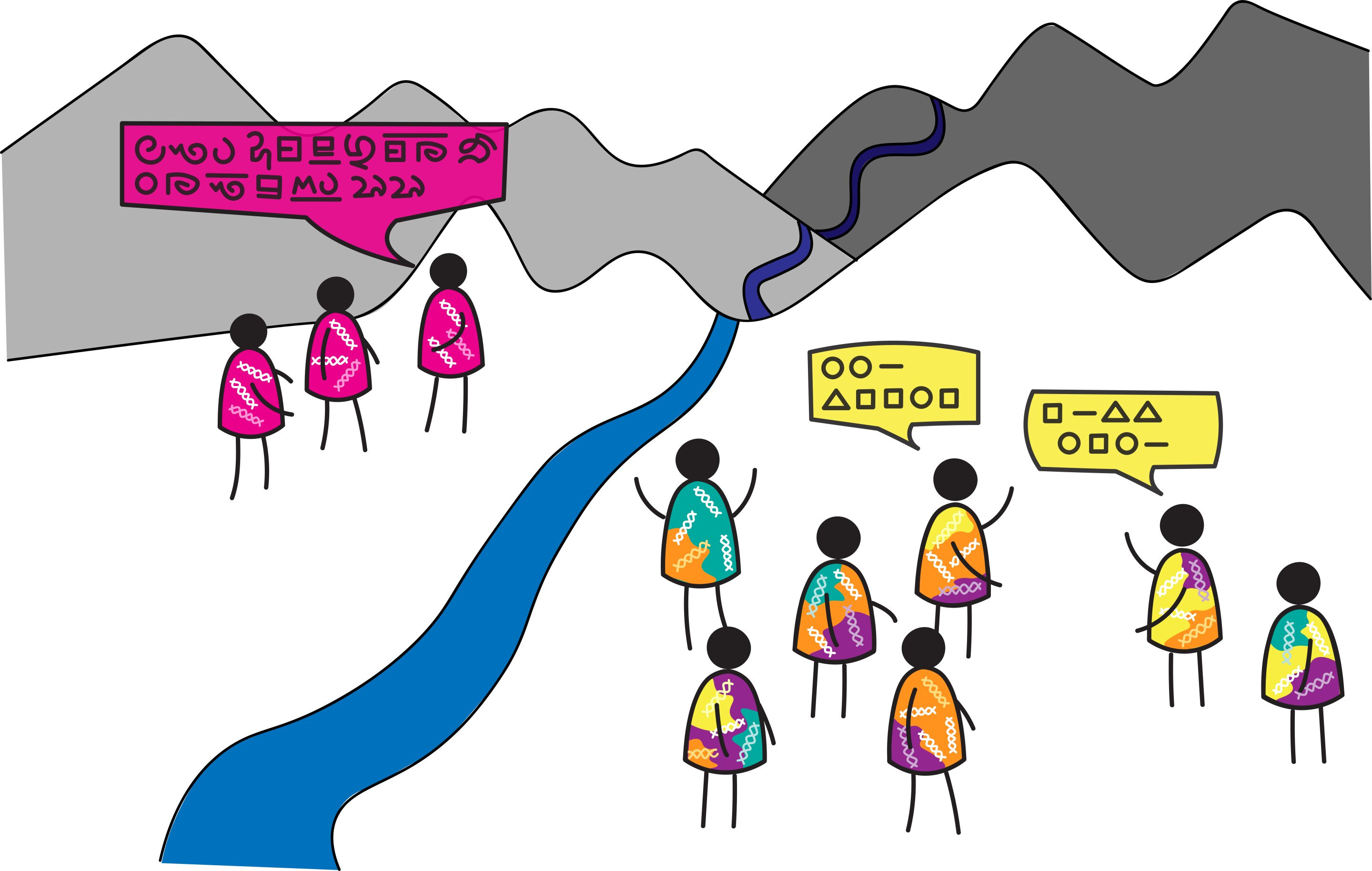
The mechanism isn’t mysterious once you think through what contact and isolation actually do to each system. Contact increases genetic diversity by mixing alleles across previously separate populations. But contact also promotes the spread of structural features across language communities, pulling grammars toward convergence. Isolation does the reverse in both domains: it reduces genetic diversity through drift and inbreeding while allowing languages to diverge from one another freely, accumulating structural differences that contact would otherwise smooth away. What’s surprising is not the logic. It’s how clearly and persistently the pattern shows up in the data.


