
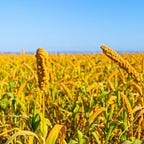
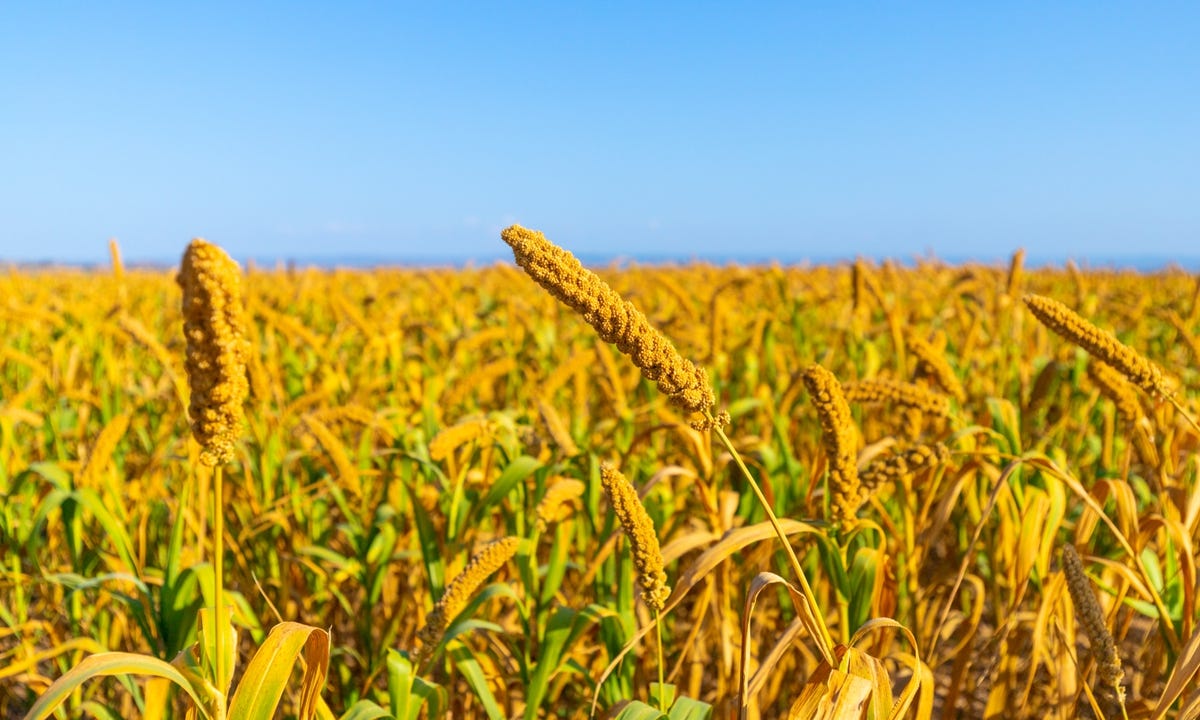
At some point around 8,000 years ago, communities in the Yanshan-Liaoning region of northeastern China were growing millet. The evidence for this is archaeological, drawn from site distributions and archaeobotanical assemblages. What has been harder to explain is why the crop’s range then shifted south over the following centuries, before spreading more broadly across the landscape after about 6,000 years ago. The timing never quite matched what paleoclimate records were showing for precipitation or air temperature. Something else was operating.
A study published in Proceedings of the National Academy of Sciences1 in May 2026 offers a specific candidate: growing-season soil temperature. The research team, led by Yongxiu Lu and colleagues from the Institute of Earth Environment of the Chinese Academy of Sciences, reconstructed a high-resolution soil temperature record spanning roughly 12,300 to 2,800 years ago, derived from biomarker proxies extracted from a loess sequence on the central Chinese Loess Plateau. What they found was not a gradual trend but a pronounced oscillation — and when they laid that oscillation against the archaeological record of millet cultivation, the correspondence was striking enough to reframe the whole question.
The loess section they worked from is called Longgugou. To build a reliable chronology for it, the team combined 14 radiocarbon dates with 18 optically stimulated luminescence dates, giving them a temporal framework precise enough to run meaningful comparisons against archaeological site data. From 114 samples analyzed for biomarkers, they reconstructed both vegetation cover and soil temperature across the Holocene.
The pattern that emerged has three phases. From about 12,300 to 7,500 years ago, growing-season soil temperatures were relatively high, moisture was low, and vegetation was sparse. Then, between 7,500 and 6,000 years ago, soil temperatures dropped by roughly 3 degrees Celsius while conditions became wetter and vegetation cover increased. After 6,000 years ago, temperatures recovered quickly and then held relatively stable for millennia.
Three degrees may not sound like much. But for frost-sensitive crops grown at the edge of their thermal tolerance, that margin matters enormously. Both Panicum miliaceum (broomcorn millet) and Setaria italica (foxtail millet) are sensitive to cold soil conditions, particularly during germination and early growth. A sustained cooling of that magnitude, concentrated in the growing season, would compress the geographic zone where reliable cultivation was possible. The team’s analysis suggests this is exactly what happened.


