

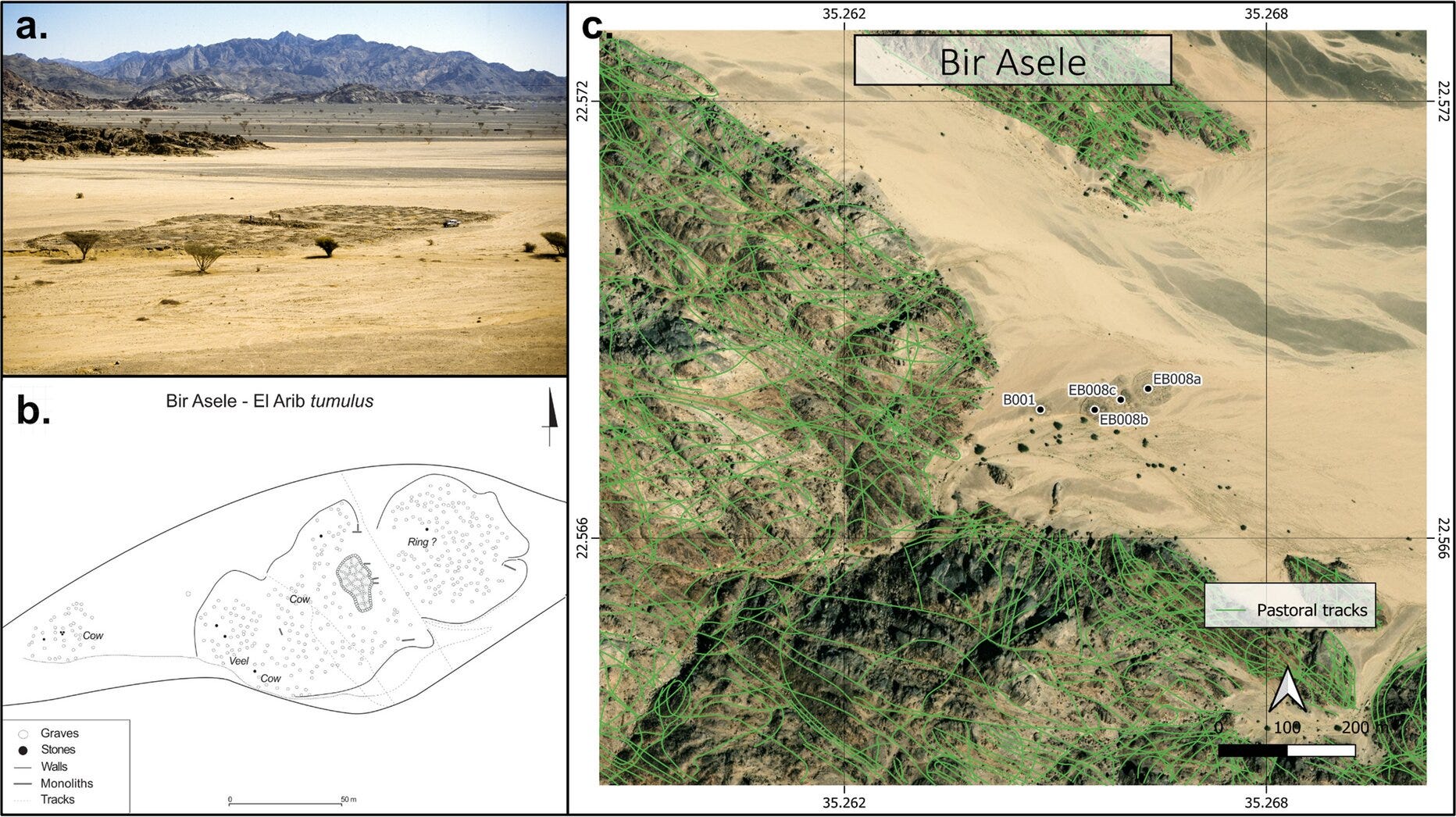
In 1926, a British surveyor named Murray dug into a large circular stone structure at a place called Bir Asele, in what is now disputed territory near the Egyptian-Sudanese border. He went down fifty centimeters and found bones. Not human bones. Cattle. He published a brief note, scratched a plan of the site, and moved on. For nearly a century, the monument sat at the edge of scholarship, noted but unexplained, classified as a curiosity without a context.
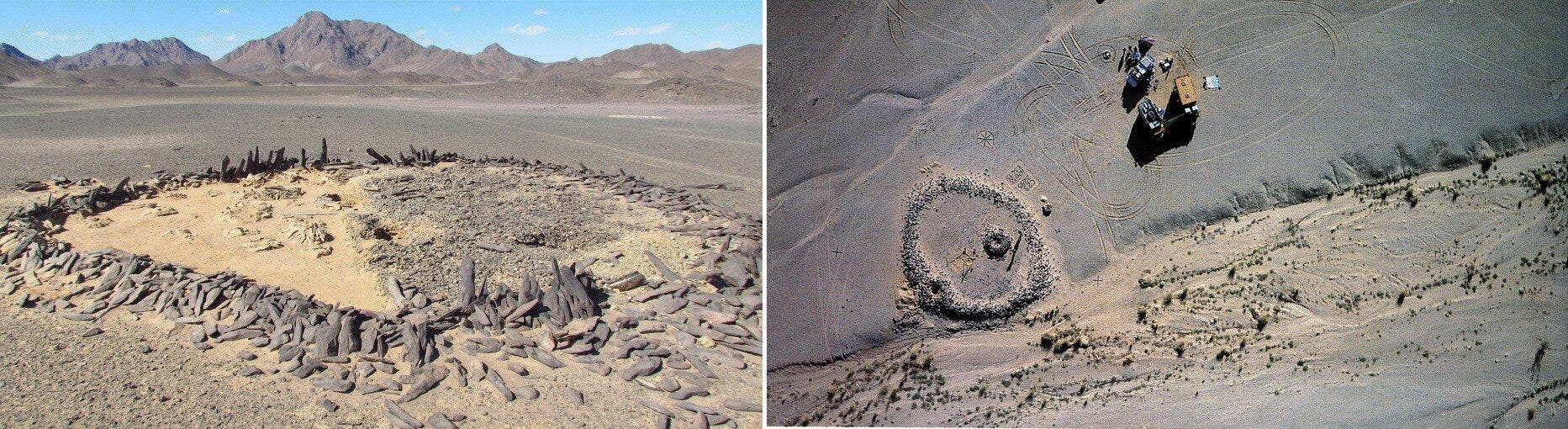
That context has now arrived, though the delivery mechanism is unusual: satellite imagery. A team led by Julien Cooper at Macquarie University, working under the Atbai Survey Project, has spent years scanning the desert between the Nubian Nile and the Red Sea from orbit. What they found, documented in a 2026 paper in African Archaeological Review,1 is a burial tradition of unexpected scale. Across the entire Atbai Desert, from the borderlands of Upper Egypt down to Eritrea, the survey identified 280 circular stone enclosure monuments. Twenty were already on record from earlier fieldwork. The remaining 260 had simply never been seen before.
The desert had been hiding them in plain sight.


