

At Kalambo Falls in Zambia, sometime between 500,000 and 400,000 years ago, someone placed an object in the ground that would survive long enough for archaeologists to find it. It was a bark tray or dish. We do not know exactly what it held. We do not know which hominin made it. The site is associated with the Acheulean, a technological tradition predating Homo sapiens by a wide margin and linked to species like Homo erectus and Homo heidelbergensis. The object appears in a 1958 publication by J. Desmond Clark and has been largely overlooked since.
It is, according to a new database assembled by Jennifer French, Somaye Khaksar, Agustín Fuentes, and Marc Kissel, the oldest known mobile container in the archaeological record.
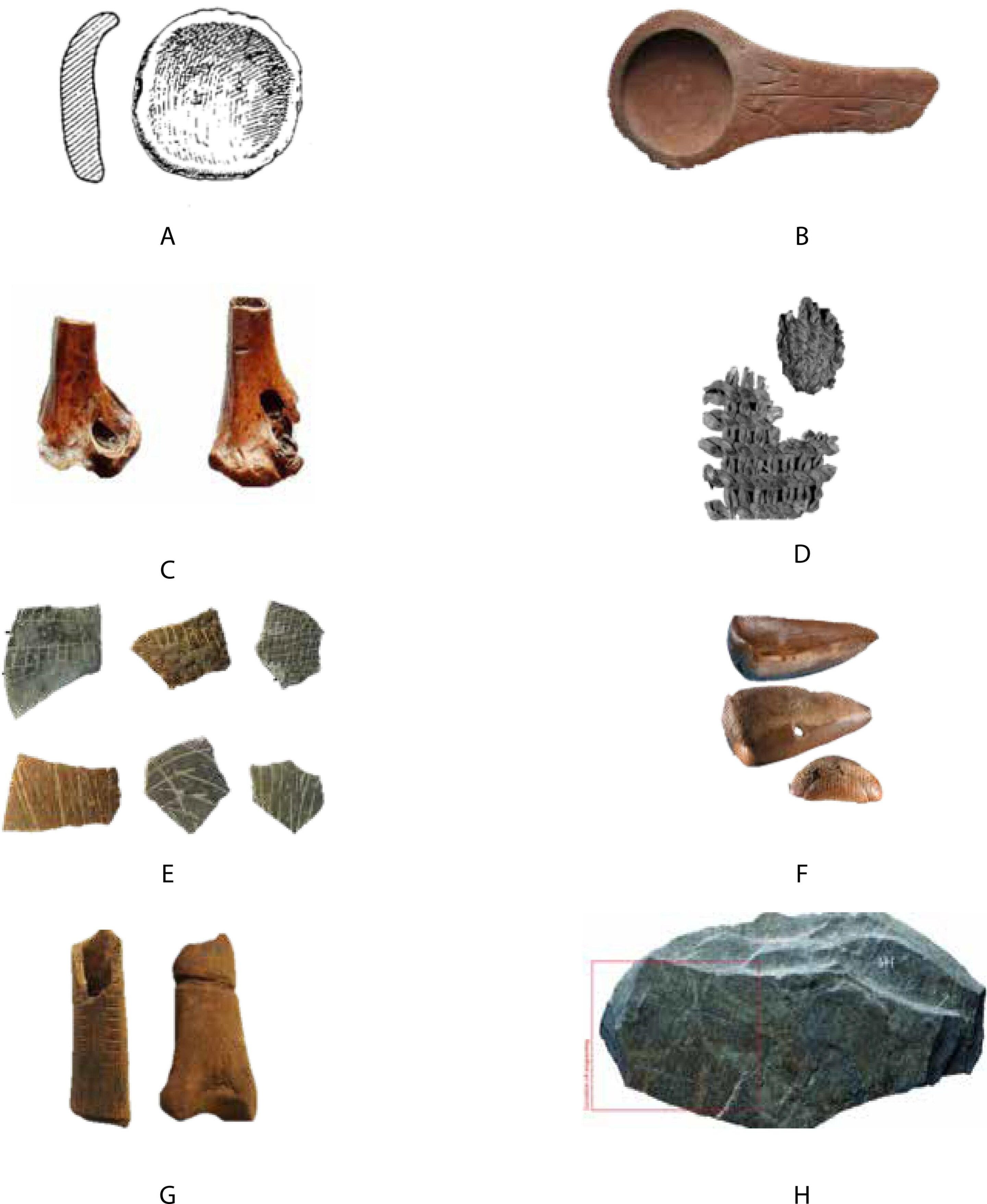
That fact alone is worth sitting with. The bark tray at Kalambo Falls is not a pot. It predates pottery by several hundred thousand years. It is not a bowl from a settled farming village. It is a portable object, made to be carried, by a hominin whose name we may never know, at a time so deep in our evolutionary past that most of what those individuals made, thought, and carried has entirely ceased to exist.
The new database, published in the Journal of Anthropological Archaeology,1 documents 739 Pleistocene mobile containers drawn from 210 sites across Africa, Asia, Europe, and the Americas. The previous published estimate of Pleistocene containers stood at 22. That gap is not primarily a reflection of new discoveries. It is a reflection of what happens when researchers go looking systematically for something that has mostly been ignored.


