

In the spring of 2018, someone doing roadwork near Cañaveral de León in Huelva province turned up a slab of stone with a headdress carved into it. That’s not a dramatic sentence, but it should have been the end of a hundred-year argument. It took until now.
The stone was a “diademated” stela, one of two major categories of decorated standing stones found across southwestern Iberia, the other being “warrior” stelae showing armed figures with weapons and ornaments. Thousands of these monuments exist across the peninsula. Almost none of them have been found where they were originally placed. Most turned up by accident, plucked from fields or walls or foundations, disconnected from whatever context might explain them. So archaeologists have spent decades arguing over what the stones actually did. Mark territory? Honor specific people? Sit above graves? The debate had no way to resolve itself, because the evidence needed to resolve it kept vanishing before anyone could dig around it properly.
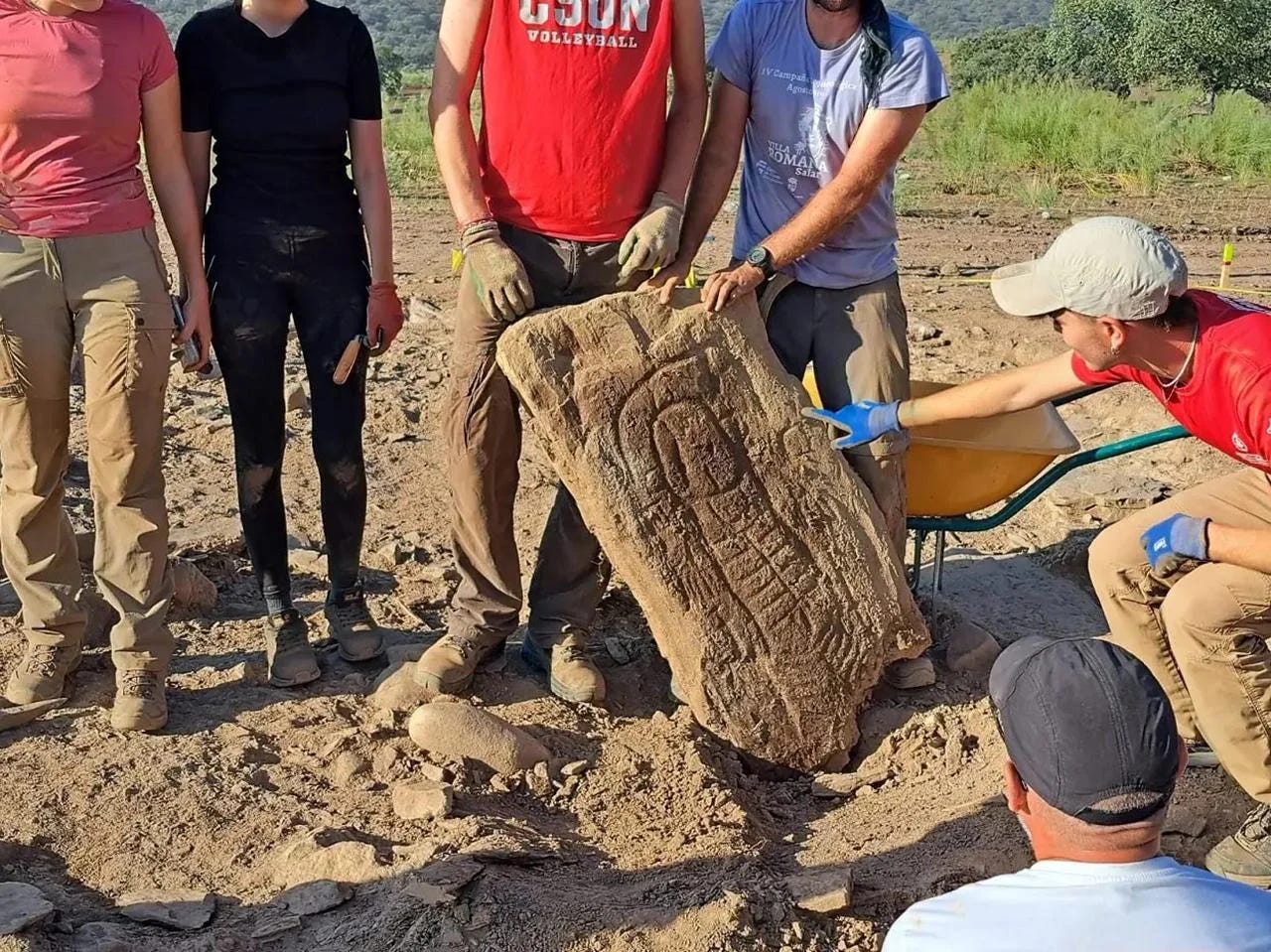
Las Capellanías broke that pattern. A joint team from the universities of Sevilla, Durham, Southampton, Gothenburg, and Huelva returned to the find spot and spent five years working the area: surface surveys from 2019 to 2021, then excavations in 2022 and 2023. They ended1 up with two more stelae, eighteen burial structures, and, crucially, a road.


