

In their 1939 monograph on the Mount Carmel remains, Theodore McCown and Arthur Keith flagged a single bone from Tabun Cave as peculiar. It was the superior pubic ramus, the bar of bone running forward from the hip socket to the joint at the front of the pelvis. In the Tabun individual it was long, startlingly thin, and pinched flat in cross section rather than rounded. Tabun C1 is female, so the reading was obvious enough. A wide birth canal.
Then the same ramus started showing up in males. Shanidar. Amud. La Ferrassie. Krapina. Long, slender, flat. It showed up in Neanderthal juveniles too.
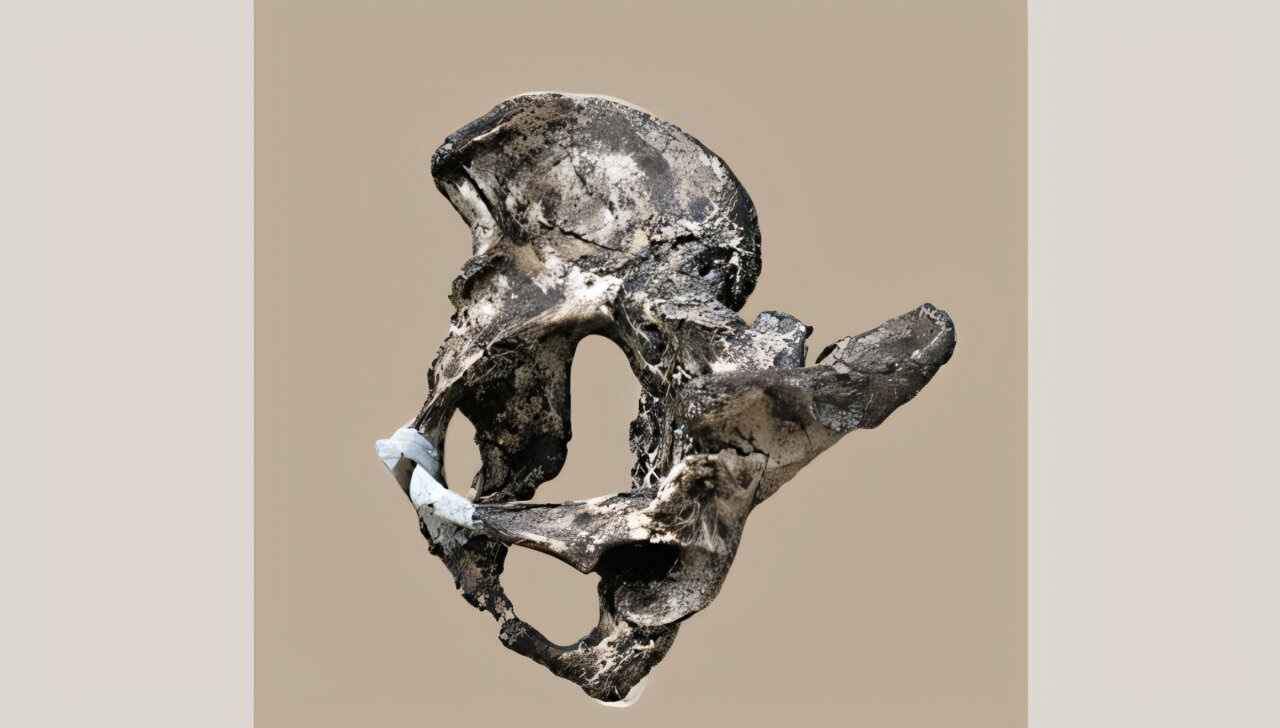
That should have been the moment the obstetric explanation ran into trouble. Instead it got more elaborate. Some researchers argued Neanderthal newborns had unusually large heads and the mothers needed the room. Erik Trinkaus proposed a gestation period longer than ours. A 2004 doctoral dissertation by Mary Black went in a different direction entirely and attributed the long ramus to heavy trunk twisting during hunting. Every one of these hypotheses shared a premise that nobody bothered to state: the Neanderthal pelvis was the strange thing requiring explanation, and the modern male pelvis was the plain, generalized default it should be measured against.
The new paper in Scientific Reports,1 from Yoel Rak, Juan Luis Arsuaga, Assaf Marom, Eli Geffen, Alon Barash, and Ella Been, argues that this premise had the polarity exactly backwards.
Their comparative material is thin, because it has to be. Two nearly complete male pelvises exist for the Neanderthal lineage. Kebara 2, excavated on Mount Carmel in 1983, is a roughly 55,000-year-old male skeleton missing its skull but preserving the pelvis well enough that Rak and Baruch Arensburg could describe a complete pelvic inlet in 1987. The second is Pelvis 1 from Sima de los Huesos at Atapuerca in Spain, published in Nature by Arsuaga and colleagues in 1999, some 430,000 years old, found disarticulated and sexed male on the basis of its robusticity and a very confined greater sciatic notch. Against these two, plus fragments from La Ferrassie 1, the team measured 63 modern male and 28 modern female pelvises.
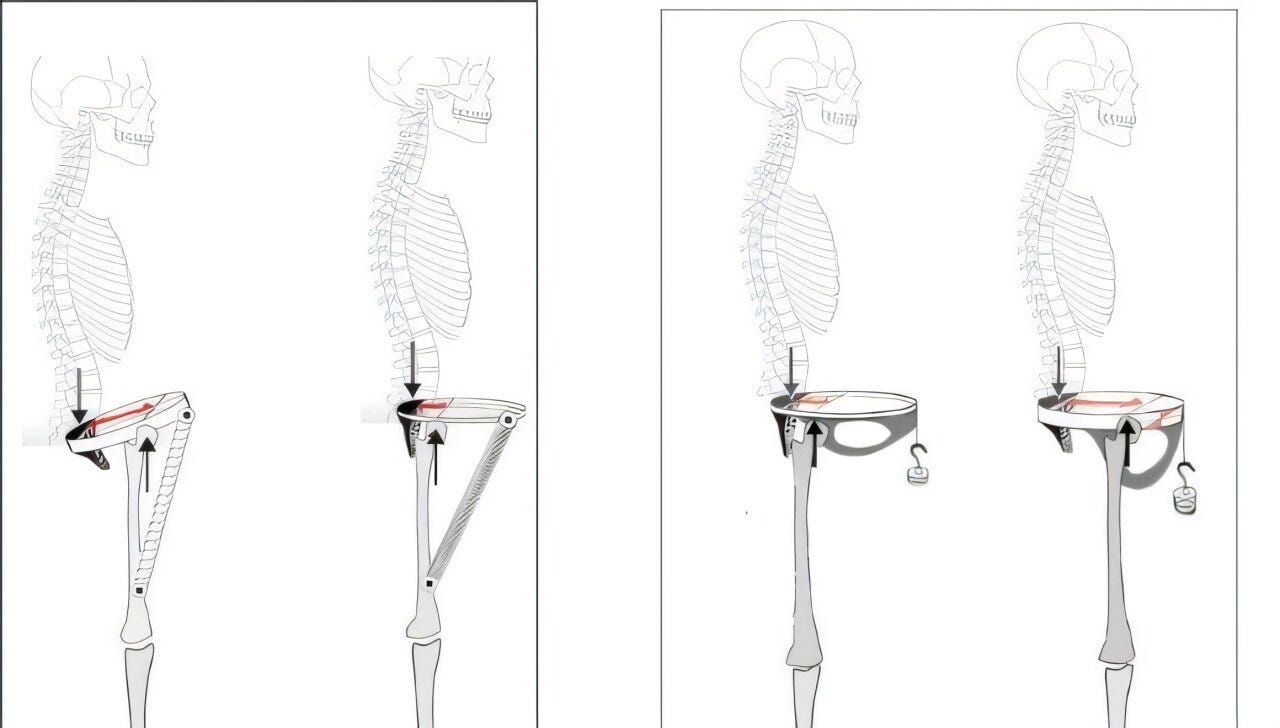
Nine variables, all scaled to the diameter of the hip socket so that Neanderthal bulk wouldn’t swamp the comparison. Then a principal component analysis, then a discriminant function with the two Neanderthals entered as unknowns.
Both were classified as modern human females with probability above 0.99. Their distance to the female centroid came out about half their distance to the male one.


