

For six centuries, there was a hole in the story. Chinese texts from the 10th century A.D. describe brass being made, but nobody had found the workshops. No furnaces, no crucibles, no slag. The physical trail didn’t pick up until the 16th century, leaving archaeologists with written testimony and nothing to back it up.
That gap has now closed, and it closed by nearly 600 years at once.
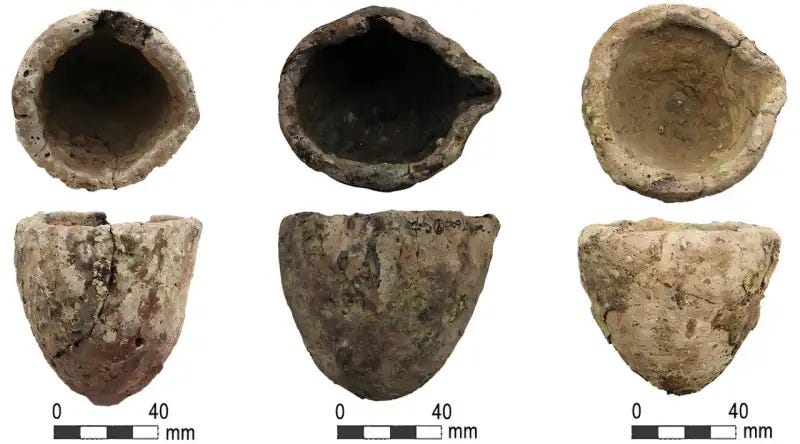
A team led by Hongyan Xiao of Peking University, publishing in Antiquity,1 has identified three crucibles from a metalworking site beneath Guangzhou’s old royal palace that were used to make brass in the 9th to 10th centuries. They are the earliest physical evidence of brass production anywhere in East Asia, and the story they tell doesn’t run through the Silk Road at all.


