
The oldest animal bones at Riwi, a rock shelter on the edge of the Great Sandy Desert in northwestern Australia, record an ancient Australian diet from about 45,000 years ago, and very few of them come from large kangaroos. Of the 447 identified fragments in the earliest time slice, the most numerous are small wallabies, along with lizards and snakes. Large kangaroos become common only after 34 ka (thousand years ago), and between 34 and 30 ka they are the largest single category of identified bone.
That order runs against what archaeologists usually expect of early hunters. The prey choice model, from behavioral ecology, ranks animals by the food they return for the effort of catching them. It predicts that people add smaller, lower-ranked species only when large, high-ranked prey can no longer feed them. A broad diet then reads as a sign of shortage. In 20121 O’Connell and Allen applied this logic to Sahul, the combined landmass of Australia, New Guinea and the Aru Islands, and predicted that diets there stayed narrow until the Holocene.
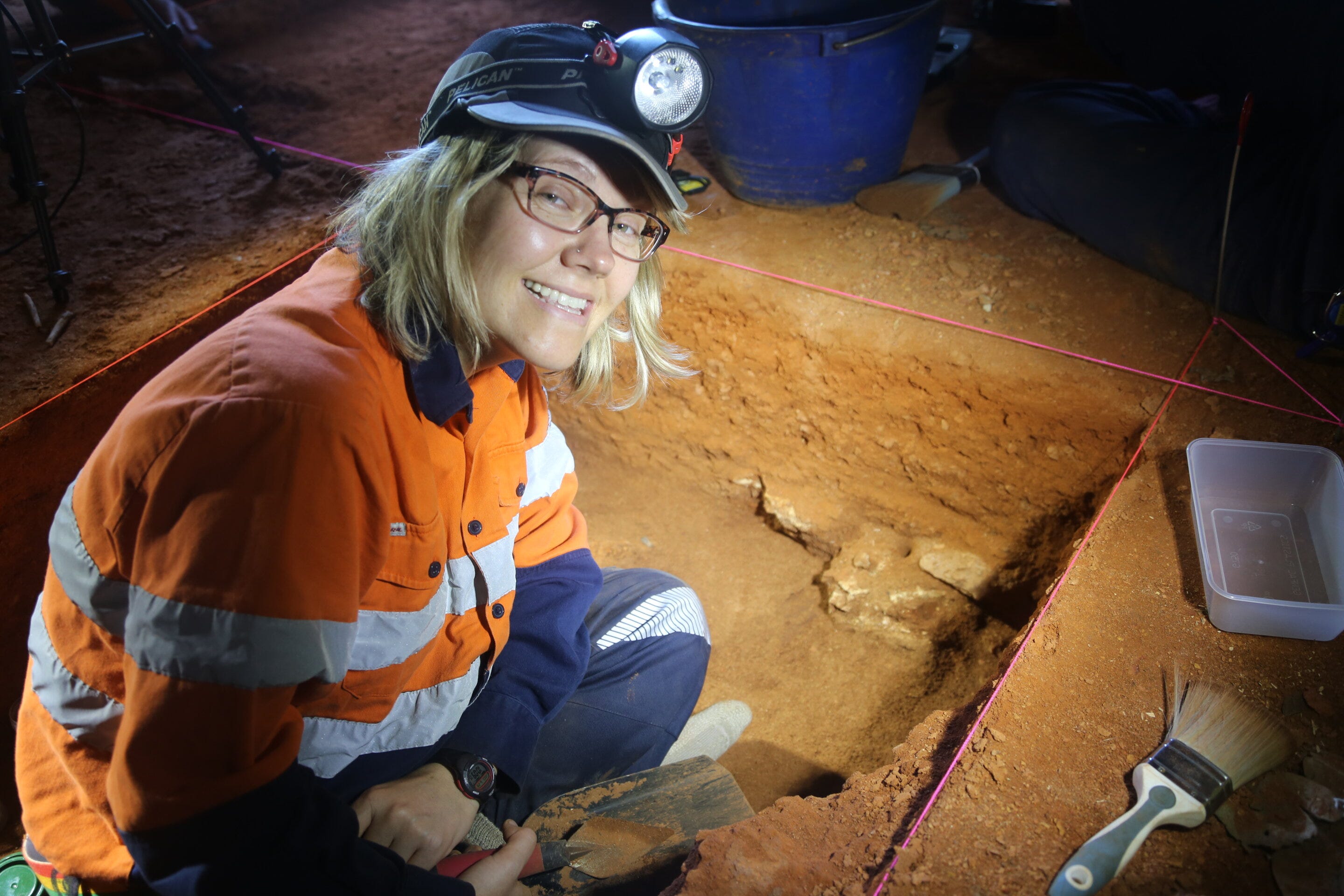
A paper published November 23 in the Proceedings of the National Academy of Sciences2 argues that this expectation fails in arid and semiarid northern Australia. Tiina Manne, an associate professor in the University of Queensland’s School of Social Science, led the study with Erin Mein, Jane Balme, Sue O’Connor, Ken Aplin and Peter Veth. They used 3,250 identified bone specimens from Riwi (1,167) and Boodie Cave on Barrow Island (2,083). The bones show people eating a wide range of animals from first occupation into the Holocene. The authors argue that where rainfall was erratic and hidden prey abundant, a broad diet was the best strategy available and does not indicate scarcity.
I think the first claim, that the diet was broad from the start, is well supported, mainly by Riwi. The second, that breadth meant plenty, is a reasonable argument the bones can’t yet test directly, and the university’s press release treats it as more settled than the paper does.
What did the first people at Riwi and Boodie Cave eat?
The method is zooarchaeology, the identification of animal remains from archaeological deposits. The team matched each fragment against reference skeletons and assigned it to a taxon or, if too broken, to a body-size class (small is under 4 kg, large over 20 kg). The basic count is NISP, the number of identified specimens. Shifts in NISP over time track shifts in hunting only if people, and not natural deaths or other predators, put the bones there, so the team also examined bone surfaces under a microscope for cut marks, burning, fracture patterns and carnivore damage.
Riwi, on Gooniyandi traditional lands, was first occupied around 45 ka, and its fauna is divided into five time slices of very different sizes. The three oldest hold 447, 283 and 321 identified specimens, covering 46 to 30 ka. The slices from the Last Glacial Maximum (the peak of the last glaciation, 25 to 22 ka at Riwi) and the Holocene yield only 60 and 56. Macropods, the kangaroos and wallabies, make up 58 percent of the identified bone.
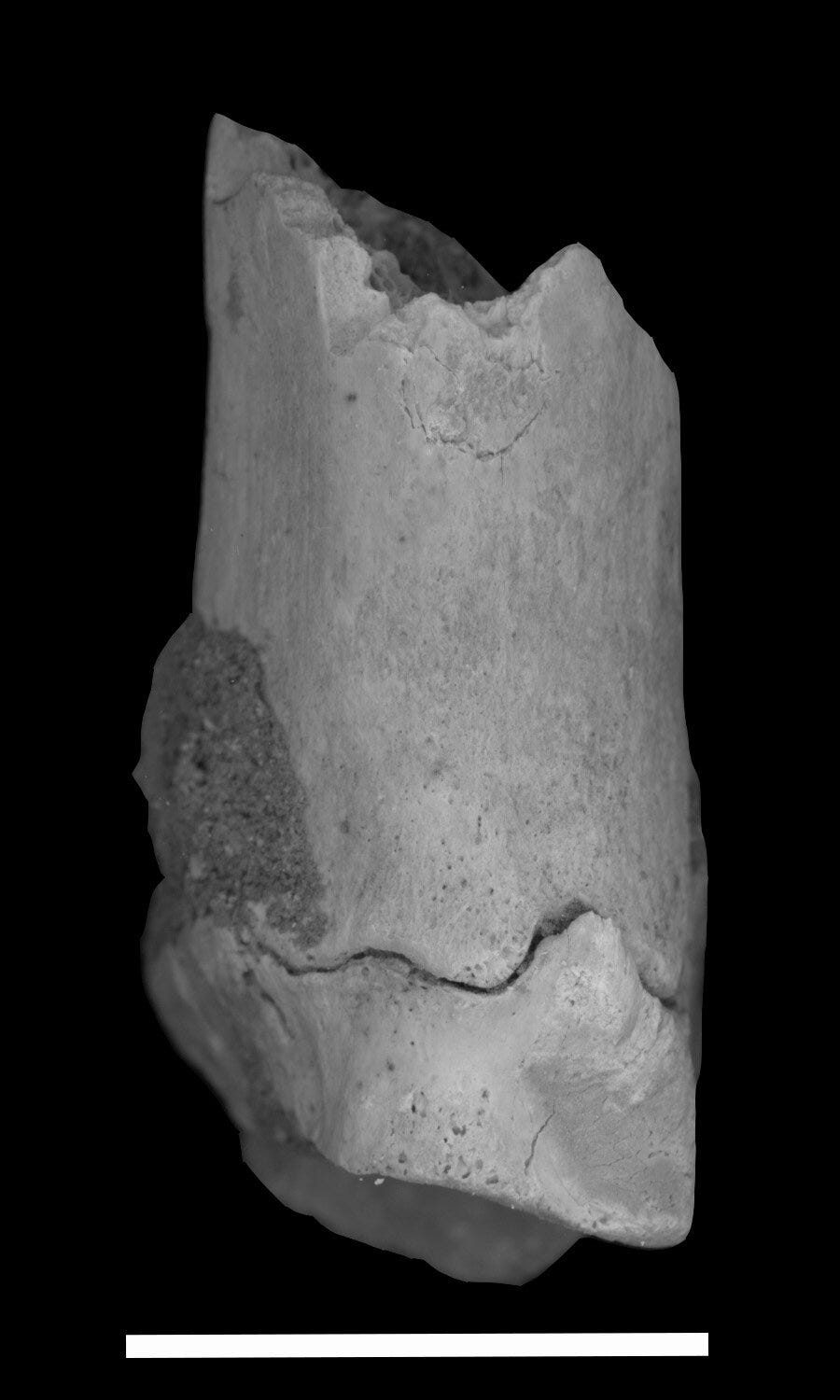
Large kangaroos needed checking, because wallaroos (Osphranter robustus), one of the large kangaroos possibly present, live in rocky hill country and could have died in the shelter on their own. The authors report no macropod bone in the sterile layers (deposits without cultural material) beneath the first occupation. The large-kangaroo teeth from 34 to 30 ka include unerupted and barely worn molars, which argues against death from old age. In that slice, 85 percent of the large-kangaroo bone is burned, with hammerstone percussion marks and breaks made while the bone was fresh. I find that convincing; every line of evidence points to people killing and processing these animals.
Boodie Cave, a large limestone cave on Barrow Island in Thalanyji Country, was first used between 51.1 and 46.2 ka, when the island was part of the mainland’s hinterland ranges. Rising seas cut it off at 8.3 ka, it reached its present outline around 6.8 ka, and the cave was abandoned after that. Its specimens, from at least 26 vertebrate taxa, are spread unevenly through the excavated layers, or stratigraphic units (SU). The oldest, SU7 and SU8 (51.1 to 42.6 ka), hold only a small number of macropod, bandicoot and reptile bones. SU6 (42.6 to 36.6 ka) has 115 identified specimens and SU5 (22.4 to 7.4 ka) has 436. SU3, covering only 7.2 to 6.8 ka, has 1,383, two-thirds of the site’s total.
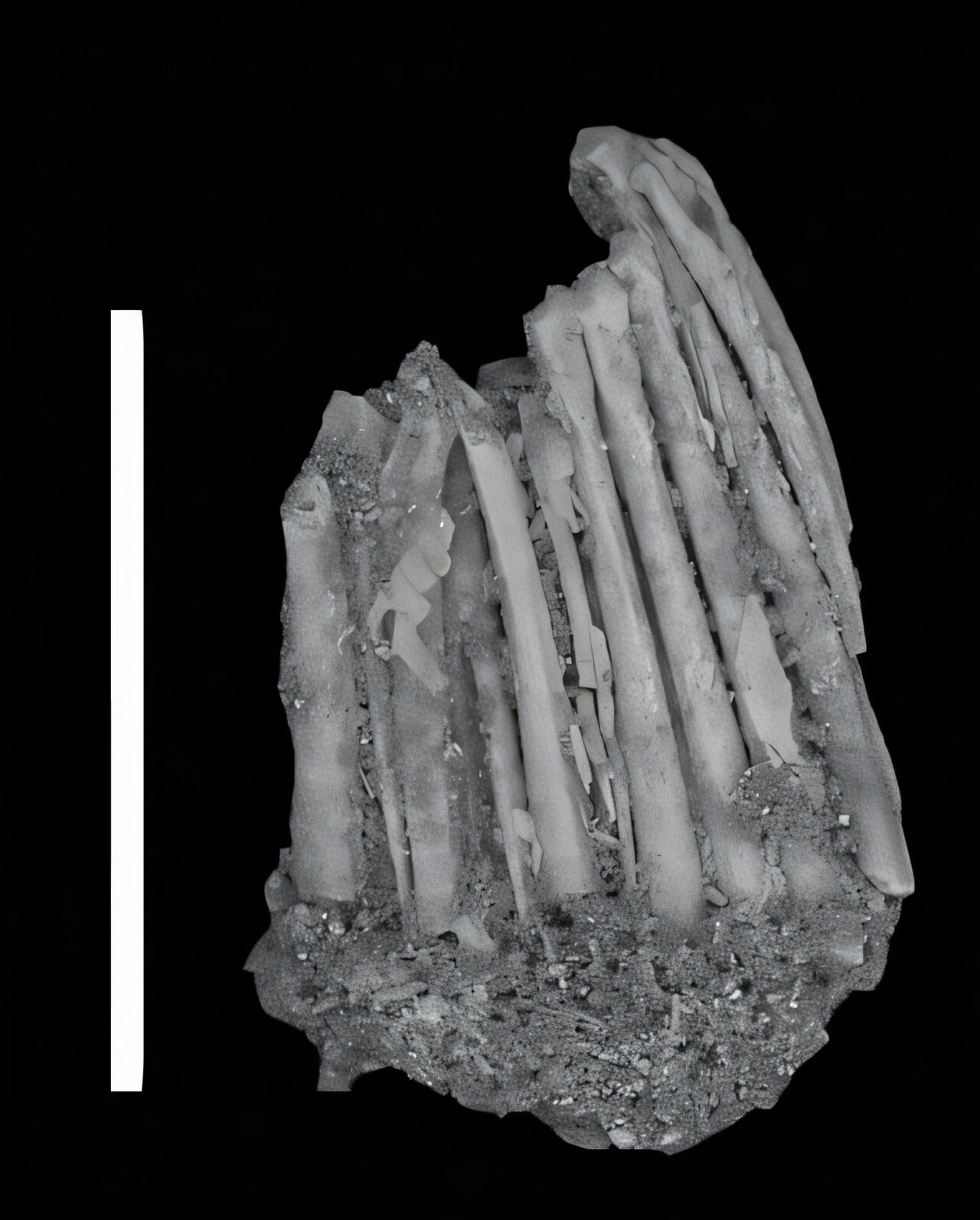
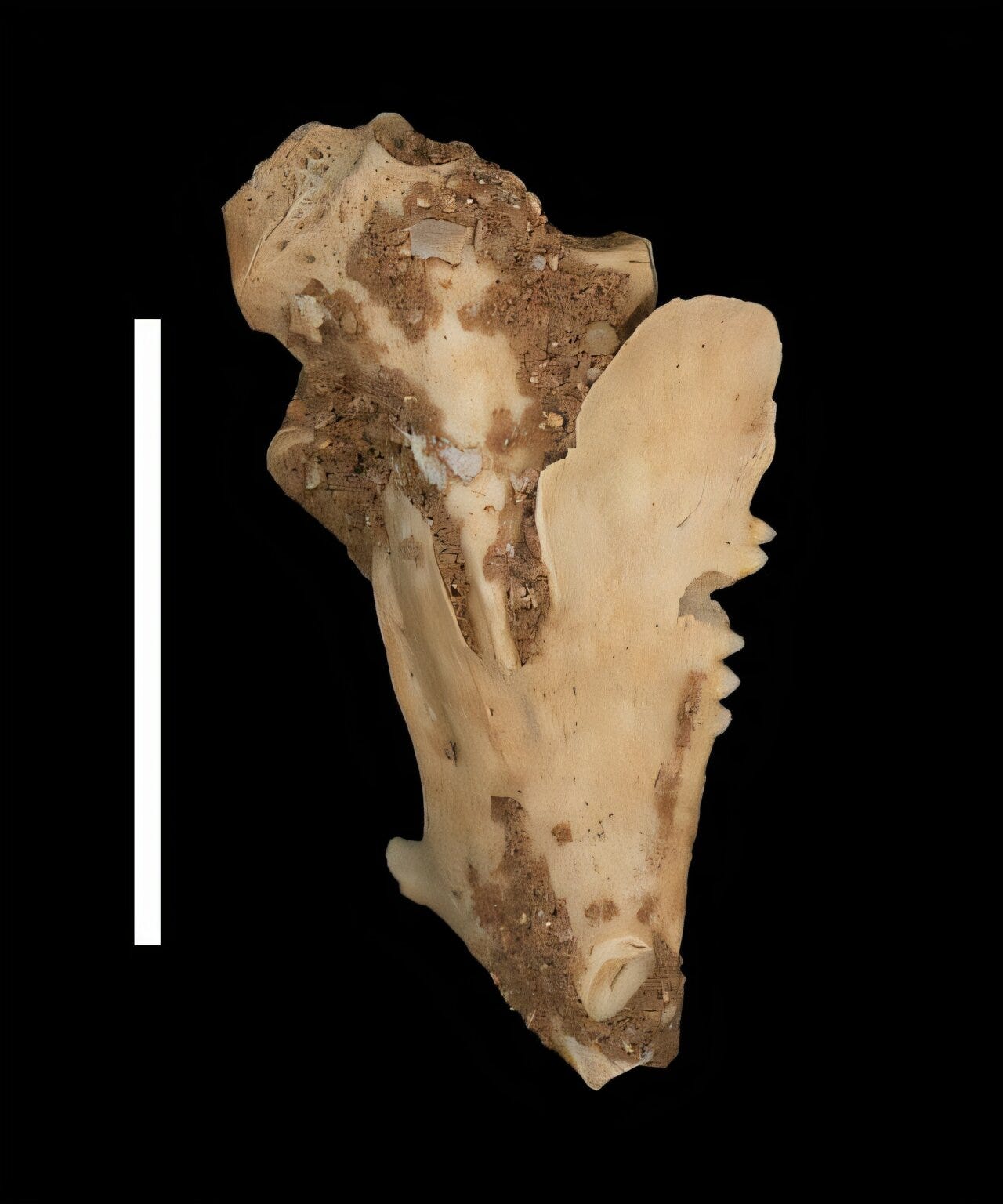
SU3 also holds the evidence the authors lean on most against scarcity: 24 instances of bones still lying in anatomical connection. Ten are fish and twelve are kangaroo and wallaby feet, lower legs or vertebrae, with a turtle and a python accounting for the rest. The authors read these as low-value parts thrown away whole by people able to focus on the meaty portions of many species.
Why would early hunters choose small, hidden prey?
The idea I’d most want readers to take away is crypsis, an animal’s habit of concealing itself from predators. Many of Australia’s small and medium mammals are nocturnal or crepuscular (active at dawn and dusk) and hide in vegetation, burrows or crevices. Hunters usually find a sign before the animal, and the paper gathers examples from ethnographic and contemporary sources. A slight depression or air bubble in dried, cracked mud points to a freshwater turtle, and milky secretions on raised sand along a dune crest point to the desert spadefoot toad. Each sign forces a choice between digging and walking on.
Drawing on foraging studies by Staddon and Gendron (1983)3 and Getty and colleagues (1987),4 the authors point out that cryptic prey reverse the usual expectation. When hidden prey are abundant and diverse, a sign is likely to be real and following it pays, so diet breadth rises. When they are scarce, hunters grow choosier about which signs to chase and the diet narrows.
The second half of the argument is that prey rank moved with the rain. Kangaroo and wallaby meat contains less than 2 percent fat, and wallabies lose fat as conditions dry. Modern golden bandicoots (Isoodon auratus) on Barrow Island shift to termites in dry periods, up to half their diet, and their fat reserves increase. Echidnas, bilbies, bandicoots and many lizards could keep or build fat while herbivores went lean, the authors argue, which raised their value in drought.
Large kangaroos move the other way. Red kangaroos (O. rufus) reach 60 km/h. In Tunbridge’s 19915 record of Adnyamathanha hunting knowledge, hunters avoided saying “Got him!” during a chase because even a wounded kangaroo might escape. Aridity shortens those odds. Kangaroos return to waterholes every four to five days and become more predictable as conditions dry, gathering near water where an ambusher can wait. After rain they fatten on new growth and scatter.
This is the part I find most persuasive, because it explains a specific feature of the Riwi record. The climate evidence the paper cites puts greater humidity at Riwi until about 37 ka and increasing aridity after at least 34 ka, which is when large kangaroos climb. A prey choice model with fixed ranks would have put them at the bottom of the sequence, where they are scarcest. My reservation is that the mechanism comes from present-day ecology and recent ethnography carried back tens of thousands of years, and the bones cannot show how much fat a Pleistocene bandicoot carried.
Does a broad diet mean scarcity?
The case for a broad diet at first settlement rests mostly on Riwi, rightly in my view, since Boodie Cave’s earliest units hold only a small number of bones. The main text also gives no richness or evenness measure of breadth checked against sample size. That matters because taxon counts rise with the number of bones identified, and at Boodie Cave, as the paper notes, sample size and taxonomic richness increase together.
I’m less persuaded by the articulated bones. All 24 come from SU3, a window of about 400 years ending at 6.8 ka. That is roughly 40,000 years after people first used the cave, and after Barrow had become an island. Articulation also depends on bones escaping trampling, and the authors’ proposal that trampling erased earlier examples is plausible but untested. The paper doesn’t connect SU3 to the abandonment of the cave that followed, and that is what I’d most want explained.
The kangaroo argument also rests on one site. Boodie Cave has no reported fauna between 36.6 and 22.4 ka, the dry interval where the argument should apply. The column for large macropods in its panel of the paper’s Figure 3 is also empty in every plotted period, which the paper doesn’t discuss. At Riwi the increase sits in one slice of 321 specimens. The authors note that Australia’s recent mammal extinctions obscure how these animals once behaved.
The university’s press release goes further than the paper. It has Manne saying that people at Riwi 45,000 years ago ate echidna and flying fox. The paper reports echidna at Riwi only from Last Glacial Maximum and Holocene deposits, and its main text never mentions flying fox. Manne said in the statement that on Barrow Island, “which was then connected to the mainland,” articulated bones suggest people ate only the most nutritious parts. Those bones date to after Barrow became an island. She added, “This isn’t the behavior of people short of food,” where the paper says only that it “seems” people could focus on meaty portions. The release also says the data “firmly support” First Nations accounts of seasonal calendars. The paper analyzes no seasonal evidence, and its time slices span 400 to 15,000 years.
My verdict is that the paper is convincing on the pattern and partly convincing on the explanation. Riwi’s earliest 447 specimens make a good case that people in the arid northwest ate widely from first settlement. So do the mixed early assemblages the paper cites from Widgingarri Shelter 1 (49.5 ka) and Carpenters Gap 1 (47 ka). That is hard to square with O’Connell and Allen’s narrow-diet prediction, and I’d call it a revision of the standard model for this region. I’m least convinced by the authors’ further suggestion that the search for fresh prey was unlikely to have driven people across Australia, because two northwestern sites are a narrow base for a continental claim.
Two kinds of evidence would settle most of this. One is a sample-size-controlled measure of diet breadth for each Riwi and Boodie Cave time slice, which would show whether the earliest assemblages are broad or merely small. The other is a second site for the kangaroo prediction. The obvious one is Carpenters Gap 1, which the authors note remains to be fully analyzed. Suppose its deposits span the dry interval after about 35 ka and the rainfall argument is right. Then its large kangaroo bones should become more common in those layers, as they do at Riwi.
O’Connell, J. F., & Allen, J. (2012). The restaurant at the end of the universe: Modelling the colonisation of Sahul. Australian Archaeology, 74, 5–31.
Manne, T., Mein, E., Balme, J., O’Connor, S., Aplin, K., & Veth, P. (2026). Rethinking broad diet breadth as a sign of scarcity: A 50,000-y record of subsistence from northwestern Australia. Proceedings of the National Academy of Sciences, 123(48), e2619837123. https://doi.org/10.1073/pnas.2619837123
Staddon, J. E. R., & Gendron, R. P. (1983). Optimal detection of cryptic prey may lead to predator switching. The American Naturalist, 122, 843–848.
Getty, T., Kamil, A. C., & Real, P. G. (1987). Signal detection theory and foraging for cryptic or mimetic prey. In A. C. Kamil, J. R. Krebs, & H. R. Pulliam (Eds.), Foraging Behavior (pp. 525–548). Springer US.
Tunbridge, D. (1991). The Story of the Flinders Ranges Mammals. Kangaroo Press.


