
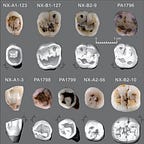
PA1799 is a lower premolar from Baxian Cave, about 20 kilometers north of Chongzuo in Guangxi, southern China. More of the new case for late Homo erectus on the Asian mainland rests on this tooth than on any other fossil. Its enamel still holds proteins. Fragments of amelogenin-Y, a protein made from a gene on the Y chromosome, show that it came from a male. It also carries a single amino acid substitution in ameloblastin, another enamel protein, and that variant has so far been found only in Chinese H. erectus. The tooth itself was dated to 213 ± 18 thousand years. The strontium in its enamel was laid down in early childhood, and it varies across a range that the authors read as time spent far from the cave, possibly in northern Vietnam.
A tooth like this doesn’t fit the account the field has worked with. Before these papers, no securely dated H. erectus fossil from mainland Asia was younger than about 400,000 years. The species’ last known population lived at Ngandong on Java in fairly open woodland. Rizal and colleagues dated1 it to between 117,000 and 108,000 years ago, and the spread of closed-canopy forest has been proposed as one reason the species disappeared there. In that account, Homo sapiens was the only human species that used rainforest regularly.
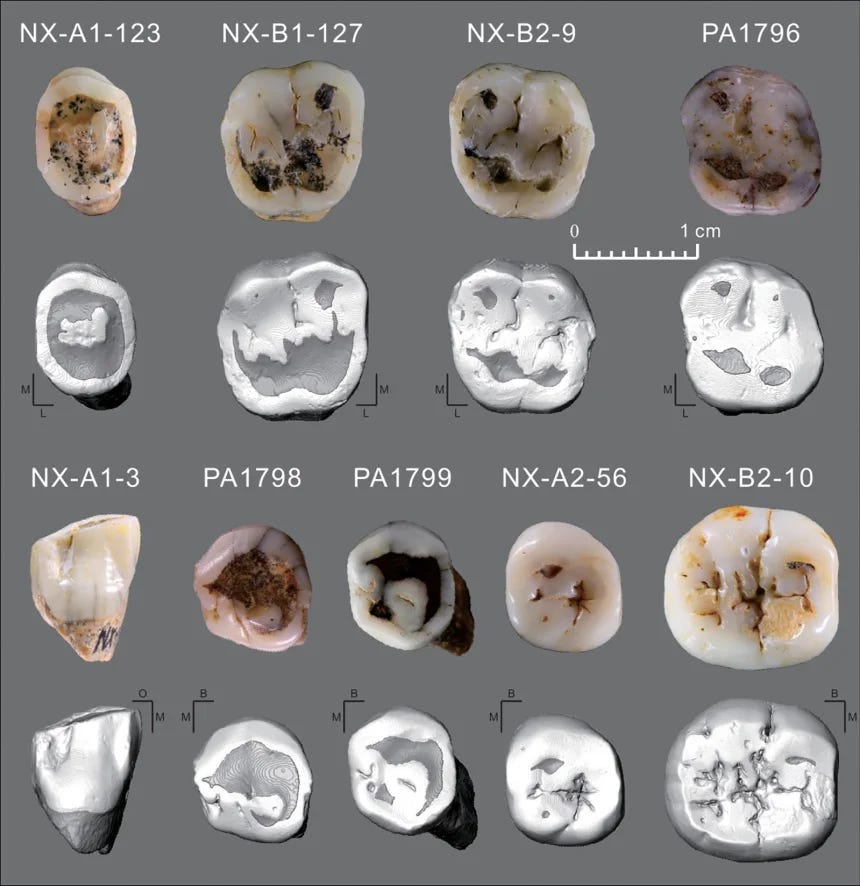
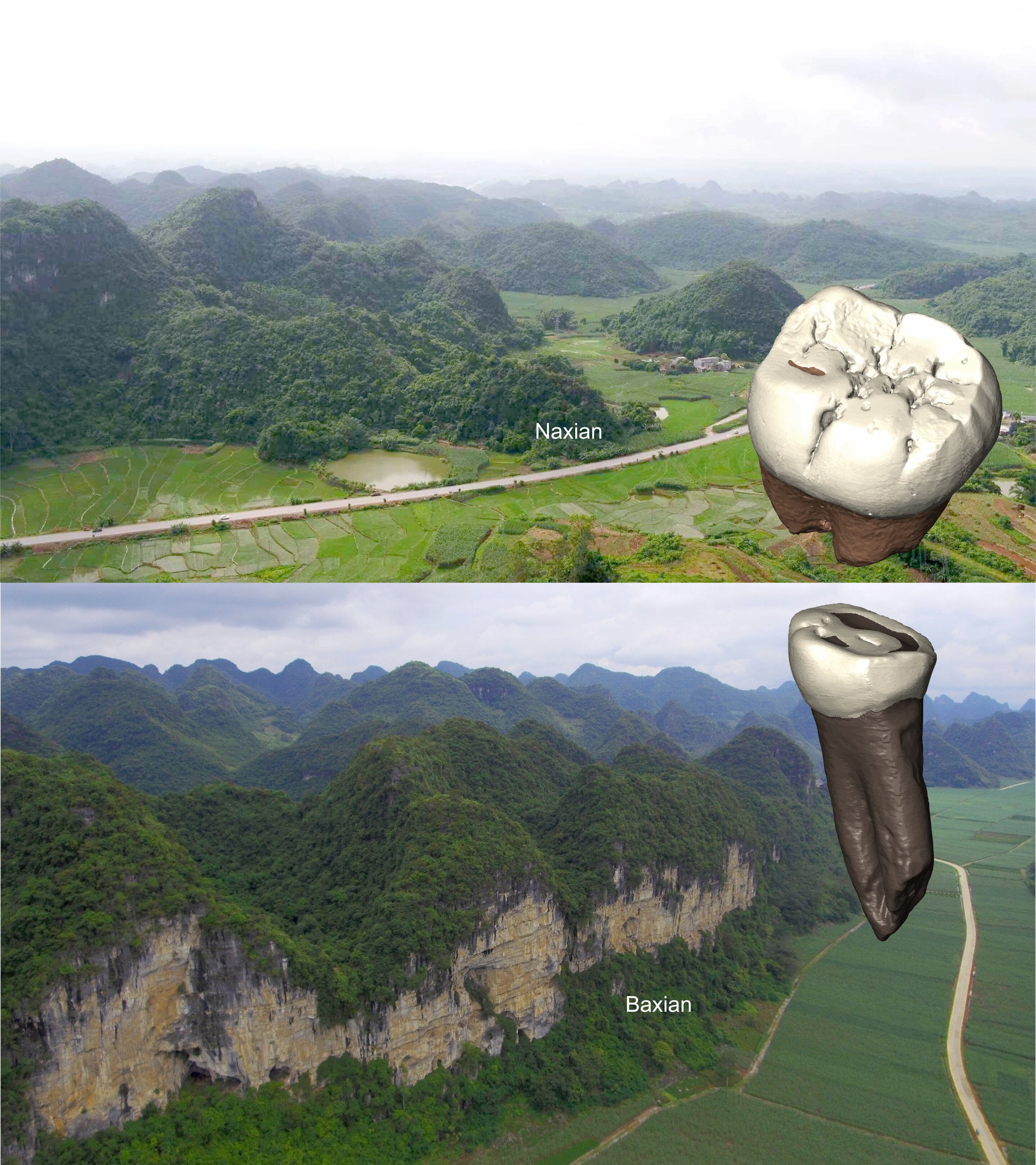
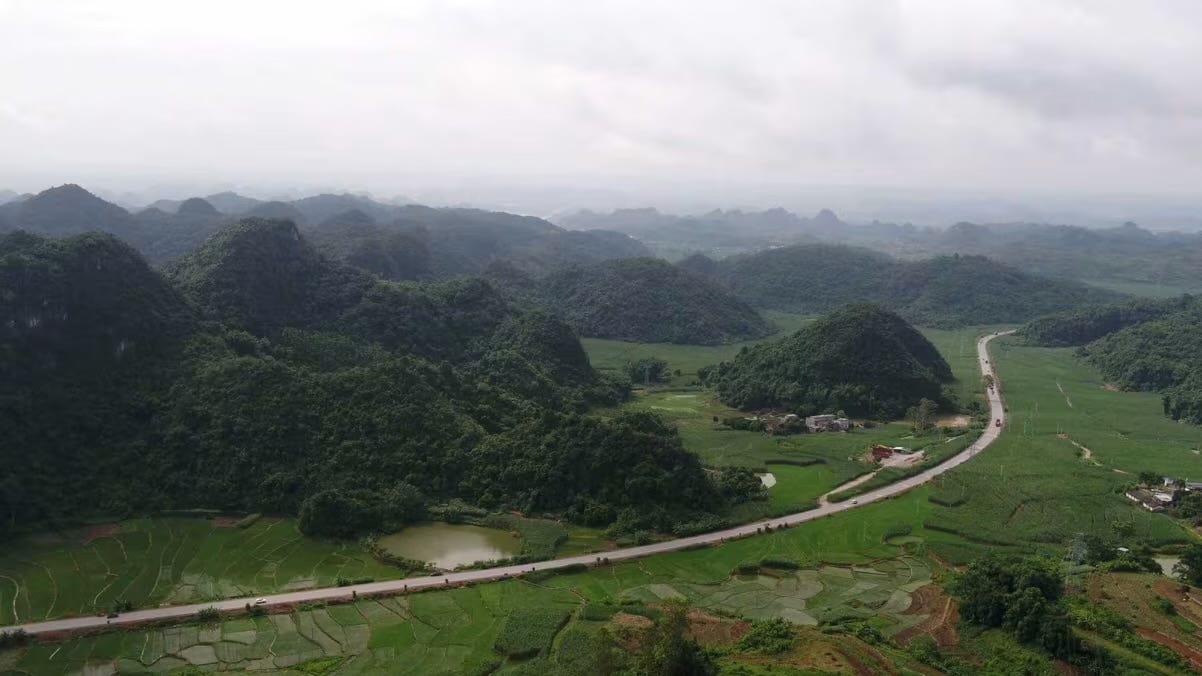
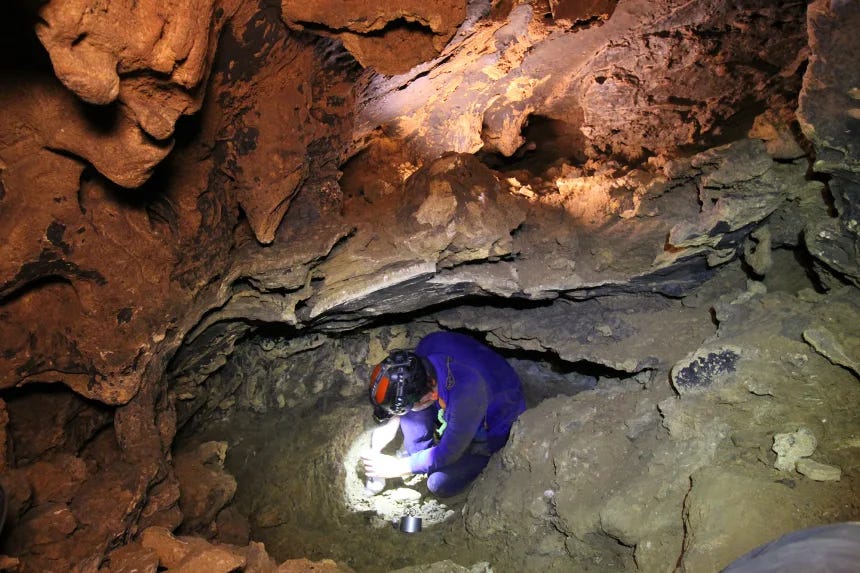
The evidence comes from two companion papers in Nature. Wei Liao of Shandong University and colleagues describe2 nine hominin teeth from Baxian and from Naxian Cave, which lies 15 kilometers away in the same karst valley. They identify eight of the teeth as H. erectus by tooth shape, and for four of those, by proteins as well. In the second paper,3 Kira Westaway of Macquarie University, Renaud Joannes-Boyau of Southern Cross University, Liao and colleagues date the deposits and reconstruct the environment. Together the papers place H. erectus in this valley at some point between 324,000 and 184,000 years ago, living among forest animals. They also show that four of the teeth carry a protein sequence that no earlier H. erectus sample has.
The ninth tooth adds a second problem. PA1796, an upper second molar from Baxian, does not fit comfortably with H. erectus, Neanderthals or modern humans, and it lacks the H. erectus protein marker. Liao’s team suggests it may belong to Denisovans (Homo longi) or to another population. If so, two hominin lineages lived in this valley late in the Middle Pleistocene.
How were the Guangxi Homo erectus teeth dated and identified?
The dating is the most solid part of the package. Westaway’s team modelled 43 radiometric ages from five methods. Luminescence dating of feldspar and quartz grains measures how long ago the sediment was last exposed to light. Uranium-series dating measures uranium decaying into thorium. Teeth absorb uranium after burial, so on a tooth this method gives only a minimum age. Pairing it with electron spin resonance, which measures the radiation damage that builds up in enamel, lets the team model when the uranium entered the tooth.
The two caves were dated differently, and that matters. At Naxian the six hominin teeth have only uranium-series minimum ages, about 97,000 to 172,000 years. So the team bracketed the breccia around them. Soda straws (thin stalactites) inside the breccia set a maximum age, and the flowstone capping it sets a minimum, which gives 319,000 to 241,000 years ago. At Baxian, PA1799 and an orangutan (Pongo) tooth were dated with the paired method, and the Bayesian model puts the fossils between 324,000 and 184,000 years ago. I give more weight to Baxian, because a hominin tooth there was dated directly. The Naxian teeth take their age from the sediment around them, which is safe only if none of them were washed in from older deposits.
The first of the two identification methods is shape. Micro-CT scans showed the enamel-dentine junction, the buried surface under the enamel cap. Its shape differs between hominin species, and in H. erectus it has a distinctive wrinkled, branching pattern. The team compared the teeth statistically with African and Asian H. erectus, Neanderthals and modern humans. Seven of the teeth classified clearly as H. erectus. An eighth, NX-A2-56, was an outlier to every group, but its other features look most like earlier Chinese H. erectus.
Proteins are the second method, and I expect them to matter most. Genes set the order of amino acids in a protein, so a change in a protein records a change in DNA. All five teeth sampled yielded original enamel proteins, with 556 to 808 amino acid positions read per tooth. Four of them carry glycine instead of alanine at position 253 of ameloblastin. That substitution is missing from the Neanderthal and Denisovan genomes and from great apes. It is also missing from 1,461,678 living people in the gnomAD database and from a H. erectus tooth about 1.77 million years old from Dmanisi, Georgia. The only other place it has turned up is six Chinese H. erectus teeth about 400,000 years old, from Zhoukoudian, Sunjiadong and Hexian, reported4 earlier this year by Fu and colleagues.
Those six older teeth also carry valine at position 273 of the same protein, as does the one high-coverage Denisovan genome. The four Guangxi teeth instead carry methionine there, the older form. A phylogenetic analysis puts the Guangxi teeth on their own branch beside the older six. The authors conclude that they come from a H. erectus population no one had sampled molecularly before. The two Naxian upper first molars may be a left-right pair from one person, so the four H. erectus teeth with proteins represent at least three individuals, one of them female.
Did Homo erectus live in rainforests?
The case for rainforest rests mostly on the animals. The breccias yielded more than 18,000 mammal fossils. Forest-dwelling species dominate, including orangutans, Asian elephants, tapirs and the extinct Stegodon. Carbon isotopes help here, because plants under a dense canopy are low in carbon-13 and plant-eaters carry that signal into their enamel. Converted to plant-equivalent values, the Naxian animals average −29.4‰, well under the paper’s dense-canopy threshold of −27.5‰. Neither cave shows any sign of C4 grasses. Baxian averages −27.6‰, only 0.1‰ below the threshold, and some animals there reach −23.0‰. The paper says both groups of animals are well below the line. I’d accept that for Naxian, but I read Baxian as forest with open patches nearby.
The evidence from the hominins themselves is much thinner. Only three H. erectus teeth were measured for carbon, all from Naxian. The paper plots them at the boundary between dense-canopy forest and more open C3 vegetation, and it acknowledges that the sample is small. In the press release, Patrick Roberts, a professor at the Max Planck Institute of Geoanthropology in Germany and a co-author, called this “the first clear, direct evidence we have for another hominin living within these habitats.” The Westaway paper states the finding in two ways. In one paragraph it calls the evidence for rainforest use unequivocal. In the next, it describes H. erectus as “at minimum, capable of persisting among rainforest fauna.” I’d stand behind the second version. Three carbon values at the edge of the canopy tell us about diet, and they can’t show that closed forest was where these people lived.
The setting adds two more cautions. Westaway and colleagues write that porcupines first gathered the bones into the caves, and neither paper describes stone tools. So these are hominin teeth in a bone collection, with no sign of a place where people lived. The Baxian age range is also 140,000 years wide, so nothing guarantees that the animals sampled for isotopes lived at the same time as any particular hominin.
What the Guangxi teeth can’t tell us yet
The mobility claim is the weakest part of the package. The ratio of strontium-87 to strontium-86 in enamel reflects the rock under the food and water a child took in while the tooth formed, between about ages two and six. The paper’s strontium map predicts values of 0.710 to 0.715 for the local limestone. The three Naxian teeth peak at 0.7165 or lower, and only PA1799 reaches 0.7220.
The paper’s estimate of a range of about 250 kilometers, toward the Red River valley in northern Vietnam, comes from a map for the most distant signal. That map is drawn for a value of 0.724, which is higher than any value the paper reports for any tooth. The paper’s own text also puts values of 0.717 to 0.723 in the mountains west and northwest of the caves, and 0.715 to 0.720 in the Red River valley. So a reading of 0.722 fits the western uplands at least as well as Vietnam. The map’s prediction errors run from 0.004 to 0.016, as large as the differences being interpreted. The authors also offer another explanation: the child may have eaten food from several places without travelling. The release never mentions that the most distant signal comes from a single tooth.
PA1796 is the other open question, and the release, which describes only eight teeth, leaves it out. Its enamel-dentine junction fits H. erectus only at the far edge of the range (P = 0.068). Its taller dentine horns and unwrinkled basins point away from that species. It also lacks the glycine at position 253, and it shares no derived substitution with the reference Neanderthals, Denisovans or modern humans. I read the Denisovan suggestion as plausible but unproven, because so far every line of evidence tells us only what the tooth is not. The authors note that only one high-coverage Denisovan genome exists for comparison. They think it unlikely that the tooth belongs to an unrecognized H. erectus group, but they can’t rule that out.
Other statements need correcting. The release says the work shows beyond doubt that H. erectus was in southern China between 324,000 and 184,000 years ago. The paper gives a 95 percent probability that the species was there at some point in that window. The release also credits ancient genetic signatures, but the molecular evidence is protein, and only four of the eight teeth have it. The Westaway paper claims the mainland record now reaches more than 200,000 years past Hexian, which is dated to about 410,000 years. That figure uses the young end of the range. From the old end, the extension is about 86,000 years.
How convincing is the case for late Homo erectus in China?
I’m convinced that H. erectus was in southern China after 400,000 years ago, because a hominin tooth at Baxian was dated directly and five independent methods agree within their margins of error. I’m also persuaded that these teeth come from a different population from the one at Zhoukoudian and Hexian, though that case rests on two positions in one protein. The rainforest claim is partly convincing. The animals show a forested region, and three hominin teeth show that those individuals got their food within it. But adaptation to closed forest has not been shown, and the 250-kilometer childhood rests on one premolar.
Two tests would move this forward. The first is carbon isotopes from the two Baxian H. erectus teeth, PA1798 and PA1799. They would raise the hominin sample from three to five and test the forest signal at the cave with the more open mix of animals. The second test is the one Liao’s team proposes. Fossils attributed to H. erectus from Changyang Cave in Hubei and Chaoxian Cave in Anhui come from layers with only minimum ages, 196,000–143,000 and 200,000–160,000 years. Their teeth could be sampled at the same two ameloblastin positions. Glycine with methionine would mean the population first found in Guangxi reached central and eastern China. Glycine with valine would place those fossils with the older population of Zhoukoudian and Hexian, and Guangxi would stand as a separate southern group. The Naxian teeth gave usable proteins from no more than 6 milligrams of enamel each.
Rizal, Y. et al. Last appearance of Homo erectus at Ngandong, Java, 117,000–108,000 years ago. Nature 577, 381–385 (2020).
Liao, W., Zanolli, C., Ásmundsdóttir, R. D. et al. Evidence for late Middle Pleistocene Homo erectus in mainland East Asia. Nature (2026). https://doi.org/10.1038/s41586-026-11271-3
Westaway, K. E., Joannes-Boyau, R., Liao, W. et al. Rainforest adaptation in late Homo erectus from southern China. Nature (2026). https://doi.org/10.1038/s41586-026-11155-6
Fu, Q. et al. Enamel proteins from six Homo erectus specimens across China. Nature 655, 141–147 (2026).


