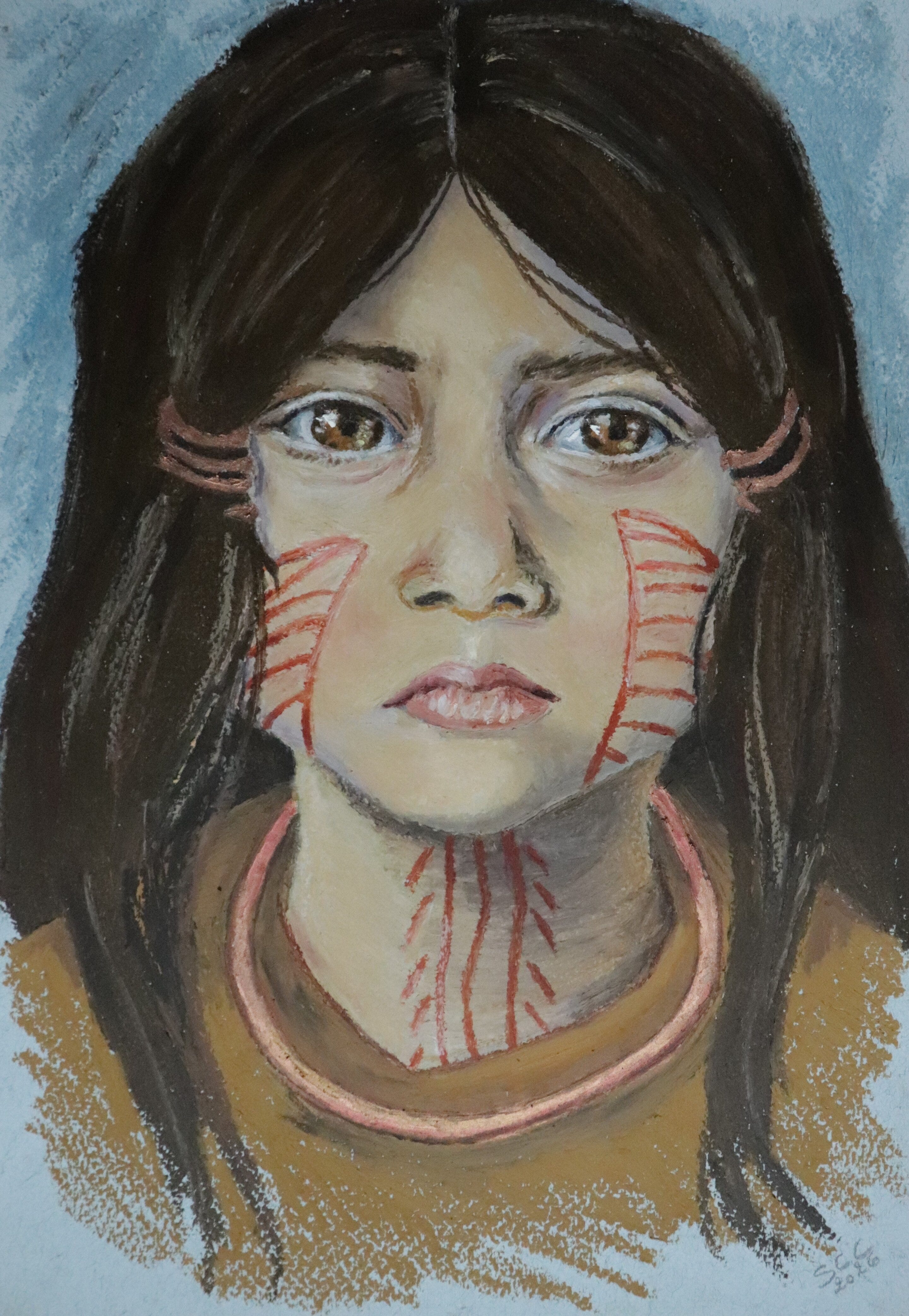
Two mature men buried at Vliněves, a Corded Ware culture cemetery in Bohemia, were father and son, according to ancient DNA published in 2021, and both carried the same paternal lineage, Y-chromosome haplogroup R1b-L151. They lie on opposite sides of the cemetery. One was buried with a blade and a scraper of imported Baltic flint, and his skeleton shows no recorded injury or disease. The other got no grave goods. His bones show a healed fracture of the right forearm, slight arthritic changes in the right arm and a knee, and cribra orbitalia, a pitting of the eye-socket roofs that bioarchaeologists read as a sign of stress early in life.
One family proves little, and these two are the only close relatives the genetic data identified in a new study of Corded Ware wealth. I still find them a good place to start, because their burials sit badly with a common picture of the herders who brought steppe ancestry into Central Europe around 2900 BCE. In the version associated with Gimbutas,1 the Corded Ware culture marked the arrival of a patriarchal class society with increased social inequality. If rank had come with birth from the start, a father and son ought to look more alike in death.
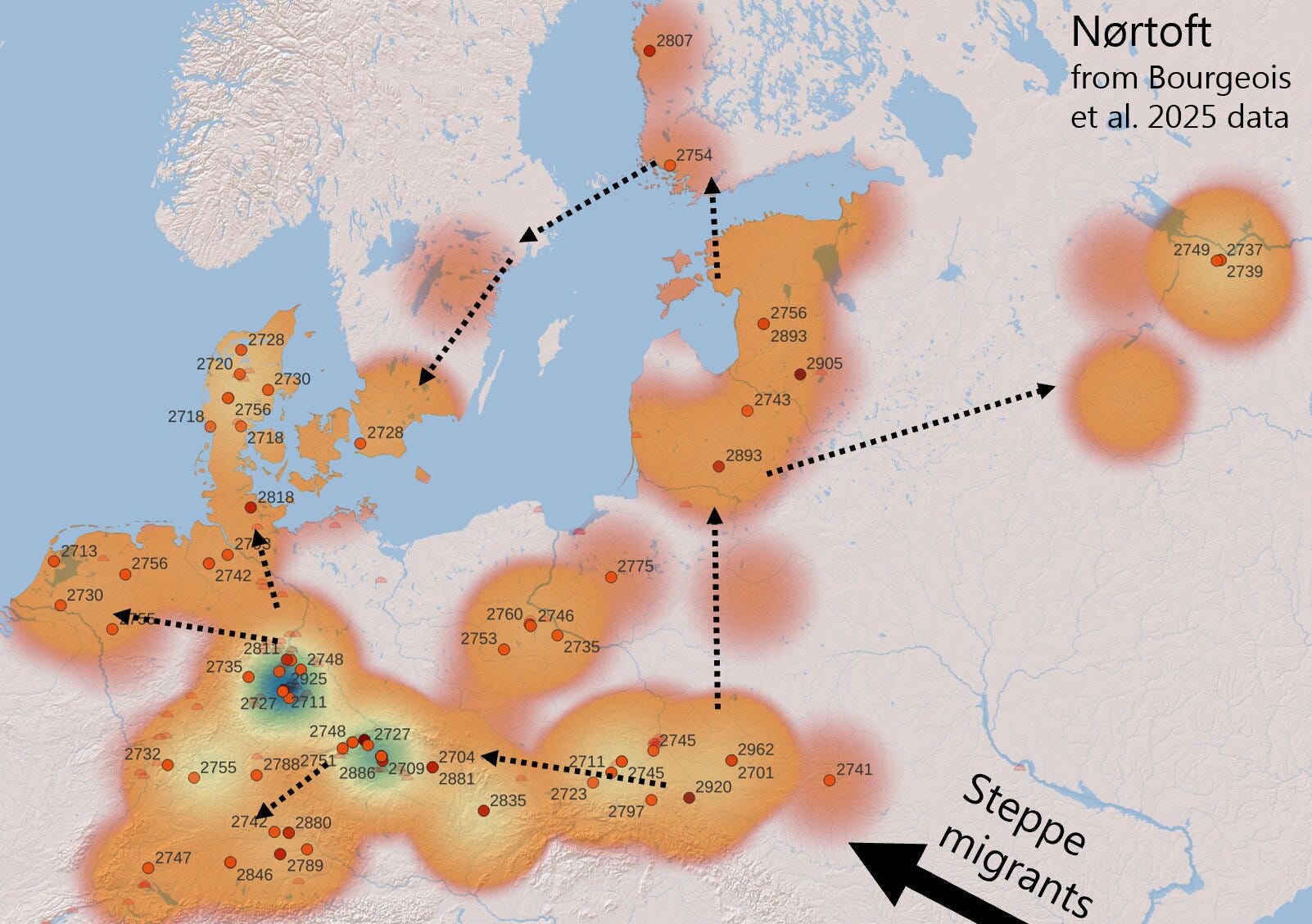
The study, by Mikkel Nørtoft of the University of Copenhagen and Adam B. Rohrlach of the Max Planck Institute for Evolutionary Anthropology and the University of Adelaide, appeared on 10 November 2026 in the Journal of Neolithic Archaeology.2 It scores 317 graves with skeletal remains from Bohemia and Moravia, the western and eastern parts of Czechia. In Bohemia, between about 2920 and 2300 BCE, grave wealth started very low and rose phase by phase, and the richest graves took a growing share of it. Burial wealth did not correlate with steppe ancestry or close kinship, where DNA was available, or with signs of ill health on the skeletons.
The authors read the Bohemian sequence in three phases: a fairly egalitarian start with older adults prominent among the dead, a competitive middle phase centered on young men while a new paternal lineage spread, and a late phase in which that lineage dominated and a few children got rich graves. Inequality, in their account, built up over centuries after the migrants arrived, possibly tied to one patriline.