

In 1979, a group of deaf children in Managua did something no one had planned for them. Nicaragua had just opened its first schools for deaf education, and the children arriving there had grown up largely isolated, each family inventing its own rough home signs to communicate with a deaf child who had no deaf community to join. Thrown together on the playground, without a shared language and without adult signers to imitate, the kids built one. Within a generation, that improvised communication system hardened into a full language, complete with grammatical structures like spatial verb agreement that hadn’t existed in the input the children received. Linguists watched it happen in something close to real time. Nicaraguan Sign Language is now taught as a landmark case in the study of how language emerges, and it’s worth sitting with the strange fact at its center: the architects were children, and the raw material wasn’t lessons from grown-ups. It was each other.
That case sits at the heart of a new paper by Sheina Lew-Levy and Dorsa Amir in Behavioral and Brain Sciences,1 and it’s doing more work in their argument than a single vivid anecdote usually does. The authors are making a broader claim, one that cuts against how anthropology and developmental psychology have typically framed childhood. The standard picture treats kids as vessels: culture flows from adults into children, who absorb it, imperfectly at first, until they’ve become competent bearers of the tradition. Lew-Levy and Amir want to flip part of that picture. Children, they argue, are not just downstream recipients of adult culture. They are independent producers of it, running their own semi-autonomous cultural systems that adults barely see and rarely participate in.
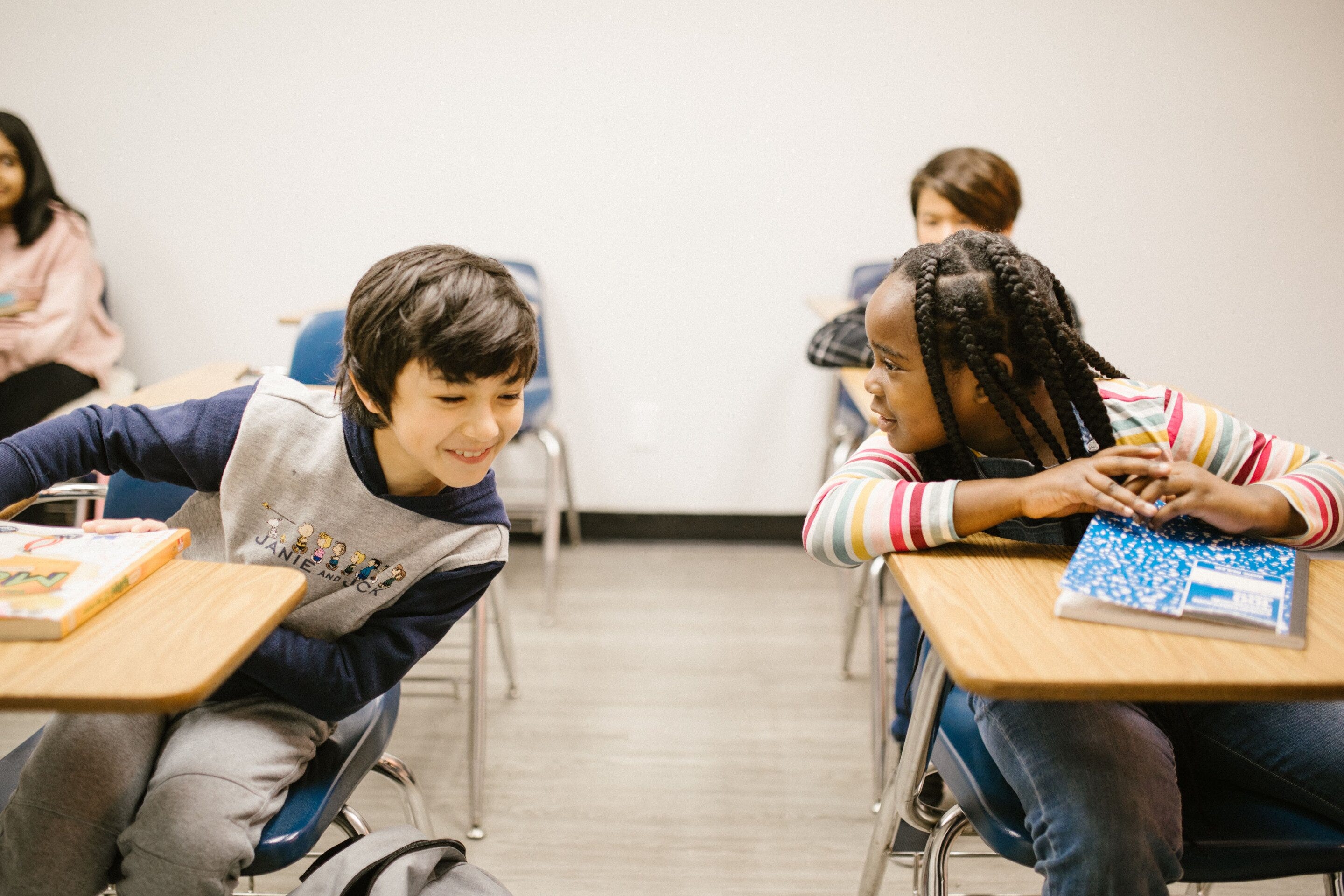
Folklorists have had a name for pieces of this for over a century, even if the theoretical weight wasn’t always attached to it. Playground rhymes, counting-out games, insult rituals, secret languages, the elaborate rule systems kids invent for tag or marbles or jump rope, these things get passed from older children to younger ones with startling fidelity, often surviving with recognizable structure across decades and even centuries, all without a single adult ever teaching them directly. Iona and Peter Opie spent years documenting British playground lore and found rhymes still circulating that traced back generations, transmitted entirely peer to peer. Lew-Levy and Amir fold this whole body of folklore scholarship into a single technical concept: peer culture, the corpus of practices, knowledge, and norms that children generate and maintain largely independent of adult input.


