

At the bottom of a slag heap at Didé West 1, in the Falémé Valley of eastern Senegal, excavators found the bases of 35 furnaces. Circular, clay-lined, arranged in a pattern that crept slowly northward over time. The oldest of them date to around the 4th century BCE. The youngest to around the 4th century CE. The same technique, recognizable from the same characteristic debris, runs through all of them.
That continuity is the puzzle at the center of a 2026 study by Morel, Lamotte, Dianifaba, and colleagues, published in African Archaeological Review.1 They weren’t just documenting an early iron production site, though the site qualifies as one of the earliest securely dated in Senegal. They were trying to understand why a tradition that worked for nearly eight centuries stayed so remarkably stable, changing only in minor technical details across dozens of generations of metalworkers.
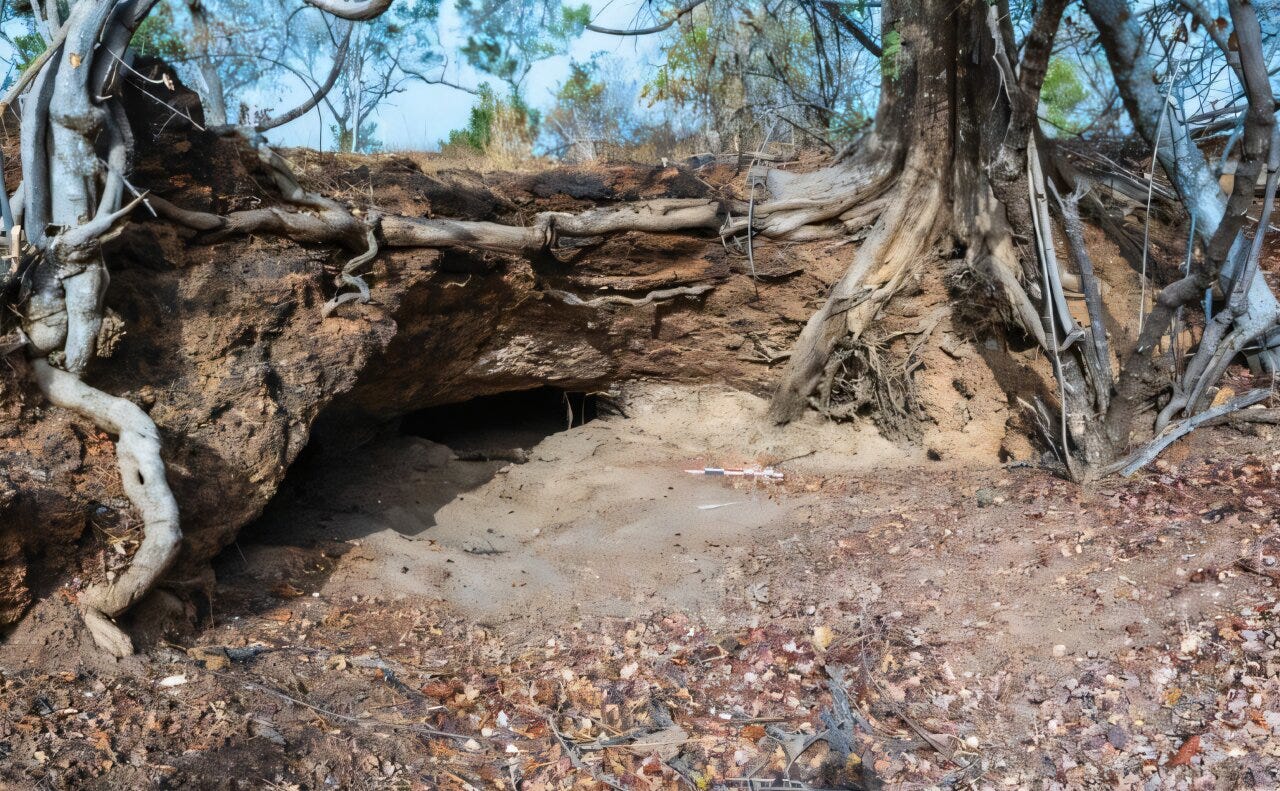
The site belongs to what the researchers call the FAL02 smelting tradition, one of at least five distinct iron production techniques identified in the Falémé Valley region. FAL02 is represented at around 100 sites across the area, but Didé West 1 is the largest and best-preserved among them. The survival of the slag heap in such detail is what makes the study possible. Slag is, essentially, the waste product of smelting: when ore is heated and worked, the unwanted material flows molten through the furnace before solidifying into dense, rocky masses. Metalworkers discarded it, and it piled up. That pile, at DDW1, preserved nearly eight centuries of practice.


