

When archaeologists opened the elite Wari mausoleum at Castillo de Huarmey in 2012, the world’s attention fixed on the gold. There were thousands of artifacts: silver bowls, bronze tools, and the remains of nearly sixty high-status women, including three Wari queens. But tucked away in the corners of this funerary chamber were other residents. These were the remains of Canis lupus familiaris, the domestic dog. For a long time, these bones were secondary to the treasure. New research1 led by Weronika Tomczyk suggests that the dogs were part of the treasure themselves.
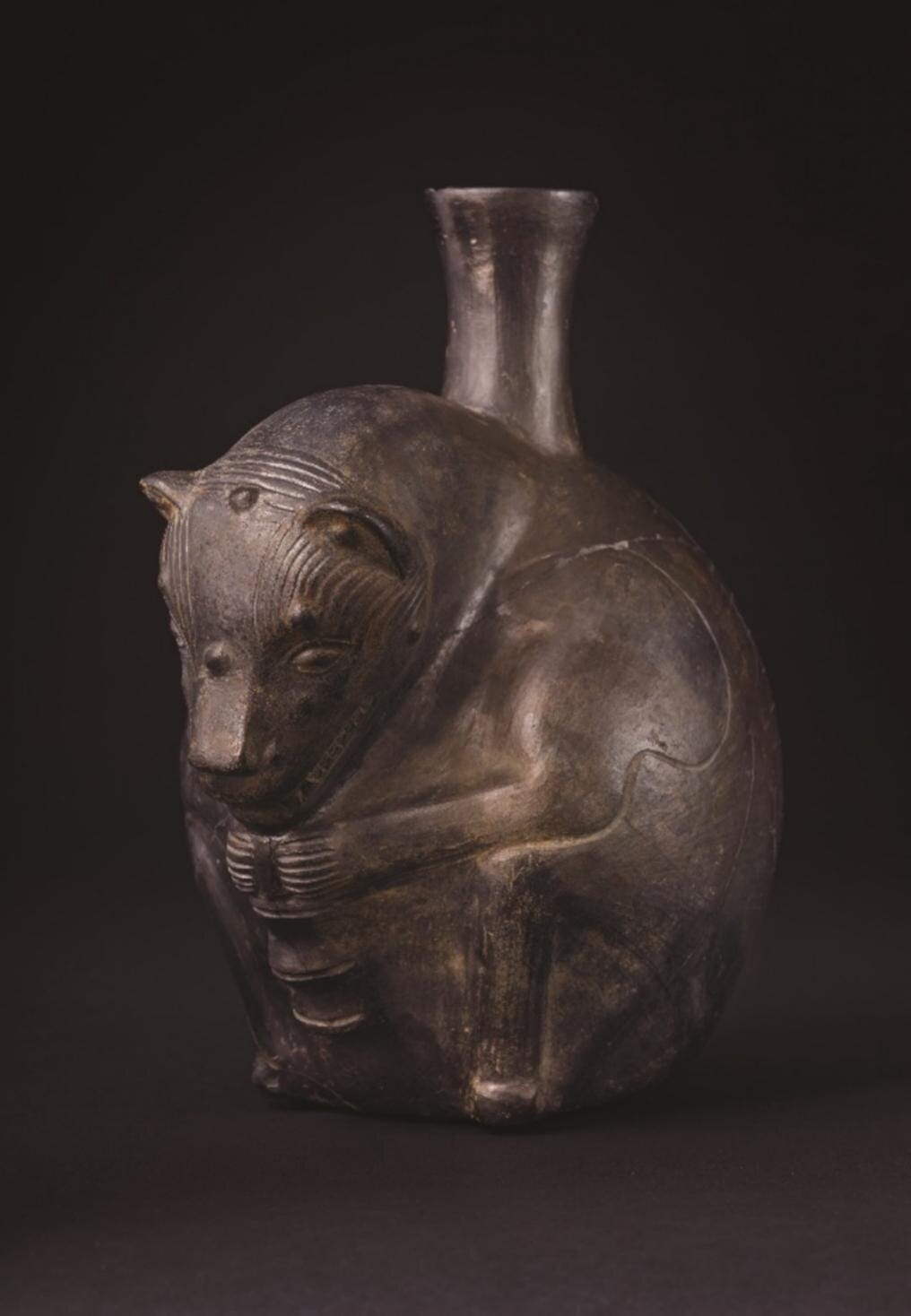
The bones do not just represent a single category of animal. By looking at the chemical signatures left in their teeth and ribs, the research team has reconstructed the biographies of these animals. They found that some dogs lived lives of labor and travel, while others were essentially biological artifacts, curated and cared for with a level of specificity that suggests they were more like family members or status symbols than tools. Among them was the first physical evidence of the Peruvian Hairless Dog ever found in a Wari context.
This particular dog, a hairless variety of Canis lupus familiaris, was not merely a local stray that wandered into a ceremony. The team used isotopic analysis to track its life. Specifically, they looked at the ratio of strontium and oxygen isotopes in its bones. Because these elements are absorbed from the local water and soil, they act as a geological fingerprint. The results showed that the hairless dog was a local. It was born, raised, and died in the Culebras Valley. This might sound mundane, but it stands in stark contrast to the other dogs found at the site. One of the furry dogs, for instance, had a strontium signature that suggests it originated in the Andean highlands before being brought down to the coast.


