
Kilwa Kisiwani is an island off Tanzania’s southern coast where a medieval port civilization once traded gold, cloth, and Chinese porcelain across the Indian Ocean. Between the twelfth and thirteenth centuries, it was one of the most significant commercial nodes in the world. The tenth-century Arab geographer Al-Masudi documented it. The sixteenth-century Kilwa Chronicle preserved the genealogies of its sultans. Today, visitors arriving at the UNESCO World Heritage Site encounter something else: a large corrugated-iron-roofed building, 25 by 20 meters, standing at the entrance with six oversized glass windows starkly out of scale with the surrounding medieval ruins. Behind the small domed mosque, a toilet block sits where one should never be placed, violating basic norms of Islamic spatial separation between sacred and polluting structures. The stone used to build it, according to a laborer who worked on the project, came from an underground archaeological foundation unearthed during excavation.
No cultural heritage impact assessment was conducted before any of it was built.
Ceramics, beads, and coins disturbed during construction were scooped into buckets and piled in a corner. According to one resident who worked on the project, a site manager who was himself an antiquities official directed workers to collect the materials and pile them for “further analysis.” The piles were eventually moved to an antiquities office. Whether they were ever analyzed is not recorded.
This is the picture that emerges from a new study published in Antiquity1 by archaeologists Elgidius B. Ichumbaki of the University of Dar es Salaam and Peter R. Schmidt of the University of Florida. Working across four sites — Kilwa Kisiwani, the Laetoli footprint site, the Kondoa rock art complex, and the Kaiija Early Iron Age shrine in Katuruka — they document a pattern of institutional failure so consistent and so severe that it amounts to a systemic crisis. The threat to Tanzania’s heritage, they argue, is not primarily climate change or looting or war. It is the government itself.
A Reorganization Without Expertise
The story of how this happened begins in 2018. Tanzania’s Department of Antiquities (DoA) had spent years failing to turn cultural heritage sites into the tourism engines the government imagined they could be. Natural parks were generating substantial income; why not ancient ruins and hominin trackways? The DoA could not build the infrastructure or demonstrate economic potential, so the Ministry of Natural Resources and Tourism reassigned management of dozens of sites to agencies that had no relevant expertise whatsoever. The Tanzania Wildlife Authority (TAWA) took over Kilwa Kisiwani. The Tanzania Forest Services Agency (TFS) was handed the Kondoa rock art sites. The Ngorongoro Conservation Area Authority (NCAA) received Laetoli. The changes were formalized in Government Notice Number 632 of August 2020. The criteria used to decide which agency got which site were never disclosed.
TAWA manages wildlife. TFS manages forests. NCAA manages a conservation area. None of them employ cultural heritage specialists, none have budget lines to hire any, and none can be expected to understand the difference between developing a safari lodge and developing infrastructure within a stratified archaeological deposit. The DoA’s own mandate was preservation and management of antiquities; it had trained personnel, institutional memory, and legal authority. What it apparently lacked was the will to act. The reorganization was, as Ichumbaki and Schmidt read it, not genuine decentralization in any meaningful sense. It was a lateral transfer within the same ministry, a bureaucratic escape from accountability dressed up as reform.
TAWA’s performance at Kilwa Kisiwani illustrates the consequences precisely. The paved footpath running 600 meters through the site required excavating into undisturbed middens to lay concrete borders. An interpretation center was built 100 meters north of the fourteenth-century palace of Husuni Kubwa without any assessment of what lay underground. Every structure was constructed without the heritage impact studies that Tanzanian law and UNESCO protocols both require.
Footprints in Concrete
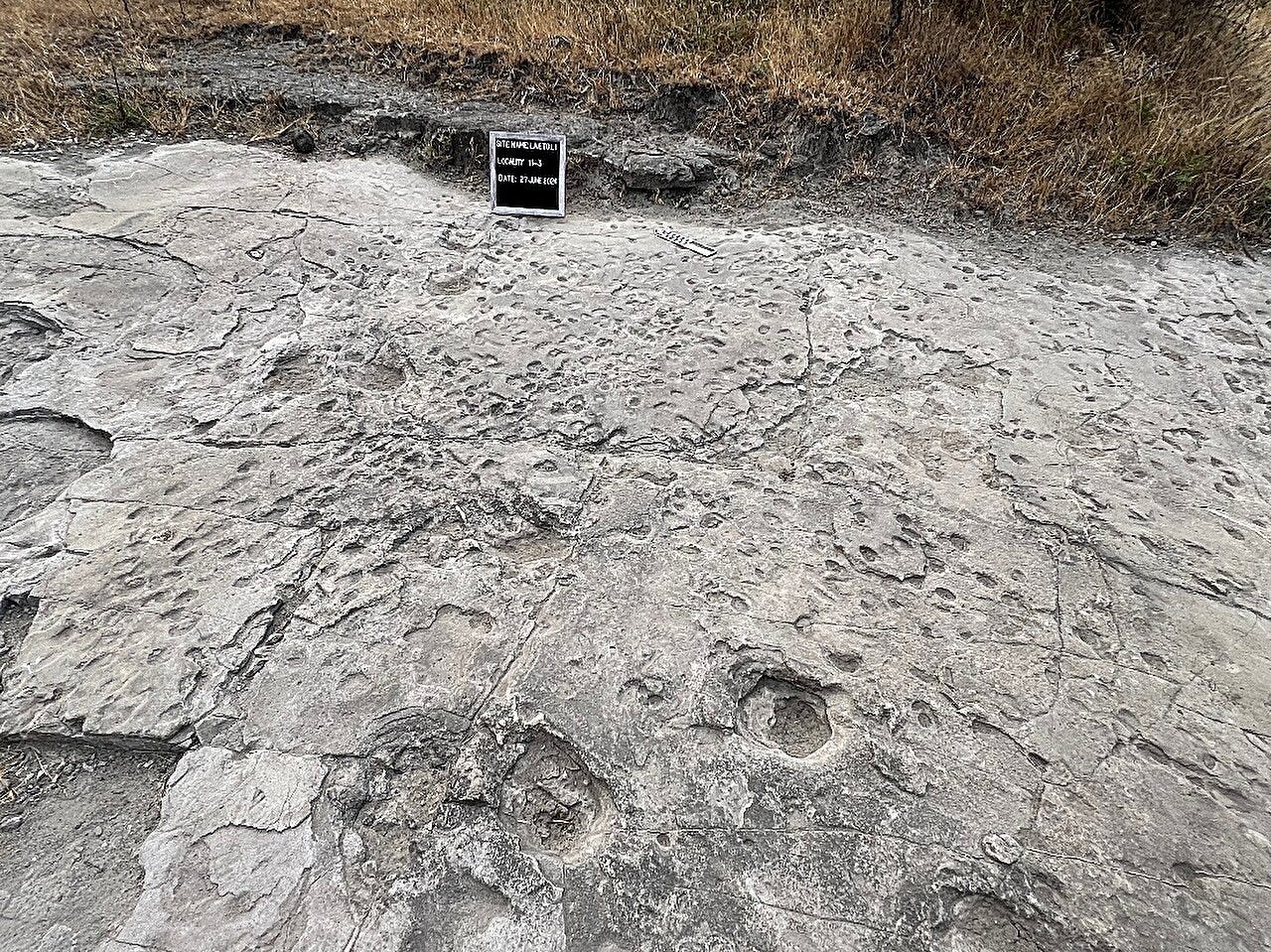
Laetoli complicates the picture slightly, because the incompetence there predates the 2018 reorganization and traces back to a presidential visit. In 2008, President Jakaya Kikwete traveled more than 200 kilometers to see the Laetoli hominin footprints — tracks pressed into volcanic sediment by Australopithecus afarensis individuals 3.66 million years ago, the oldest evidence of hominin bipedality on record. He was shown only a two-meter section of the trackway, with protective stones piled on top of the rest. Reportedly displeased, he directed that the tracks be uncovered and a proper museum built over them.
That directive set a project in motion. Unusually, a cultural heritage impact assessment was conducted before construction began, and it led to a remarkable discovery: in 2014 and 2015, a University of Dar es Salaam team working at Site S found a second trackway representing two individuals, later designated S1 and S2, moving in the same direction as the known tracks at Site G. Analysis of the new footprints added significantly to what we know about body size variation within Australopithecus afarensis. The project was paused.
Then, in 2023, it resumed. Without expert consultation.
The NCAA constructed a 47-by-12-meter rectangular building over Site G, with an interior foundation of 40 by 8 meters supporting a viewing platform roughly two meters high. A smaller structure at Site S was built directly over part of the trackway, including four footprints identified by local Maasai communities as belonging to Lakalanga, a figure of cultural importance to them. Between the two sites, a walkway of large pavers mimicking hominin footprints was laid after land leveling — an operation involving heavy earth-moving equipment crossing terrain that still contains documented animal tracks and hominin footprints. Ichumbaki and Schmidt’s site observations recorded a heavy excavator moving through that landscape during construction.
The NCAA’s characterization of these permanent structures as “semi-permanent” does not change what they are or what was destroyed to build them.
Cages, Concrete, and Communities Left Out
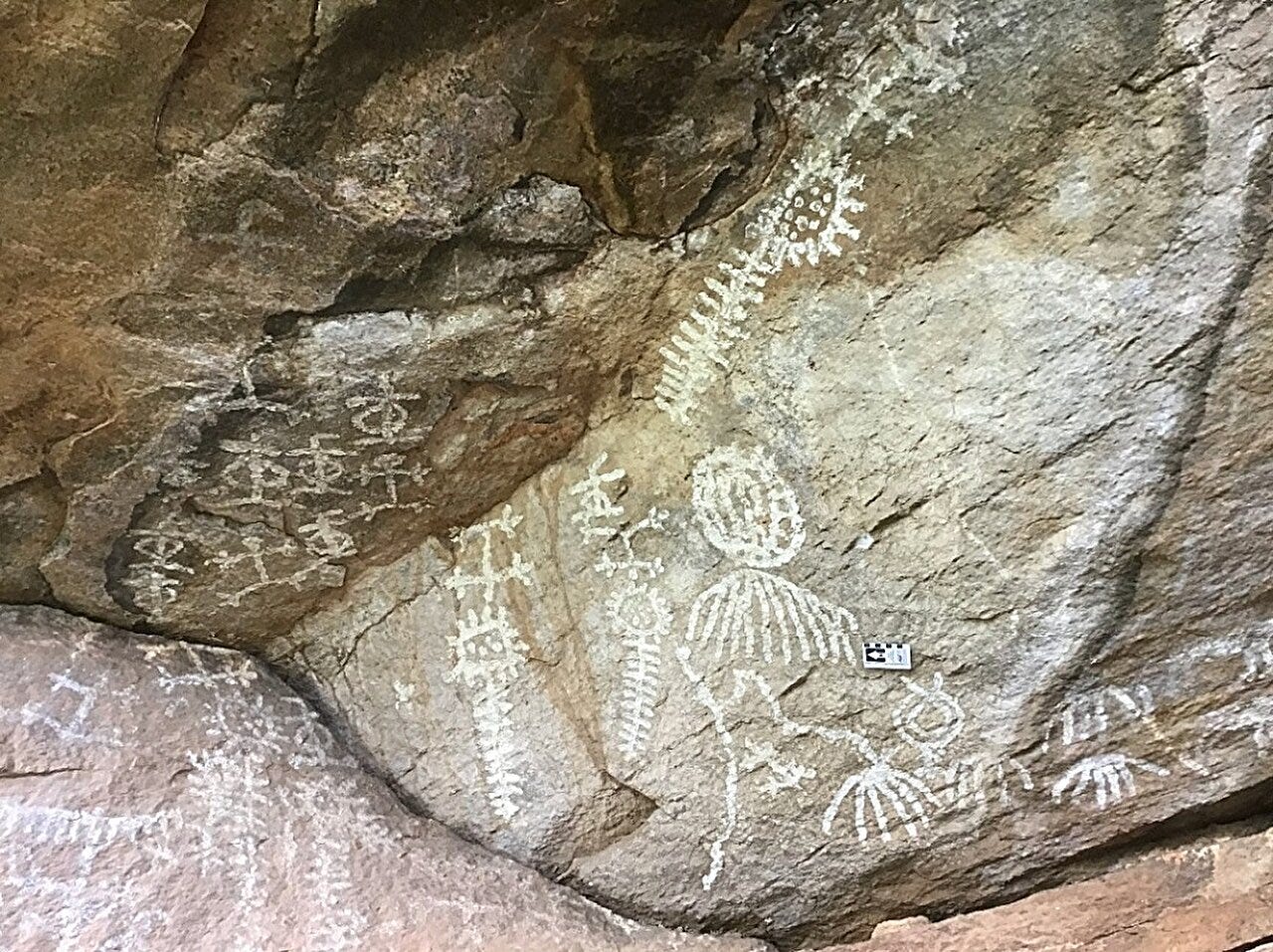
The Kondoa rock art sites in central Tanzania offer a different set of problems, though the underlying institutional failure is the same. Between 150 and 450 paintings decorate rock shelters, caves, and overhanging cliffs across the landscape. They are not merely ancient marks on stone; local communities continue to use these sites for rainmaking, healing, initiation, and divination. The living relationship between the paintings and the people who made them is, in heritage terms, part of the significance.
In 2016, the DoA and TFS responded to concerns about dust and water damage at the Kolo B1-B3 sites by pouring concrete floors across the shelter interiors. Ichumbaki and Schmidt consider this a straightforward act of site destruction. TFS also replaced a footpath to one hilltop painting site with a 900-meter gravel road, wide enough for vehicles, constructed without any heritage impact assessment and without monitoring. On-site observations from January 2020 documented disturbed lithic artefacts along its edges.
Earlier, the government had tried to protect the paintings from ritual activity by erecting cages around the art-bearing rock faces. Local communities dismantled them and repurposed the materials. Ichumbaki and Schmidt cite this as a lesson worth taking seriously: protective enclosures imposed without community buy-in tend to fail, and the appropriate response is collaborative stewardship, not enforcement. The government learned the opposite lesson.
The fourth case study, from Katuruka in northwestern Tanzania’s Kagera region, makes that failure most explicit. The Kaiija shrine is the site of an Early Iron Age forge dating to the late first millennium BC, one of the oldest iron-working sites in East Africa, embedded within the seventeenth-century capital of King Rugomora Mahe. For the Haya people, Kaiija — meaning “place of the forge” — represents the deep-time origin of an economy built on iron production and, through it, agricultural prosperity. Schmidt’s collaborative research with Haya elders beginning in the late 1960s documented the oral traditions tied to the site and excavated the forge itself.
After the Kaiija Tree, a monumental living part of the shrine, was killed in the mid-1990s by a neighboring landowner who complained it shaded his banana farm, the community mobilized. Katuruka villagers formed a representative committee and an NGO, reconstructed a royal spirit house, and built interpretive infrastructure to memorialize the site. The project worked. The community was doing precisely what Tanzania’s 2008 Cultural Heritage Policy nominally encouraged.
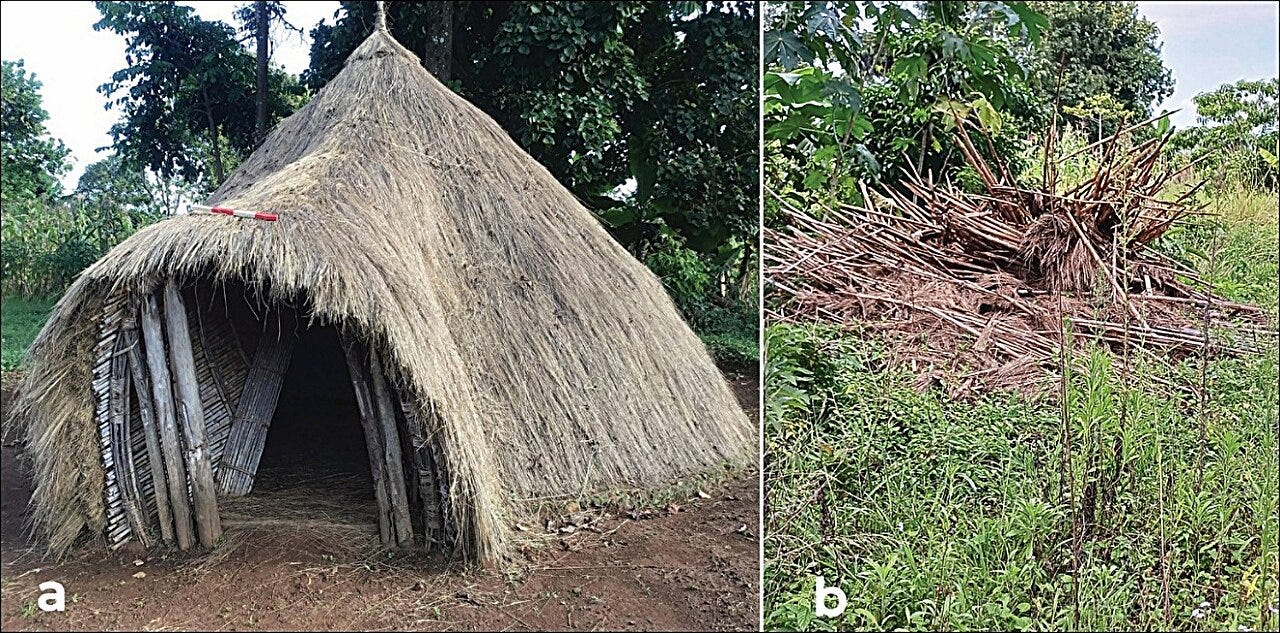
Then a collateral branch of the royal clan, which had no traditional ties to Kaiija, filed land claims against the NGO. Lawsuits and intimidation dragged on for four years. One of the plaintiffs built a competing “royal house” nearby and physically destroyed the reconstructed Buchwankwanzi ritual house, the site’s royal divination structure. The community appealed to regional authorities and to the Ministry responsible for Antiquities. Letters went unanswered. Two DoA staff members eventually visited, conducted interviews primarily with one plaintiff, and took no legal action. The Assistant Director of Antiquities later relayed, in a telephone call, unsubstantiated allegations against Schmidt himself — claims that he had removed a “pot of rupees” during the 1970 excavations and that he was conducting research without a permit. The message was clear enough: the DoA would not protect Kaiija, and it would prefer this go away.
The case is still unresolved. Both the High Court and the District Housing and Land Tribunal have declined jurisdiction. The residents of Katuruka continue to wait.
What the State Owes the Past
Ichumbaki and Schmidt are careful to situate Tanzania’s situation within a broader global pattern. Similar dynamics play out in China, where profit-driven local authorities frequently destroy historic fabric and ignore communities in the name of heritage tourism development. The contradiction at the heart of Tanzania’s approach is stark: genuine decentralization, in any meaningful sense, would require empowering local communities and independent experts. Instead, the DoA transferred authority to other central government agencies while simultaneously undermining the community-based initiatives that were actually working. The result is neither centralized competence nor genuine local management. It is a vacuum.
The researchers make a specific and actionable recommendation: Tanzania should fill the Advisory Council for Antiquities, a body established under the Antiquities Act in 1979 and mandated under Article 20 to include qualified, non-political representatives. That council has never been constituted. If it were, and if it were empowered to conduct a comprehensive review of heritage governance, there might be a path forward. That is a more modest demand than the situation would seem to warrant.
At Kilwa Kisiwani, medieval ceramics sit in an antiquities office, stripped of their provenance. At Laetoli, buildings now stand on trackways that preserved 3.66-million-year-old steps. At Kondoa, concrete covers the floors of painted rock shelters. At Katuruka, the Buchwankwanzi house is a pile of collapsed thatch and timber. In each case, the institution nominally responsible for protecting the site was directly or indirectly responsible for the damage. That is the finding. What Tanzania and the international community do with it remains to be seen.
Further Reading
Masao, F.T. et al. 2016. New footprints from Laetoli (Tanzania) provide evidence for marked body size variation in early hominins. eLife 5. https://doi.org/10.7554/eLife.19568
Leakey, M.D. & Hay, R.L. 1979. Pliocene footprints in the Laetoli beds at Laetoli, northern Tanzania. Nature 278: 317–23. https://doi.org/10.1038/278317a0
Schmidt, P.R. & Ichumbaki, E.B. 2020. Is there hope for heritage in former British colonies in Eastern Africa? A view from Tanzania. Journal of African Cultural Heritage Studies 3(1): 26–51. https://doi.org/10.22599/jachs.69
Ichumbaki, E.B. & Munisi, N.C. 2024. Kilwa and its environs, in T. Spear (ed.) Oxford Research Encyclopedia of African History. New York: Oxford Academic. https://doi.org/10.1093/acrefore/9780190277734.013.1008
Bwasiri, E.J. & Smith, B.W. 2015. The rock art of Kondoa District, Tanzania. Azania: Archaeological Research in Africa 50(4): 437–59. https://doi.org/10.1080/0067270X.2015.1120436
Ichumbaki, E.B. & Schmidt, P.R. 2026. Heritage forfeited and forgotten: some issues with state control in Tanzania. Antiquity. https://doi.org/10.15184/aqy.2026.10361


