

The two fossil sites are less than a kilometer apart. You could walk between them in about ten minutes. Swartkrans and Sterkfontein sit in the same valley within what is now South Africa’s Cradle of Humankind, and for much of the twentieth century, researchers assumed the hominins buried there moved through the world in roughly the same way. Both Paranthropus robustus and Australopithecus africanus were bipeds, the thinking went. They walked on the ground. They may have climbed a bit. Beyond that, their bodies were probably not so different.
A study published in PNAS1 in May 2026 challenges that assumption in a specific and consequential way. A team led by Marine Cazenave of the Max Planck Institute for Evolutionary Anthropology ran high-resolution CT scans through a recently discovered articulating femur and tibia from Swartkrans — the first P. robustus tibia ever recovered from the fossil record, and the first femur of this species with a complete distal epiphysis. They compared the internal bone architecture of these specimens against Australopithecus remains from Sterkfontein. What they found inverts a reasonable expectation: the geologically younger hominin was the more arboreal one.
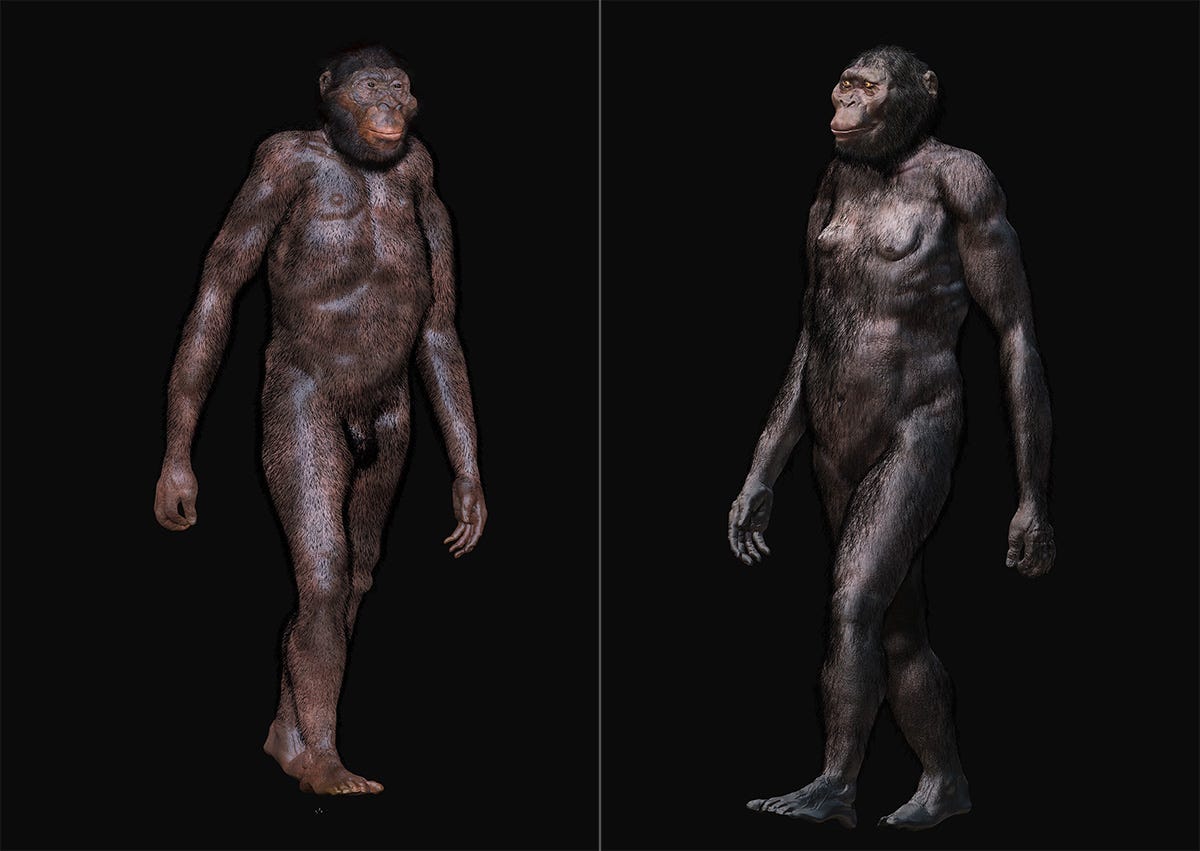
P. robustus dates to roughly 2.2 to 0.96 million years ago. The Australopithecus fossils from Sterkfontein Member 4 used in this analysis are around 3.4 million years old. If you assumed a directional story, you might expect the older taxon to be the more ape-like climber, with the newer species having shed more of its arboreal habits over time. The bones say otherwise.


