

At a Bronze Age cemetery in what is now southwestern Poland, a group of mourners lit a pyre, reduced the body to ash, and placed what remained inside a ceramic urn. They did this again and again, over centuries, until the cemeteries of the Lusatian Urnfield culture held thousands of graves. It was, by the standards of the European Late Bronze Age, an almost universal funerary practice. And it was, for osteoarchaeologists working millennia later, a methodological nightmare.
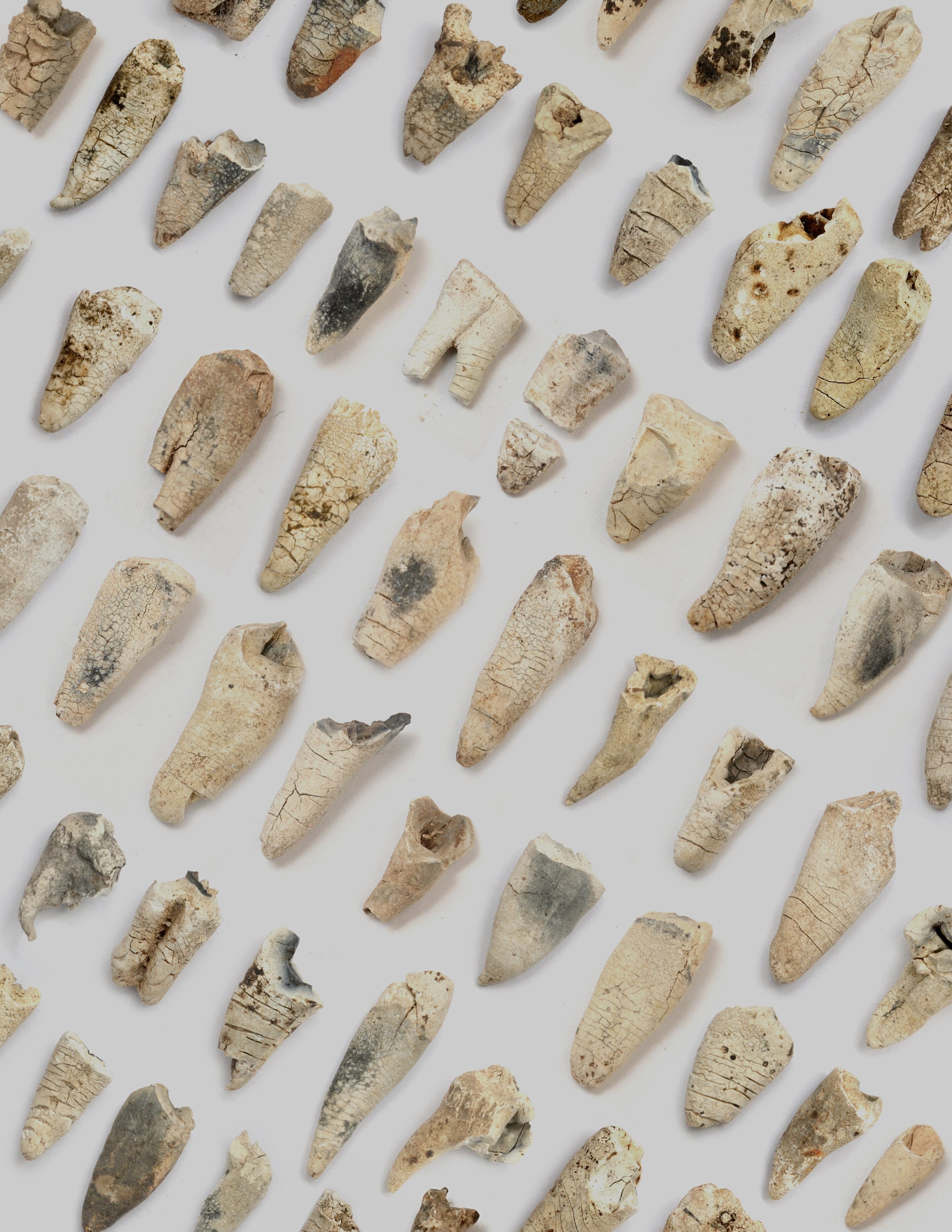
Fire does strange things to bone. It cracks it, shrinks it, destroys the biological gradients that osteologists normally use to reconstruct a life. Cranial sutures fuse, then fragment. The pubic symphysis warps beyond legibility. The diagnostically useful features of the skeleton disappear into white and cream calcined fragments that yield only broad, ambiguous age categories. A study published in Scientific Reports1 in 2026 — led by Agata Hałuszko of Maria Curie-Skłodowska University in Lublin, working with colleagues at the Medical University of Vienna — asked whether teeth might offer a way through this problem. Specifically, whether the microscopic growth lines preserved inside cremated tooth roots could provide reliable age estimates despite everything the pyre had done.
The answer was largely yes. But the more interesting finding was something the team had not set out to look for.


