
Nine copies of a starch-digesting gene sat in the genome of a woman buried in a rock shelter in the mountains of Kanto sometime around 8,300 years ago. She lived by hunting and gathering, centuries before rice farming reached the Japanese archipelago. Most people today, across most populations, carry somewhere around four to six copies of that gene. She had nine. The Yayoi-period man buried more than five thousand years later at a coastal site in Yamaguchi, by contrast, carried roughly ten.
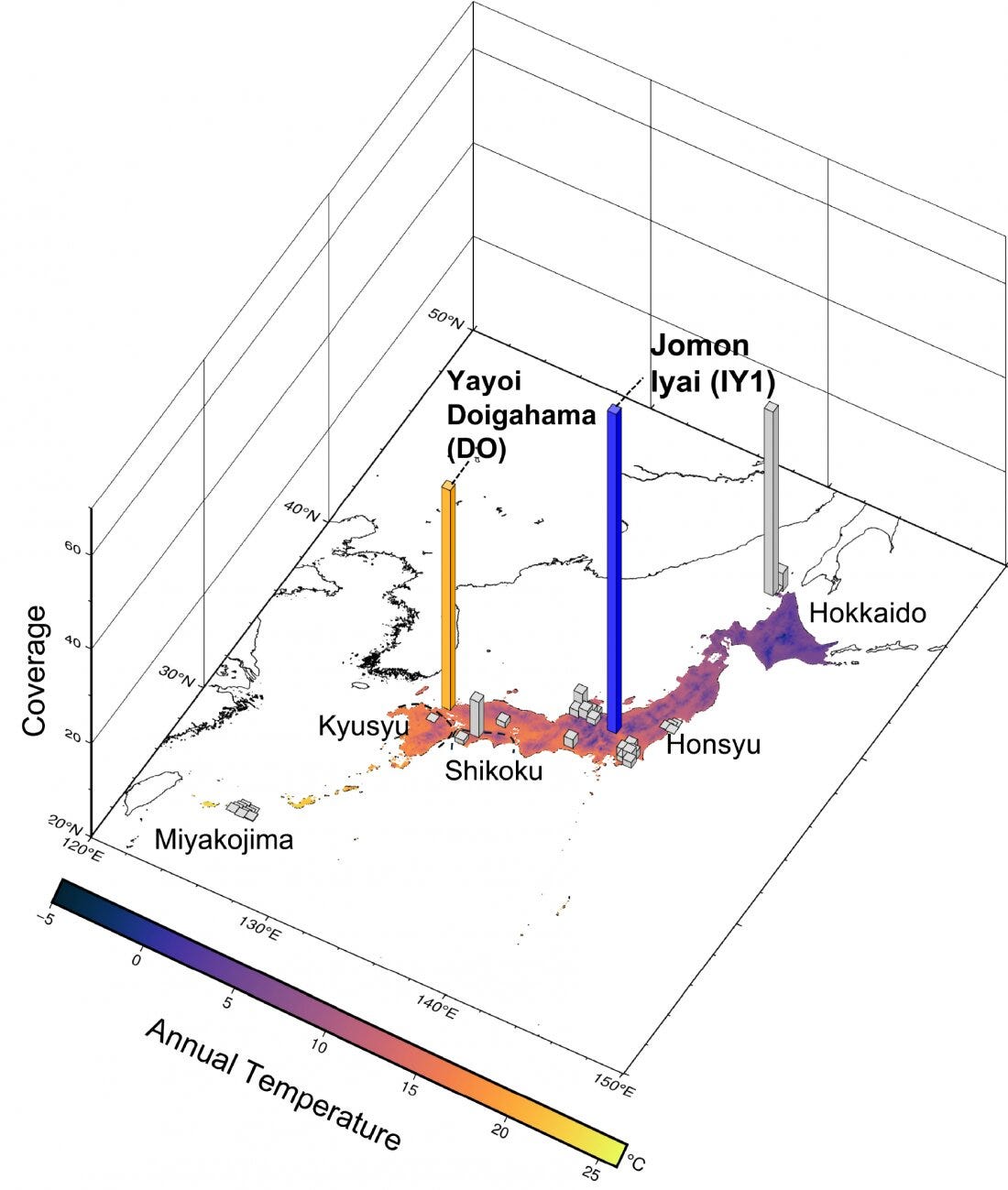
That’s the detail sitting at the center of a new PNAS1 study led by Koji Ishiya and colleagues at Kanazawa University, and it complicates a story that’s usually told as a clean before-and-after: hunter-gatherers eating meat and shellfish, farmers arriving with rice and the genetic tools to digest starch that came with it. The amylase gene in question, AMY1, encodes salivary amylase, the enzyme that starts breaking down starch the moment it hits your mouth. More copies generally mean more enzyme, which generally means a body better equipped to handle a starch-heavy diet. The assumption that its copy number tracks the arrival of farming has shaped how researchers think about diet and genetics across Eurasia. This Jomon woman’s genome doesn’t fit that assumption.


