

Üçağızlı II Cave sits on the Levantine coast in southern Türkiye, and for five years a team of excavators worked through it a few millimeters at a time. What they found1 underneath all that patience was a stratified sequence running from roughly 77,000 to 47,000 years ago, with Homo neanderthalensis occupying the lower layers and Homo sapiensthe upper ones. That alone would be a solid contribution to the record. What makes the site strange is what didn’t change when the occupants did.
The shift from Neanderthals to modern humans at this cave happened, but you would not necessarily know it from the tools, the food refuse, or a particular category of object that has nothing to do with either. Marine shells, of a kind with no dietary value, show up consistently through both occupations. They aren’t food waste. Nobody was eating what lived in them. Someone was picking them up, carrying them into the cave, and keeping them there, and whoever was doing it kept doing it across a species boundary.
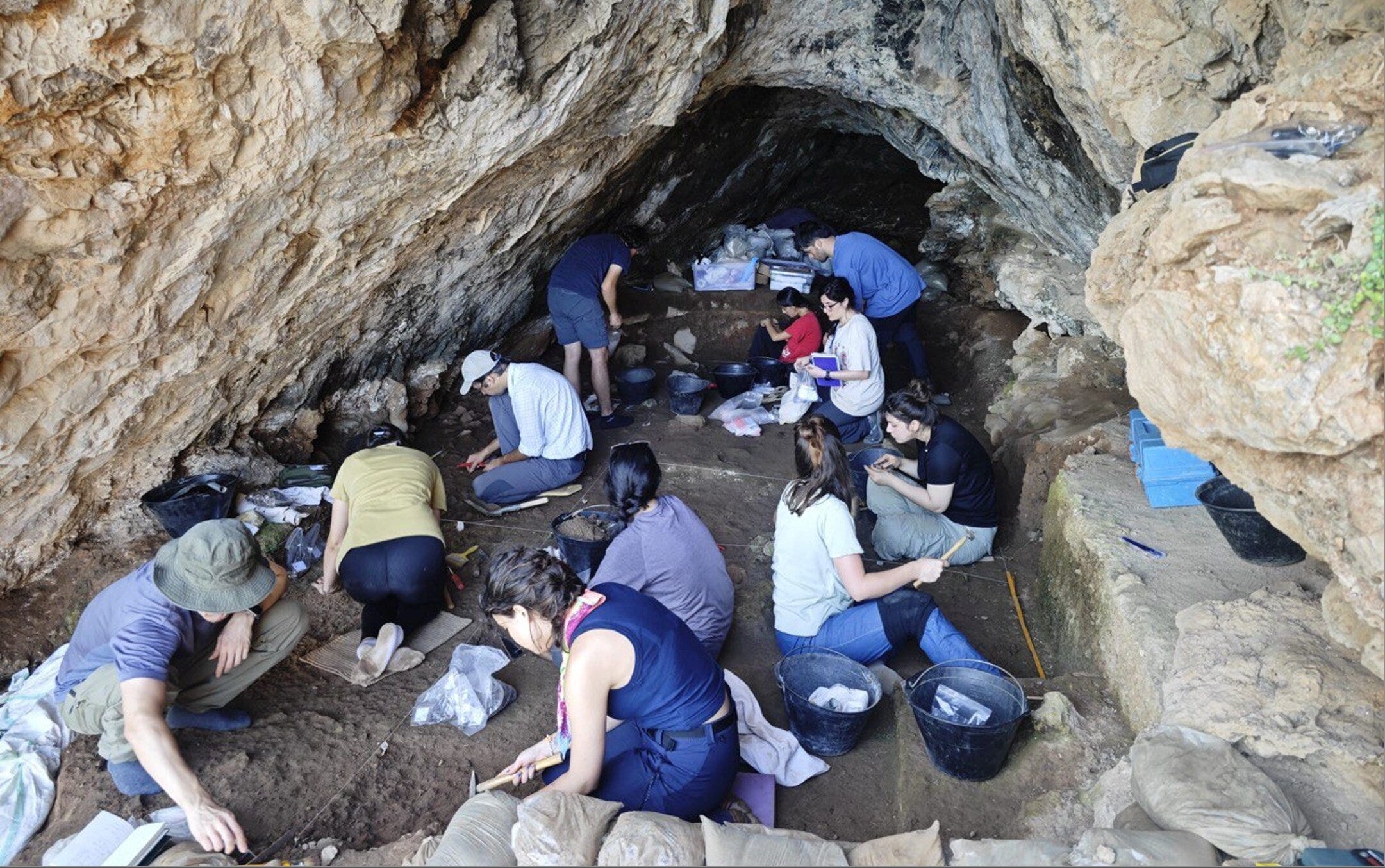
This matters because the usual story about the overlap between Neanderthals and Homo sapiens in the Levant is built out of separate pieces. You get a Neanderthal skeleton at one site, a modern human tooth at another, a stone tool tradition somewhere in between, and researchers stitch a narrative across the gaps. Üçağızlı II is unusual because the fossils and the material culture come from the same stratified sequence in the same cave. You are not comparing two different populations at two different locations under two different excavation methodologies. You are watching one place change hands, if it changed hands at all, while everything else about how people used it stayed remarkably stable.
Drone footage of the Üçağızlı II Cave in southern Türkiye. Credit: KyotoU / Naoki Morimoto


