

Somewhere in the discard heap of a two-chamber kiln at Qurayyah, in the desert of northwestern Saudi Arabia, there is a small beaker that was shaped, smoothed, painted, and never fired. It sits in the excavation records as sample Q36. Whatever went wrong that day, the vessel was thrown out before it ever went into the fire, and it has been sitting there for roughly 3,500 years as a record of an interrupted intention.
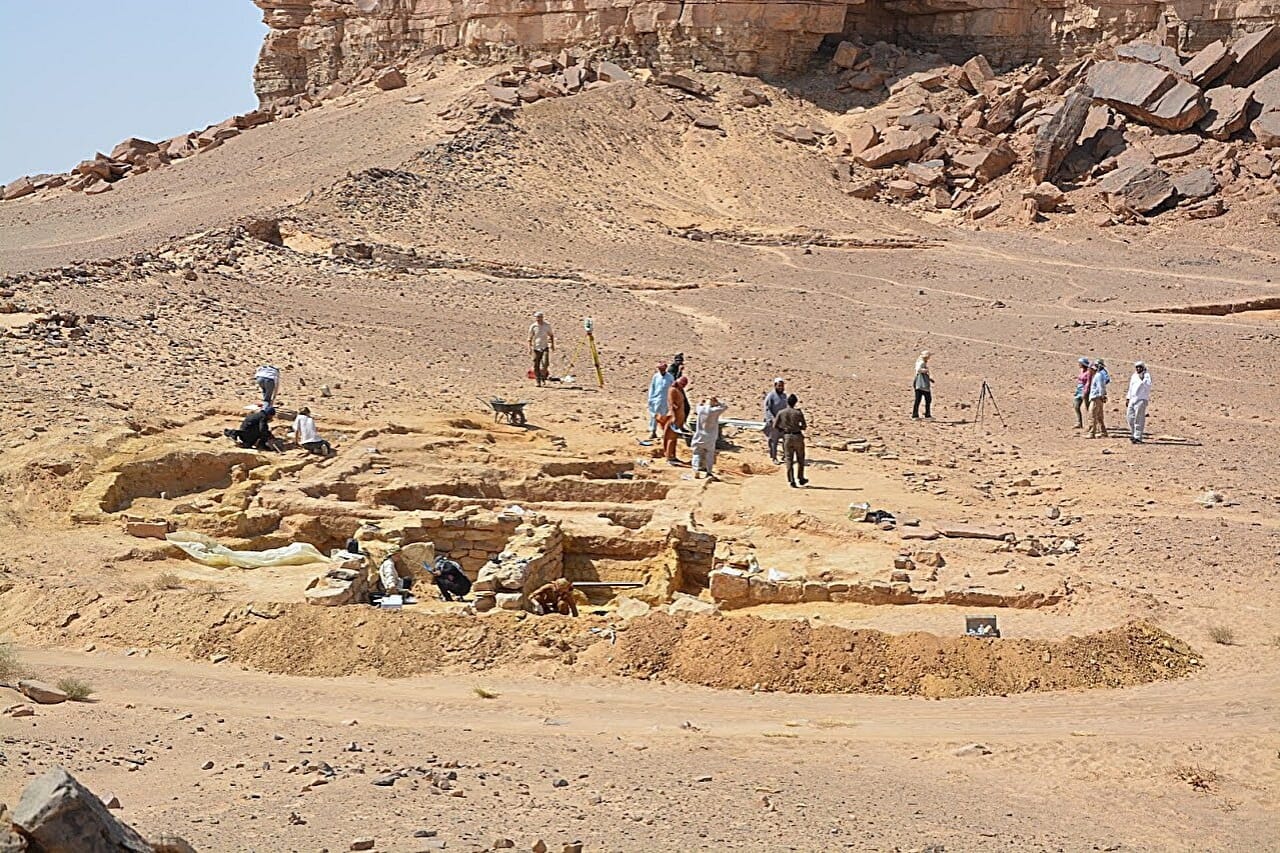
That unfired beaker matters more than it might seem. A pot found at a settlement could have been made anywhere. A pot found in the waste dump of the kiln that made it is anchored. Marta Luciani and colleagues built their entire argument1 on this anchoring, using 3,209 diagnostic sherds from Area A at Qurayyah, including warped, cracked, overfired, and vitrified failures alongside one complete vessel. Production debris is unglamorous. It is also the only material that lets you say with confidence: this was made here.
What they wanted to know was where a particular painted pottery came from, and the answer turns out to have consequences for how archaeologists talk about ancient commerce.
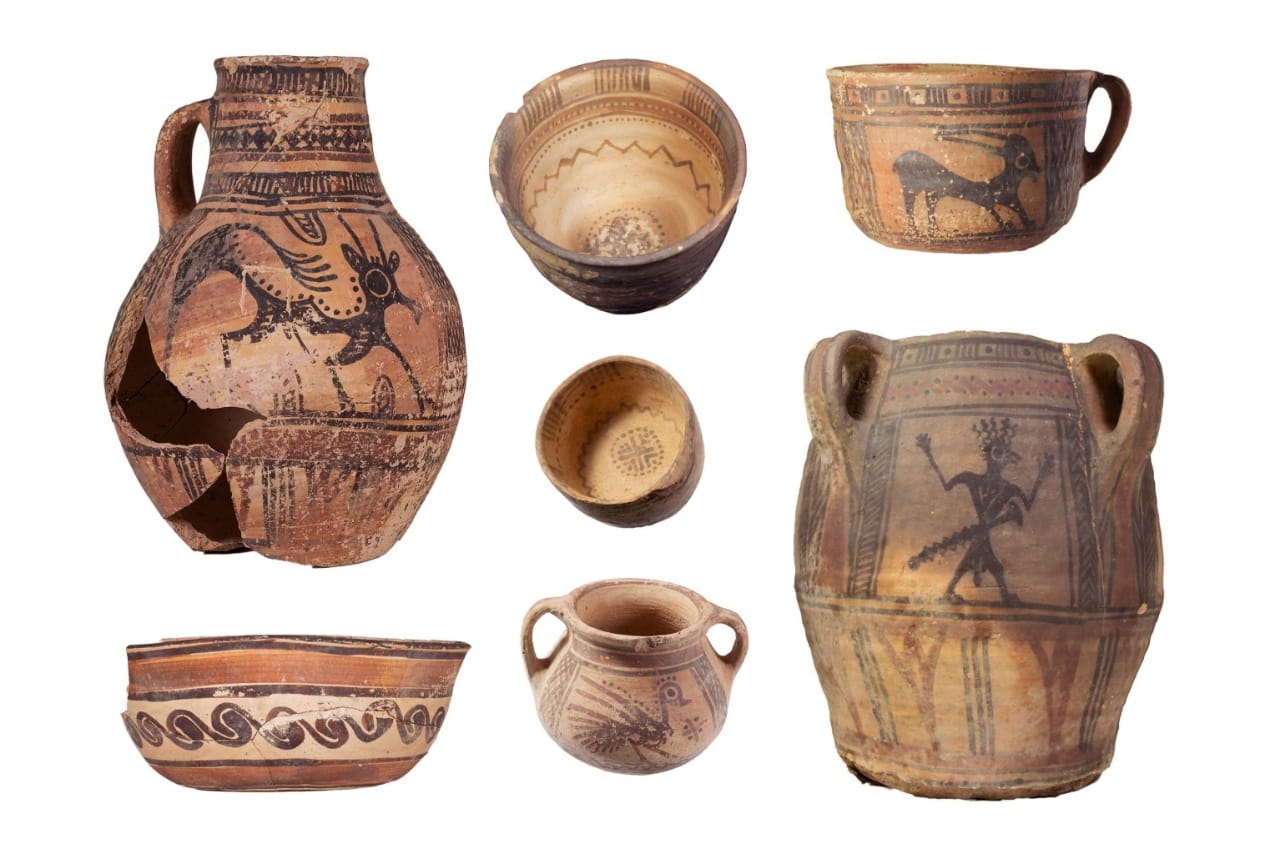
The pottery in question has had an identity problem for over fifty years. Bichrome painted vessels, red and dark paint on a pale slip, geometric panels and the occasional ostrich or ibex, turn up across the southern Levant and northern Arabia. Nelson Glueck called the fragments he found at Tell el-Kheleifeh “Edomite,” then “Midianite.” The Midianite label stuck, and it carried baggage: it implied a people, a region, a diffuse cultural sphere. Later work renamed it Qurayyah Painted Ware, which pointed at a place. But pointing is not proving.
The Qurayyah Joint Archaeological Project has now done three things at once to the same set of samples, which is the methodological point of the paper. Thirty-six sherds from the kiln, plus four from earlier and later contexts, went through macroscopic fabric classification, thin-section petrography under a polarizing microscope, and neutron activation analysis at the Atominstitut in Vienna. Previous studies had done one of these at a time, on isolated vessels. Doing all three on stratified material from a known production context is what converts an inference into a baseline.
The petrography sorted the Qurayyah material into three groups. The largest, Qurayyah 1, dominated by angular shale fragments, accounts for 21 of 40 samples. Qurayyah 2 is defined by well-sorted monocrystalline quartz. Qurayyah 3 is a small, fine-textured outlier group of three sherds. All three align with the local Silurian Qalibah geology of the Tabuk region: silty micaceous claystones, fine-grained sandstones. The potters were digging in their own backyard.


