

Off the northern coast of Vanua Levu, Fiji’s second-largest island, there is a small patch of ground surrounded by mangrove forest that should not, strictly speaking, exist. It sits a few centimeters above the high-tide mark. Burrowing crabs churn its surface. And it is made, to an extent that takes a moment to process, almost entirely of shells.
Not gravel. Not sand. Shells. Between 70 and 90 percent of the material that makes up this 3,000-square-meter island is the discarded remains of edible shellfish: clams, cockles, gastropods, species that people eat. The rest is a sandy-clay matrix, with occasional fragments of plain pottery mixed through.
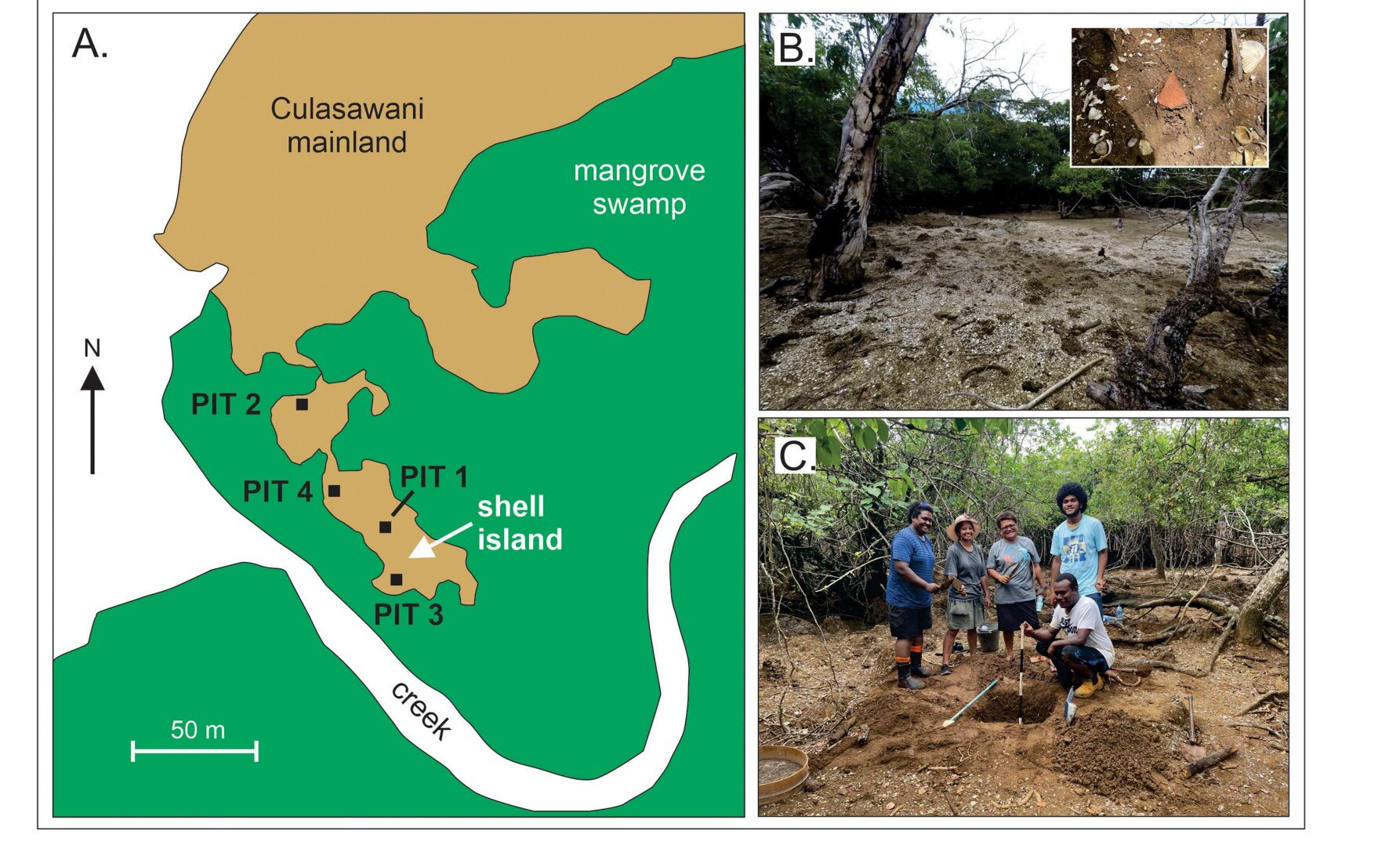
Patrick Nunn and colleagues first came across the site in January 2017 during a reconnaissance survey along the northern coast of Vanua Levu. They initially thought it was a promontory attached to the mainland. Detailed mapping in 2024 showed it was something else — a discrete island, surrounded by water and mangroves, rising perhaps 20 to 60 centimeters above mean high tide. The team returned twice that year, excavated four test pits, put down 20 narrow hand-auger cores, and sent ten Anadara shells for radiocarbon dating. Their findings are published in Geoarchaeology.1
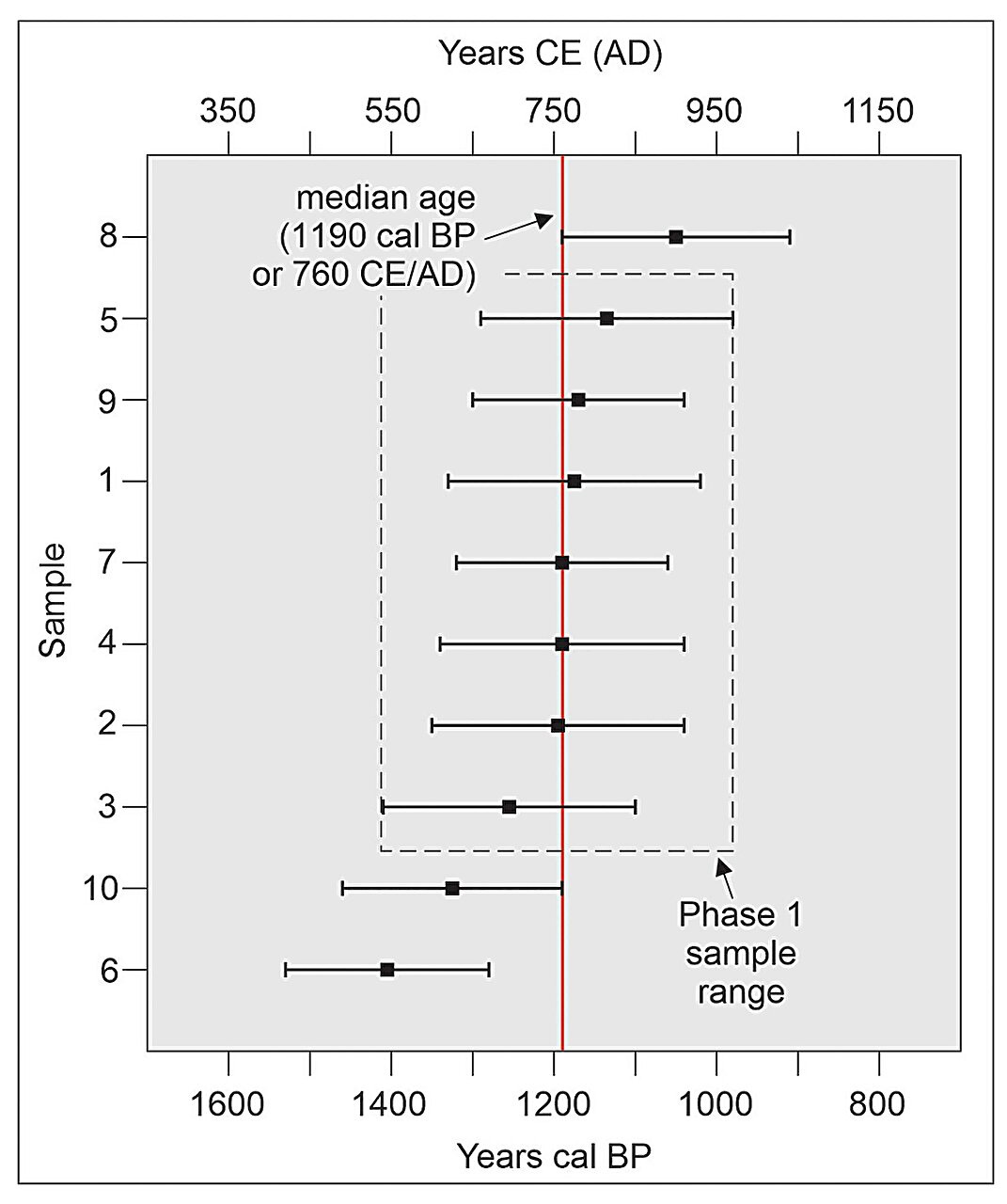
The radiocarbon dates came back clustered. Tightly. The median age across all ten samples was 1,190 calibrated years before present, or roughly 760 CE. The full range runs from about 420 to 1040 CE, a span of six centuries. The clustering was unexpected enough that the team ran a second phase of dating specifically to check it.


