

Border Cave sits on a cliff in the Lebombo Mountains, right on what is now the border between South Africa and Eswatini. It looks out over the lowveld, and it has been holding secrets in its sediments since at least 227,000 years ago. Archaeologists have been excavating there since the 1930s. What they keep finding, layered into the deposits, are the preserved remnants of grass beds.
Not metaphorical beds. Actual beds. Dried grass, sometimes charred, sometimes still recognizably structured, laid down by people who came to this shelter repeatedly over an almost incomprehensible stretch of time. The oldest confidently identified bedding at the site dates to around 200,000 years ago. The most recent is roughly 43,000 years old. Between those two points, people kept coming back, kept gathering grass, kept sleeping on it, and kept burning or refreshing it when the time came.
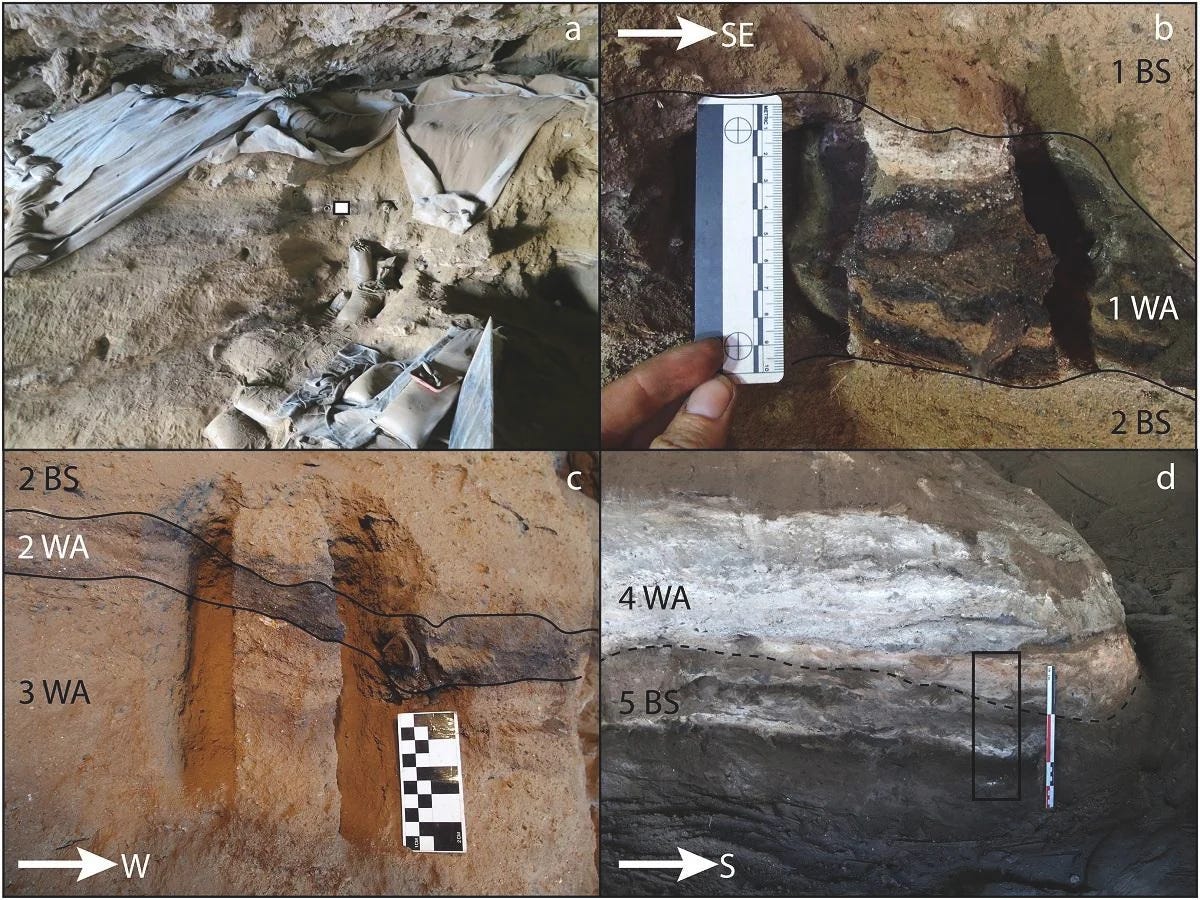
A new study1 by Peter Morrissey and Dominic Stratford, both based at the University of the Witwatersrand, takes the most detailed microscopic look yet at those deposits. Their analysis describes six distinct bedding types, called microfacies, each representing a different way the beds were built, used, and left behind. Some of these match what researchers have described at other South African Middle Stone Age sites. Three of them have no published equivalents anywhere.


