

On May 6, 2021, voters in Centreville, Illinois, dissolved their town. Centreville merged with neighboring Alorton and with the modern municipality of Cahokia, which takes its name from a subtribe of the Illinois Confederation, to form a new city called Cahokia Heights. Centreville sits on the east bank of the Mississippi about 10 km southwest of Cahokia Mounds State Historic Site, and its population has been shrinking for years. A new paper on Cahokia’s decline treats the houses left behind as an archaeological site forming in slow motion, with abandoned structures entering the archaeological record while some neighbors stay put.
None of these modern places should be confused with the ancient city whose mounds give the historic site its name. Cahokia was the great center of the Mississippian tradition, the mound-building farming societies centered on the Mississippi valley, and it lost population from the end of the 12th century to the middle of the 14th century CE. Readers who know the site usually know the environmental account: a multidecadal drought and a major Mississippi River flood in the second half of the 12th century, then decline, with the implied lesson that bad years drove people away. A.J. White and Sissel Schroeder argue that this account skips the question that matters most for the archaeology, which is whom the bad years hurt.
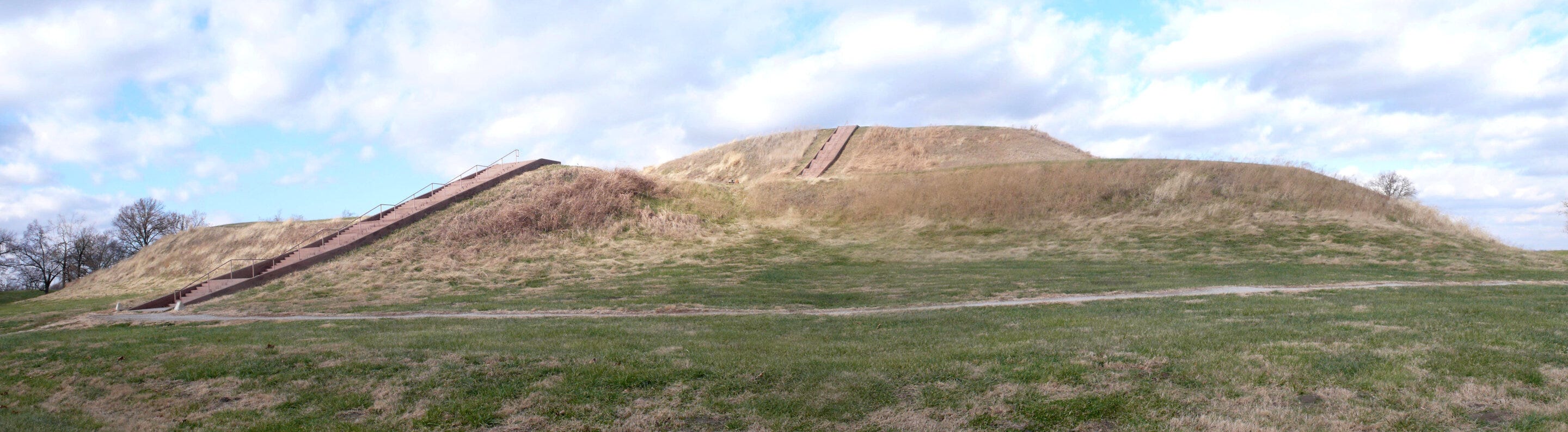
Their paper, published in the December 2026 issue of the Journal of Anthropological Archaeology,1 proposes that the droughts and floods fell unevenly on Cahokia’s individuals and kin groups. In a hierarchically organized society, that unevenness opened pathways for inequality to grow, and the authors suggest the same climate events played an initial role in Cahokia’s depopulation. The Cahokia evidence they weigh comes from previously published climate records and excavation data; what they add is a framework for reading it, built from a living community on the same floodplain.
The core claim is that Cahokia’s decline was slow and uneven, with the costs of drought and flood landing harder on some households than on others, and that Centreville shows what such a process looks like while people are still living through it.


