

The samples that were supposed to come back empty didn’t. Researchers collected unpigmented cave wall fragments as controls, blank stone with no visible signs of human activity, selected precisely because they should contain nothing. In two of those controls, from Escoural Cave in Portugal and Covarón Cave in northern Spain, they found ancient human DNA anyway.
That surprise sits at the center of a new study published in Nature Communications1 by a team led from the Max Planck Institute for Evolutionary Anthropology, working within the First Art project, a multinational collaboration focused on dating and chemically characterizing Paleolithic cave art across the Iberian Peninsula. Their goal had been to ask whether ancient DNA could survive in rock art pigments. What they found was more complicated, and more interesting.
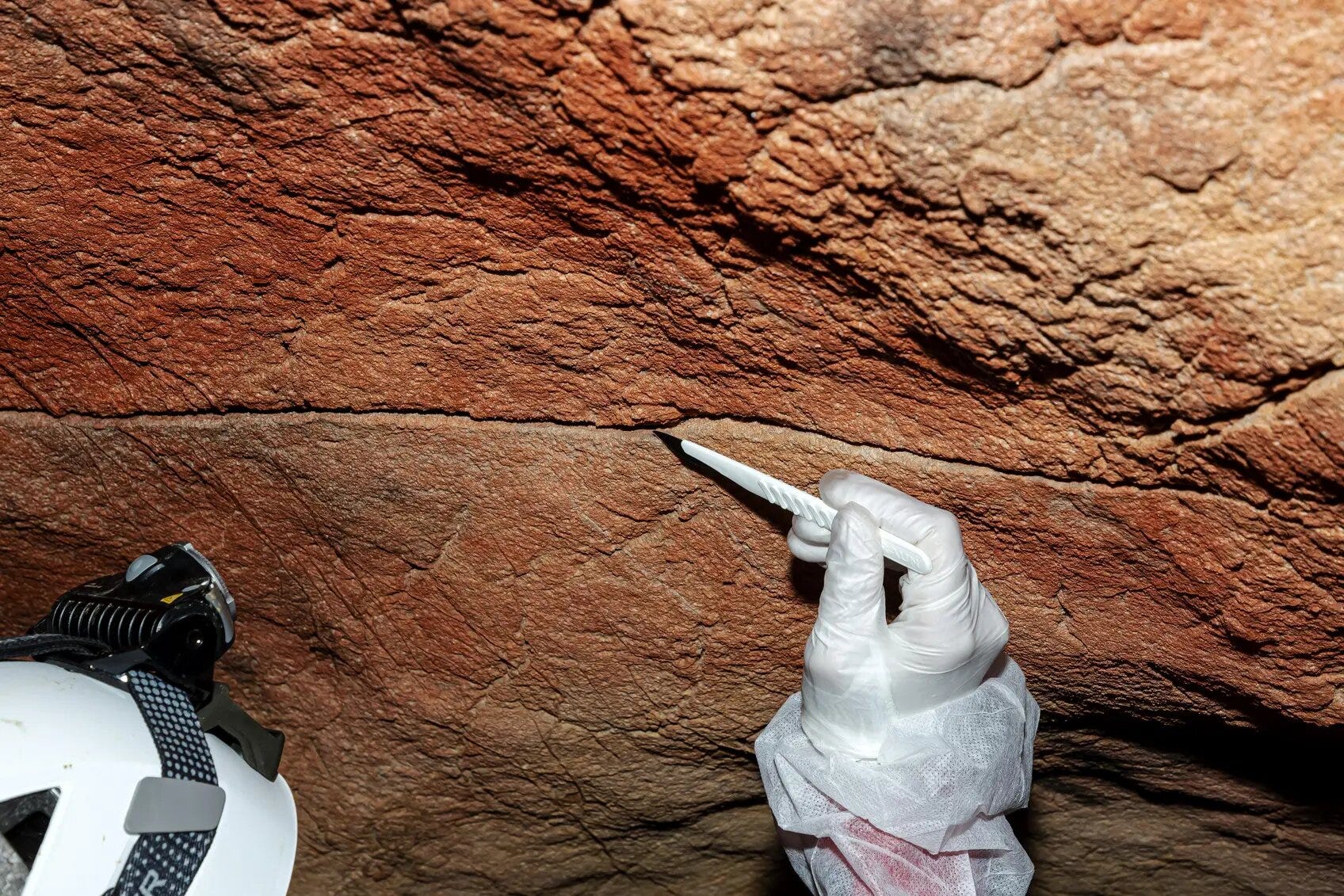
The team sampled 54 specimens from 24 rock art panels across 11 caves in Spain and Portugal. The panels included simple marks and geometric forms, the aniconic tradition thought to represent some of the oldest Palaeolithic art, along with hand stencils from Maltravieso Cave in Extremadura and pigment fragments associated with figurative paintings at the Cave of Altamira. They also sampled adjacent unpigmented wall surfaces, sediments, animal bones, and a bird bone coated in red ochre on its interior that had likely served as an airbrush for blowing pigment onto walls.
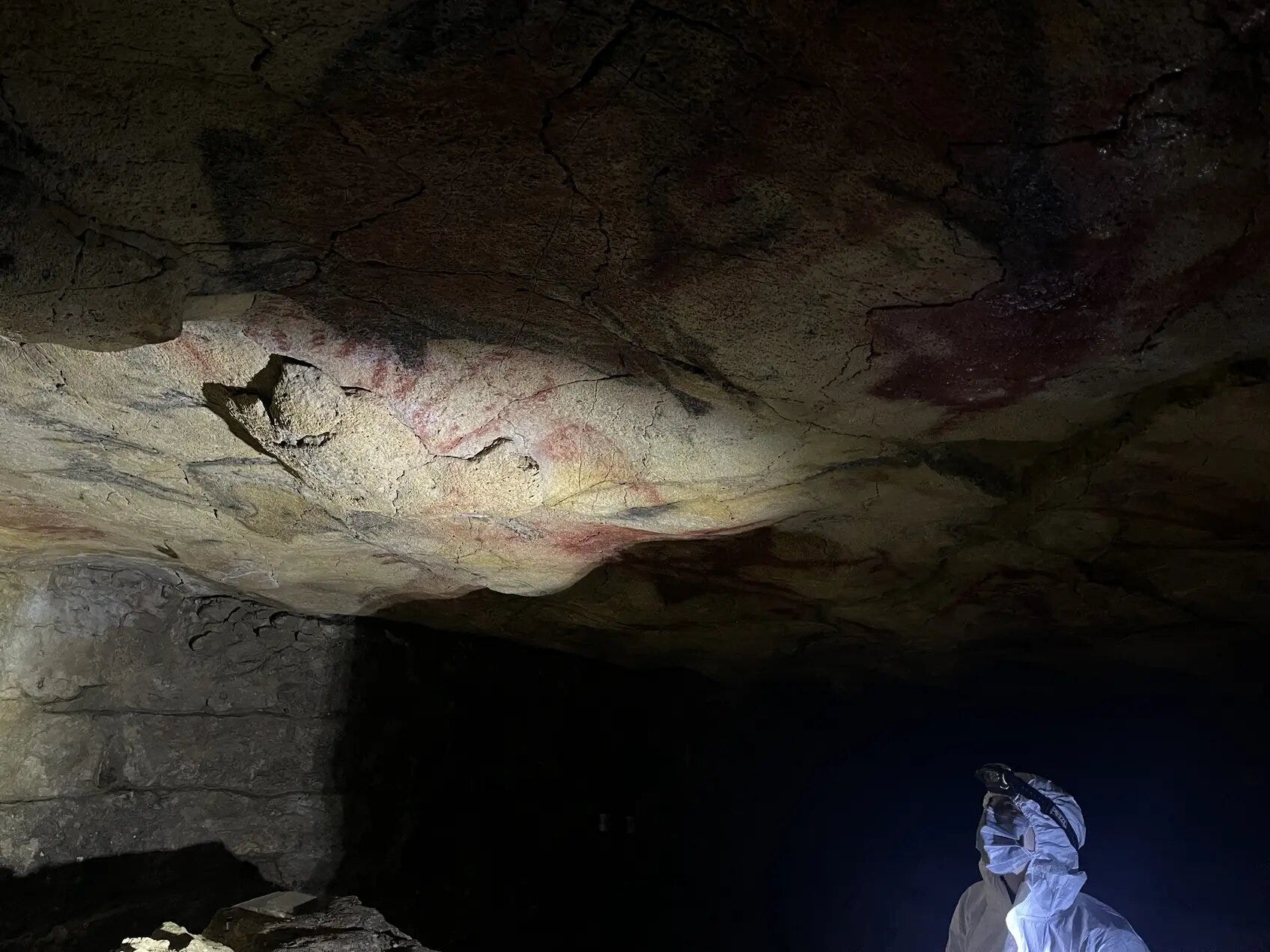
Of the 54 samples, only five yielded authentic ancient human mitochondrial DNA. Authenticity here means something specific: the characteristic pattern of cytosine-to-thymine substitutions that accumulates in DNA molecules over time, a chemical fingerprint of age that distinguishes genuinely old sequences from modern contamination. In a field where contamination is a constant methodological threat, those damage patterns matter enormously.


