
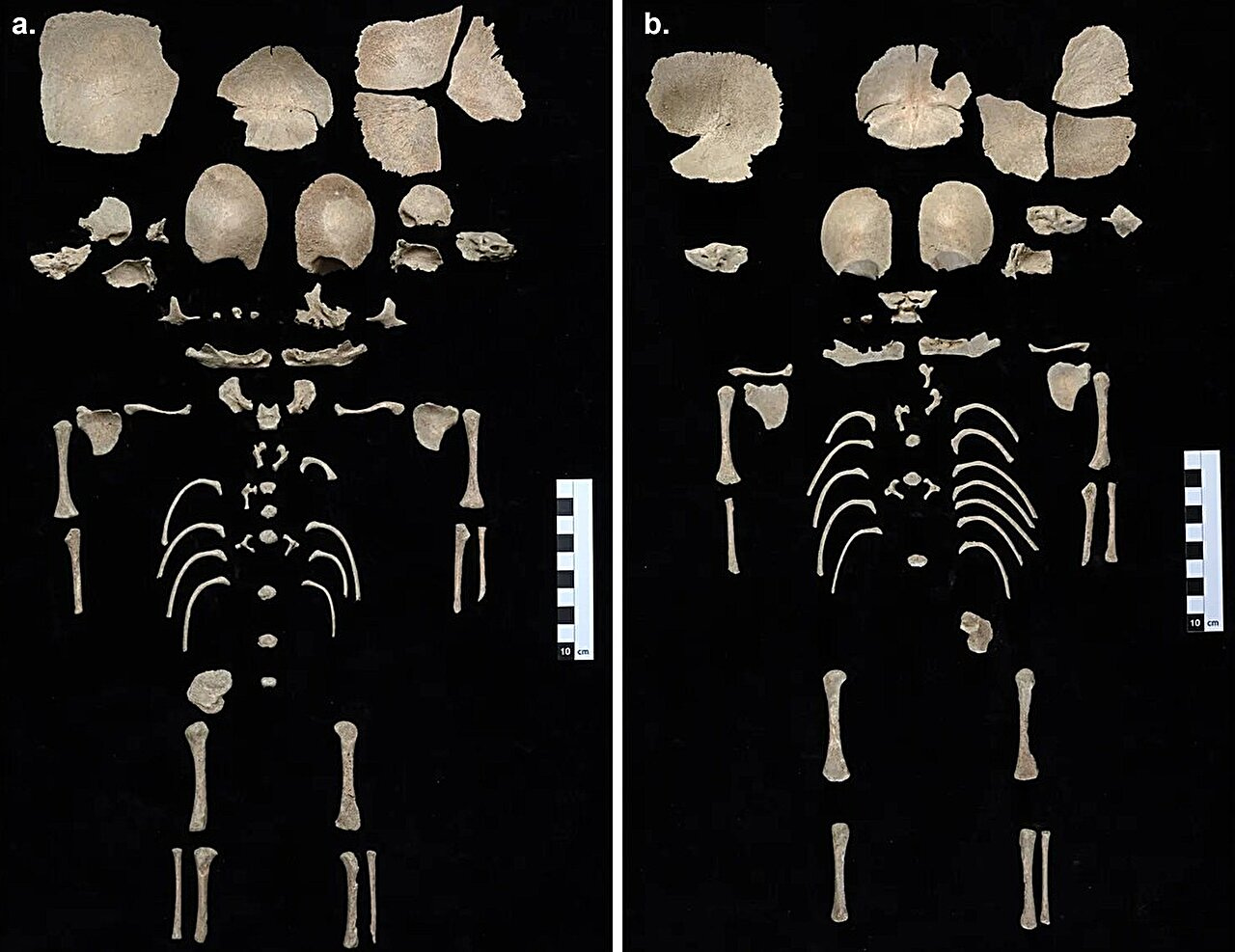
The building had been a concert hall once. Then it became a public toilet. Then, for a few centuries, nothing at all, just a slowly filling shell inside the sacred precinct of the Temple of Artemis at Ephesos, in what is now western Türkiye. Butchers dumped scraps there for a while. Broken pottery accumulated. And sometime between the years 692 and 887, someone carried two dead infants into that ruined latrine channel, built them a small stone-and-tile cist, lined it with soil hauled in from elsewhere, wrapped the bodies, and sealed them in.
That’s the setup described in a new paper in Childhood in the Past1 by Caroline Partiot and Lilli Zabrana of the Austrian Archaeological Institute. What makes it worth sitting with isn’t just the unlikely address. It’s what the burial seems to be arguing, quietly, against a set of assumptions many people carry about how the ancient and medieval world treated its smallest dead.


