
Here’s a strange fact about identifying an ancient seed: the hardest part usually isn’t the seed. It’s what happened to it after it died.
A grain of foxtail millet that burned in a hearth five thousand years ago doesn’t look like a grain of foxtail millet. Charring shrinks it, cracks it, sometimes blows out its surface texture entirely. Long burial does its own damage, warping shapes that were already distorted by fire. So when an archaeobotanist sits down at a microscope with a tray of carbonized specimens from a flotation sample, they’re not matching what they see to a clean reference image. They’re matching it to a mental library of everything charring and time can do to Setaria italica, and everything it can do to Panicum miliaceum, and then working out which set of damage patterns is more plausible.
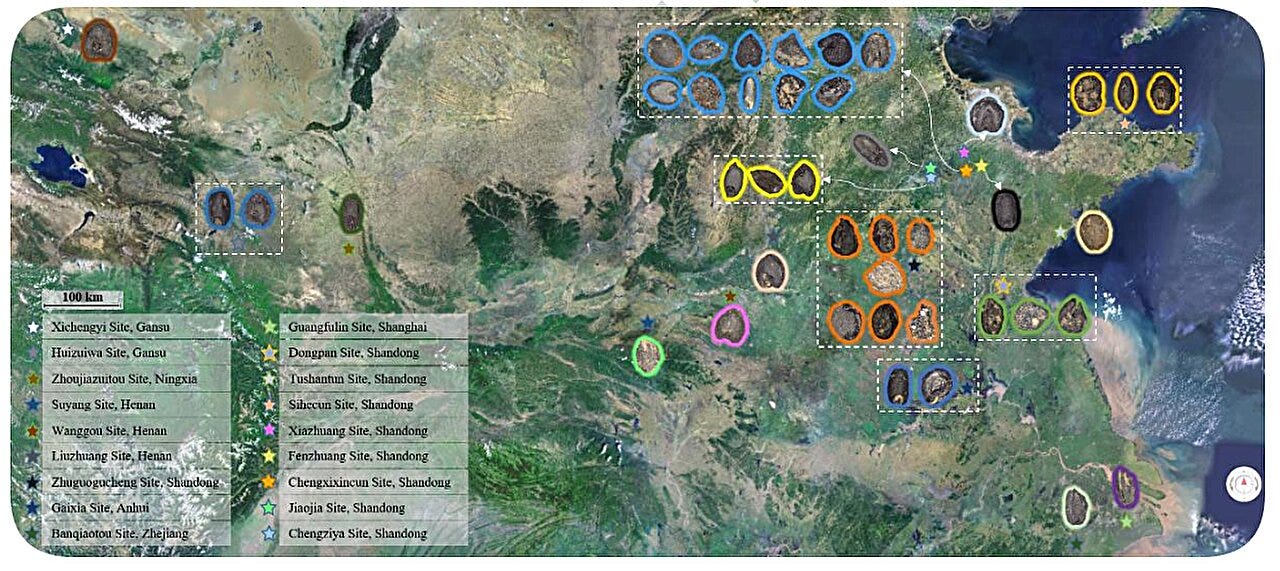
That takes years to learn. Literally years, according to researchers at Shandong University and Lingnan University, who point out that specialists need extensive training before they can identify charred seeds independently, and even then they’re stuck examining specimens one at a time under magnification. It’s precise work, but it doesn’t scale. A large-scale excavation can produce far more flotation samples than any lab has hands to process, and that bottleneck has quietly shaped what archaeobotanical research is possible to do.
A team led by Rui Xing and Runmin Cong decided to see whether a machine could learn the same trick. The result, published in npj Heritage Science,1 is a dataset and a neural network that together represent the first serious attempt at automating ancient seed identification in China. The dataset is called APS, for Ancient Plant Seed. The network is APSNet. And the way APSNet actually works turns out to say something interesting about what expertise is.


