

Your brain, at rest, doing nothing more strenuous than reading this sentence, is burning through glucose at a rate that would embarrass most of the rest of your body. About five milligrams of it, every minute, for every hundred grams of neural tissue. Multiply that out across roughly 1,400 grams of human brain and the number gets uncomfortable fast. Now imagine you’re Australopithecus afarensis, and that organ is only 300 grams, and every increment of growth over the next four million years is going to have to be paid for in the same currency.
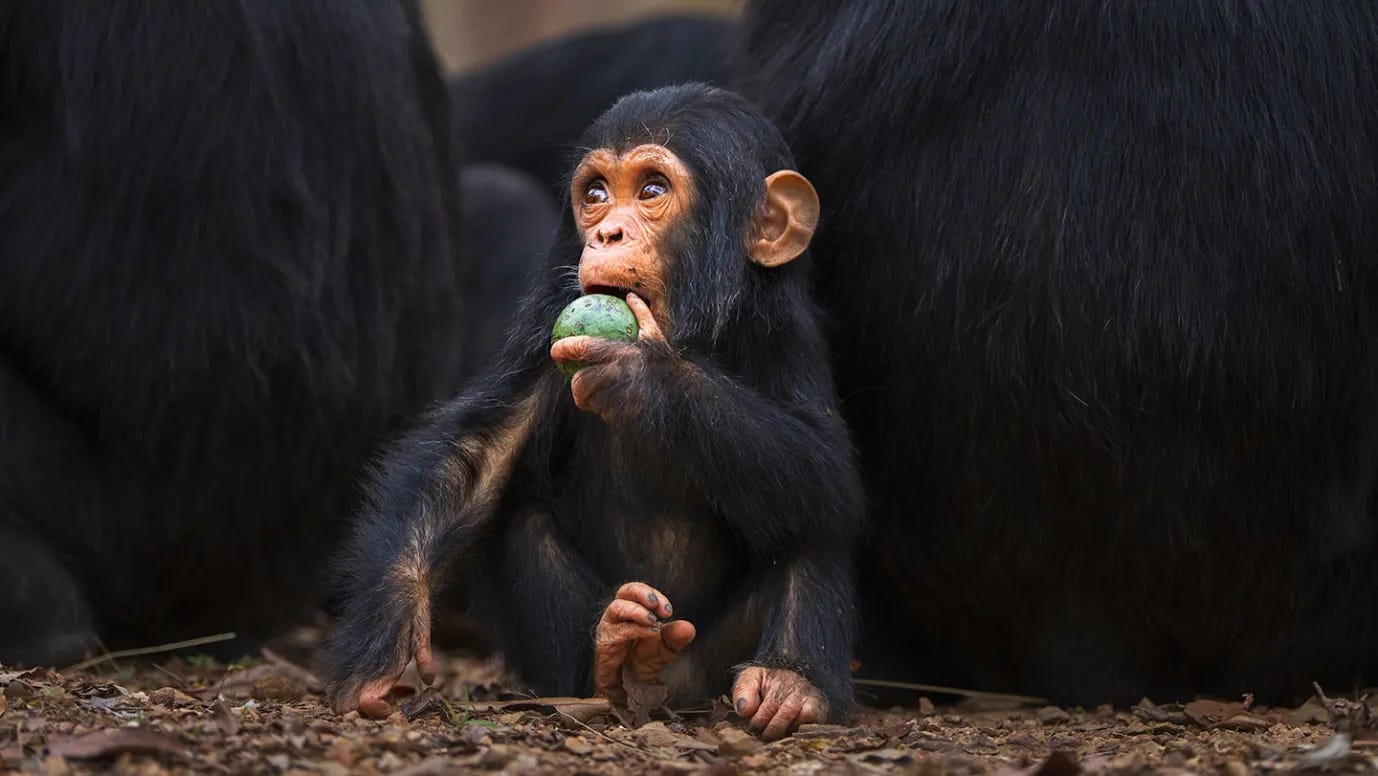
That’s the premise behind a new modeling study published in Science1 by Jennie Brand-Miller, Karen Hardy, Les Copeland, and colleagues from the University of Sydney and the University of Glasgow, and it’s a premise that quietly sidesteps one of the longest-running arguments in human evolution.
The argument, for anyone who’s spent time in this literature, usually goes like this: meat did it. Animal fat and protein, unlocked by tool use and cooperative hunting, supplied the calories and nutrients that let hominin brains balloon past anything else in the primate lineage. It’s a compelling story, well-supported, and it’s dominated diet reconstruction for decades. What this new paper points out is that it’s answering the wrong question, or at least an incomplete one. Brains don’t run on protein or fat, not primarily. They run on glucose. And glucose, for most of the time period in question, wasn’t coming from a haunch of antelope.


