

The name Renmark may carry the memory of the stone. Norman Tindale, the ethnographer who spent decades documenting Aboriginal vocabularies across South Australia, suggested the town’s name derived from the Erawirung word Reŋma:ko, a term meaning something like “place of chert” or referencing the presence of fine-grained stone outcrops in the area. If he was right, then the modern town bears, in garbled European form, a deep-time acknowledgment that people had been coming to this stretch of the Murray River for the stone long before anyone built anything there.
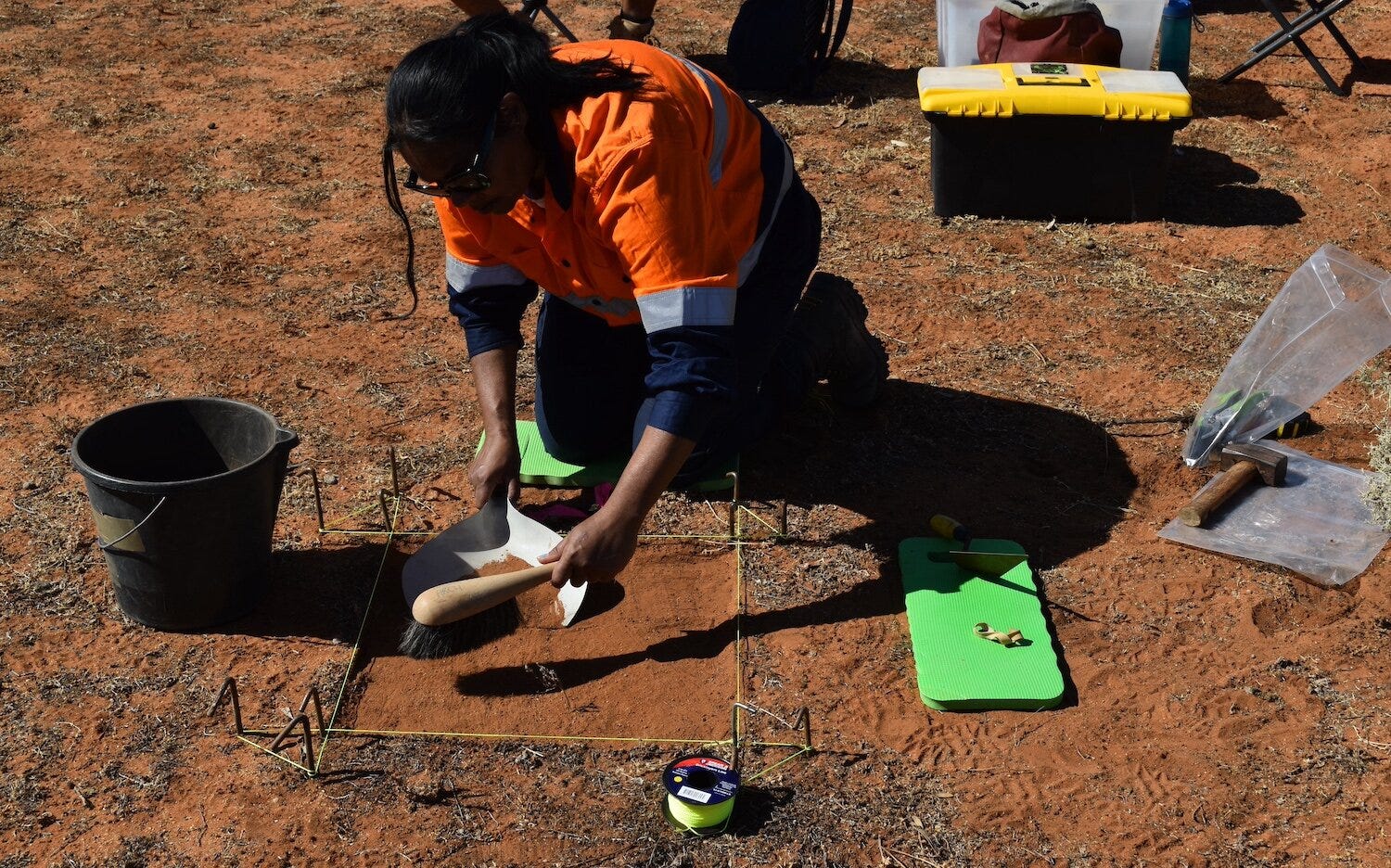
That is the context into which a new study by Craig Westell, Ian Moffat, Amy Roberts and colleagues at Flinders University, working in collaboration with the River Murray and Mallee Aboriginal Corporation (RMMAC), now plants a firm chronological stake. The site is Sugarloaf Hill, a small bedrock prominence about five kilometers upstream of Overland Corner in South Australia’s Riverland. The paper, published in Archaeology in Oceania,1 describes the first multi-method investigation of an Aboriginal quarry in the region and presents a dating program spanning 28 radiocarbon samples and seven optically stimulated luminescence (OSL) ages. The result is a timeline reaching back at least 7,000 years, and probably further.
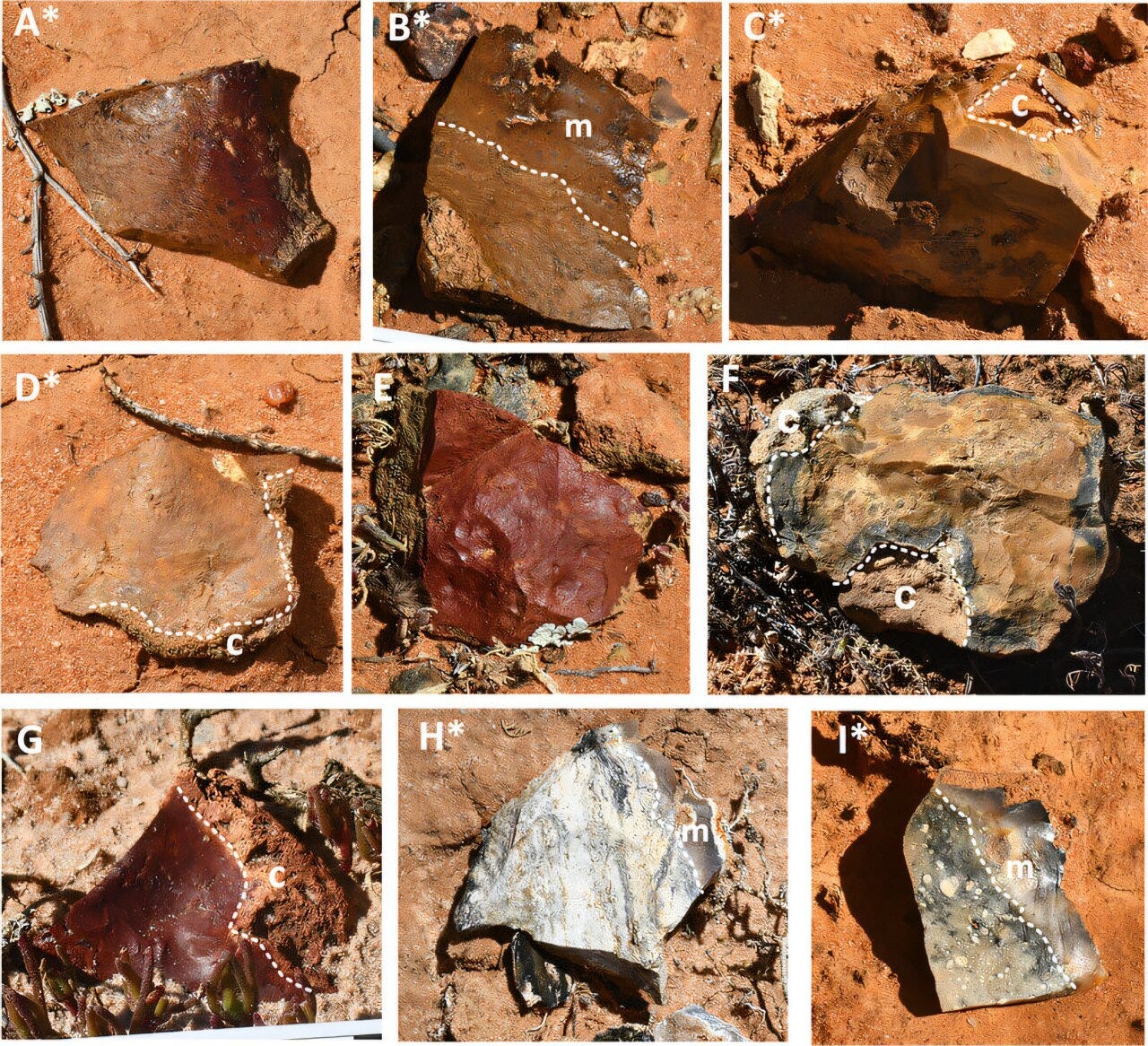
That might sound routine. It isn’t. As the authors note at the outset, only two dated Indigenous Australian quarries currently have chronological data with sufficient stratigraphic context to be reliable. Establishing a third, with this level of methodological rigor, is genuinely significant.


