

The sole that survived best still has its mud crust intact. Peel that away, mentally, and what’s left is a spiral of esparto grass cord, coiled and stitched, worn thin at the heel and barely touched at the arch. It was thrown away sometime after the 1st century CE, tossed into an ash dump along with furnace slag and broken pottery, and it sat there until archaeologists working1 the “Nuevo Filón Norte 1” sector of Urium, the Roman-period predecessor to modern Riotinto, pulled it out of the ground.
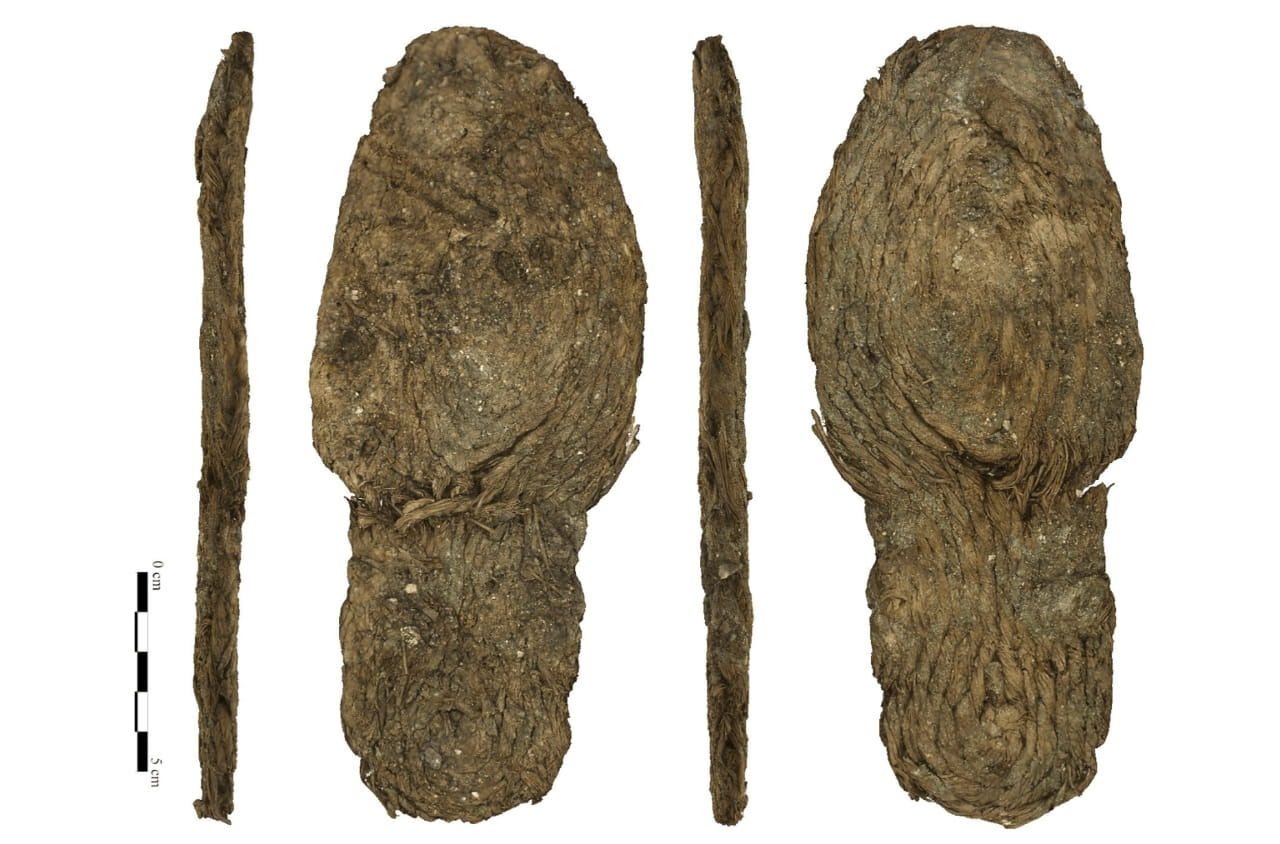
It wasn’t alone. The team recovered eight soles total, all made from esparto grass, all pulled from two ash-rich dumping contexts tied to a mid-1st-century CE metalworking officina, a complex with ten furnaces and sixteen rooms of uncertain function. Ash turns out to be an unusually good preservative for organic material, and that’s the reason this assemblage exists at all. Cordage and basketry, wet cardboard consistency, would be gone otherwise.


