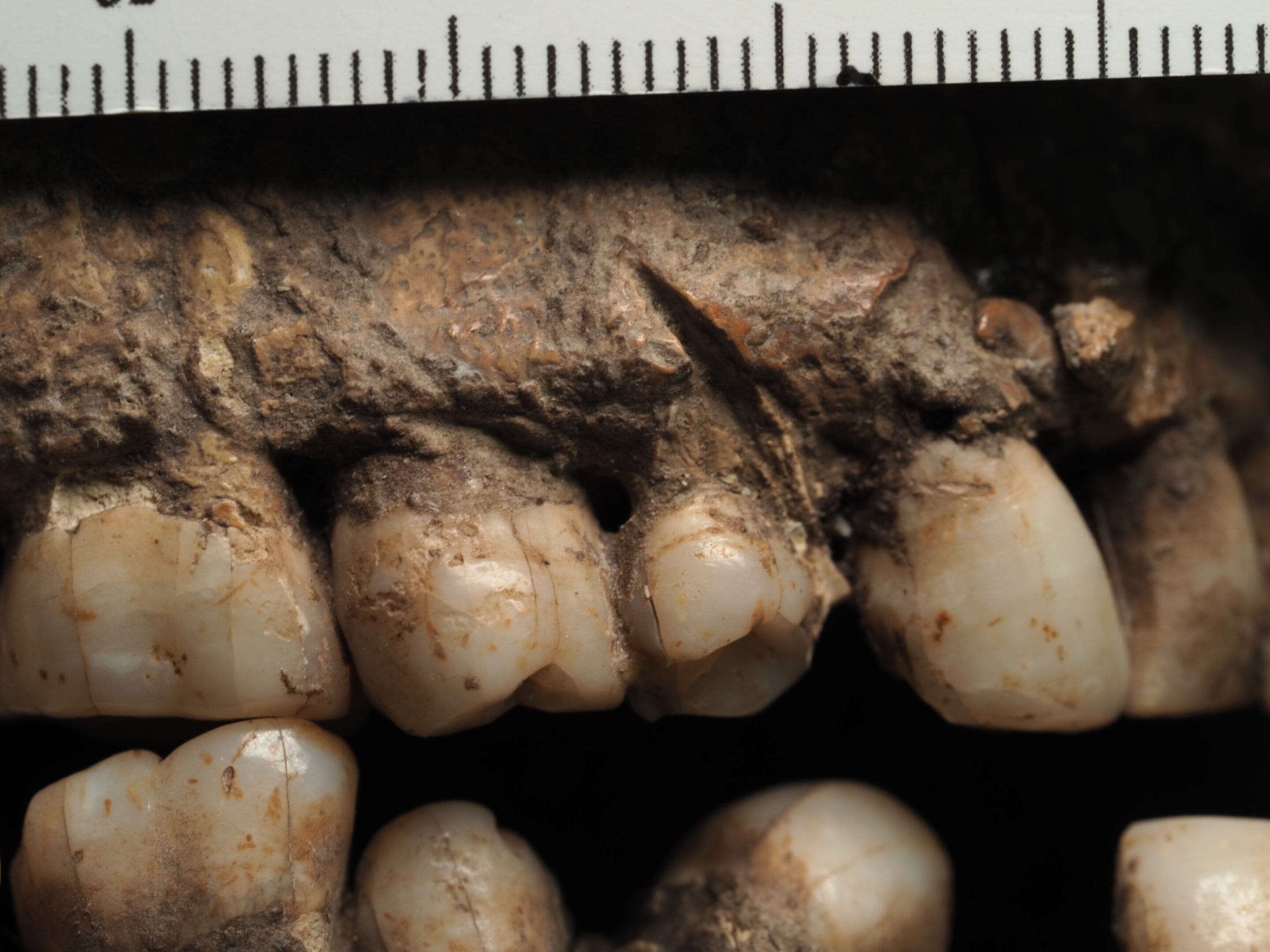
The mark is small. Nine millimeters along the buccal surface of a mandible, tapering into the root of a lower left premolar, shaped in cross-section like a shallow V that widens into something closer to a U as it runs deeper into the tooth. You could walk past it in a museum case. But a team led by researchers at CENIEH, working with colleagues at Tel Aviv University, spent months putting this mark through microCT scanners at eighteen times the resolution of previous imaging, and what they found1 reopens a question that has hovered over the Qafzeh assemblage for decades: did someone try to kill this person.
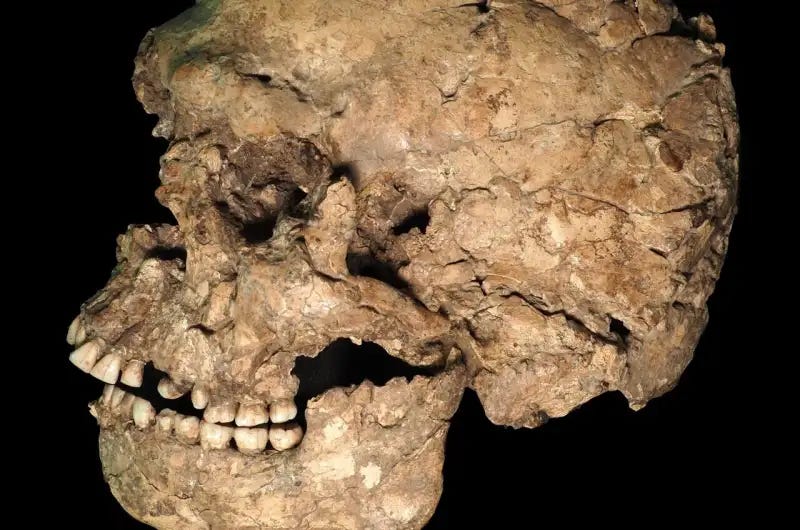
The skeleton is known as Qafzeh 25, one of at least 27 individuals recovered from a cave in the Lower Galilee near Nazareth, first excavated in the 1930s and again from 1965 to 1979. Layer XVII, where Qafzeh 25 was found in 1979, dates to roughly 92,000 to 145,000 years ago, placing the individual among the earliest known Homo sapiens outside Africa, though the population shows enough morphological variability that its taxonomic status is still debated. The young adult, likely male based on the robusticity of the cranium and mandible, was buried alongside the remains of several children in a patch of ground that has yielded some of the richest evidence anywhere for how the dead were treated in the Middle Paleolithic.