

Central Anatolian volcanoes are not just mountains. For the people who lived near Nenezi Dağ and Göllüdağ around 8,000 to 9,000 years ago, they were sources of obsidian; a glass that no one else in the ancient world could match. The rock is hard enough to cut, sharp enough to slice, and unlike anything else you can find on the landscape. In fact, it’s been found all over the region for thousands of miles, meaning the people who made these arrows were either making them or traveling with them over very long distances.
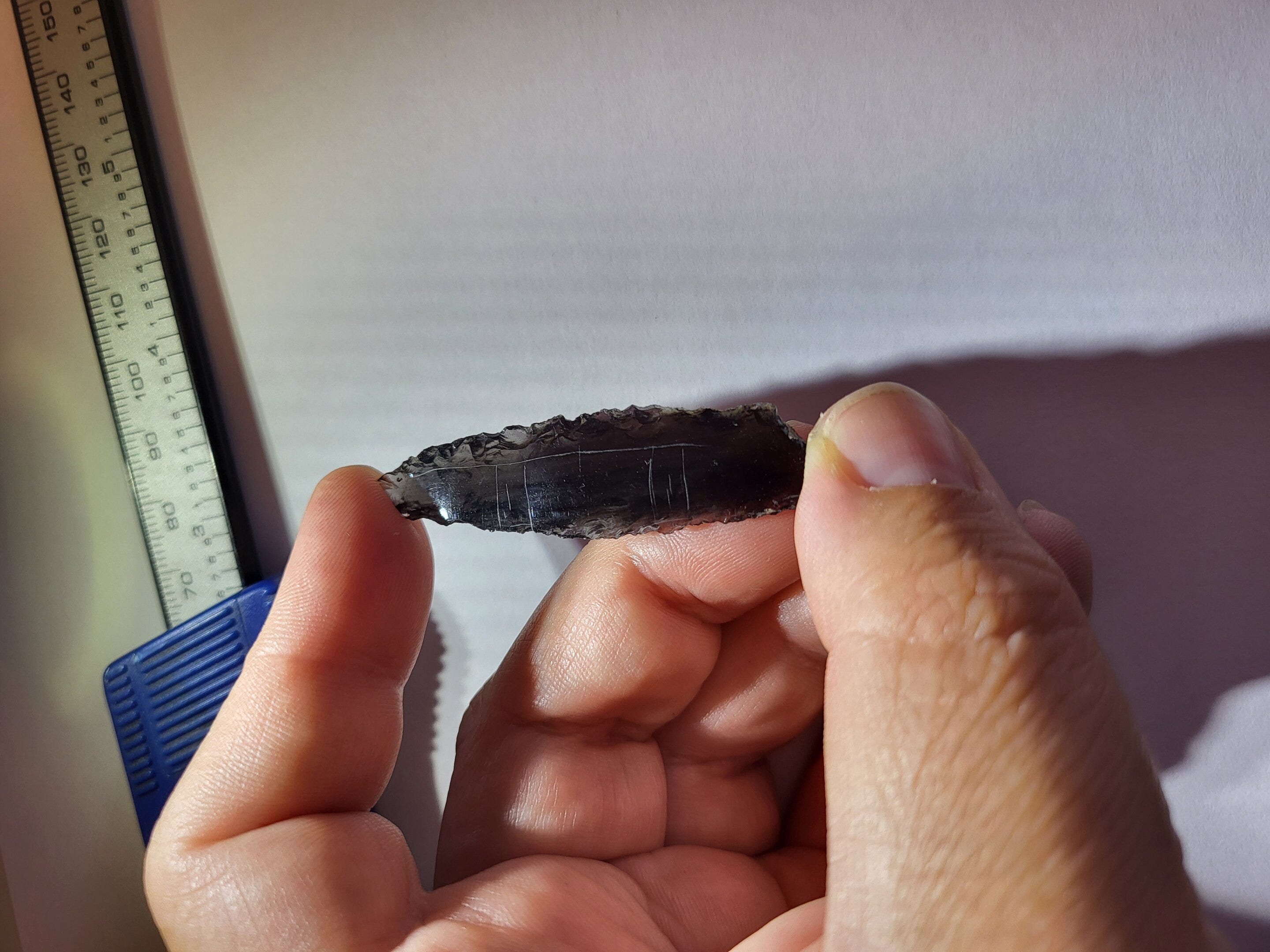
That makes sense, given how rare incised obsidian arrowheads are in this part of the world. A new PLoS One paper1 identifies a small artifact class that is known exclusively from Neolithic Central Anatolia between the late 8th and early 7th millennia BCE, roughly the last one to two thousand years before the Bronze Age. In other words, the people making these arrows were living at a time when language had not yet been invented, yet they left behind objects that suggest meaning was being deliberately built into things.


