

At Hala Sultan Tekke, in a room that once held a stone table and a low altar, excavators found a mass of burnt bone beneath the floor. Fish, mammal, and the remains of at least 45 pigeons, all packed in together with fine Mycenaean pottery, Egyptian faience beads, and gold leaf. This wasn’t food waste tossed in a corner. It was deliberate, buried in a room that looks, by every archaeological signal available, like a place for ritual feasting.
That room is the center of a new study in Antiquity,1 and it pushes the domestication of the common pigeon, Columba livia, back nearly a thousand years earlier than the previous benchmark.
The old benchmark came from Hellenistic Nea Halos in Greece, fourth to first century BCE, where pigeon towers called columbaria left unambiguous architectural proof that people were housing and breeding birds on purpose. Before that, the evidence gets murky fast. Pigeon bones show up in Gibraltar caves associated with Neanderthal and early Homo sapiens activity as far back as 67,000 years ago, but eating an animal opportunistically and domesticating it are very different things, separated by millennia in most species and by a documentary record that, for pigeons, barely exists.
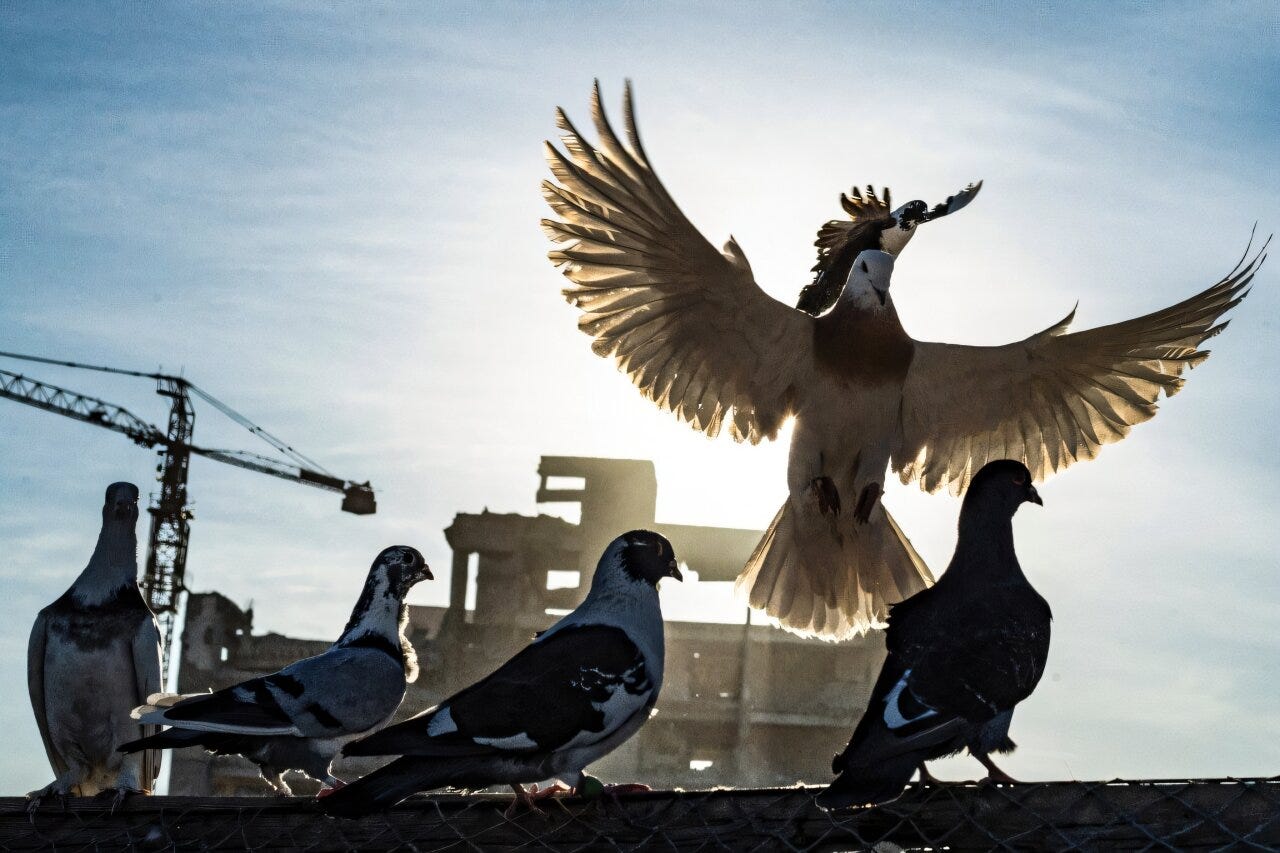
Part of the problem is that pigeons are terrible subjects for the usual method. Zooarchaeologists typically look for size increases to flag domestication, the same way you’d expect a managed cattle herd to eventually diverge in bone dimensions from wild aurochs. Pigeons don’t cooperate. Wild and domestic birds are nearly identical skeletally, and domestic pigeons in particular show more morphological plasticity than almost any other bird species, varying with diet, climate, and management style in ways that scramble the size signal. A large pigeon population and a small one can both be fully domesticated, or both be fully wild. Bone length alone won’t tell you which.
So the Groningen-led team working on the Hala Sultan Tekke assemblage, a coastal Bronze Age harbor city on the edge of the Larnaca Salt Lake, went looking for a different kind of evidence: what the birds had been eating.


