

On January 9, 2021, Joshua Fetter was walking the perimeter of a pond on the Sugar Creek golf course in Sugarcreek, Ohio. The course was being stripped and graded for future residential development, and the machinery had been cutting deep. Near the water’s edge, he spotted something in the disturbed earth. He dug a few inches and pulled up a stone biface. Then another. By the time he stopped, he had nine of them, recovered from an area smaller than a square meter.
The Fetter family happened to know a graduate student in Kent State University’s anthropology department. By the next morning, archaeologists were on site. Within that same small patch of ground, excavation revealed two more bifaces buried roughly five centimeters below the first nine. Below them, in the sediment, were flecks of charred wood.
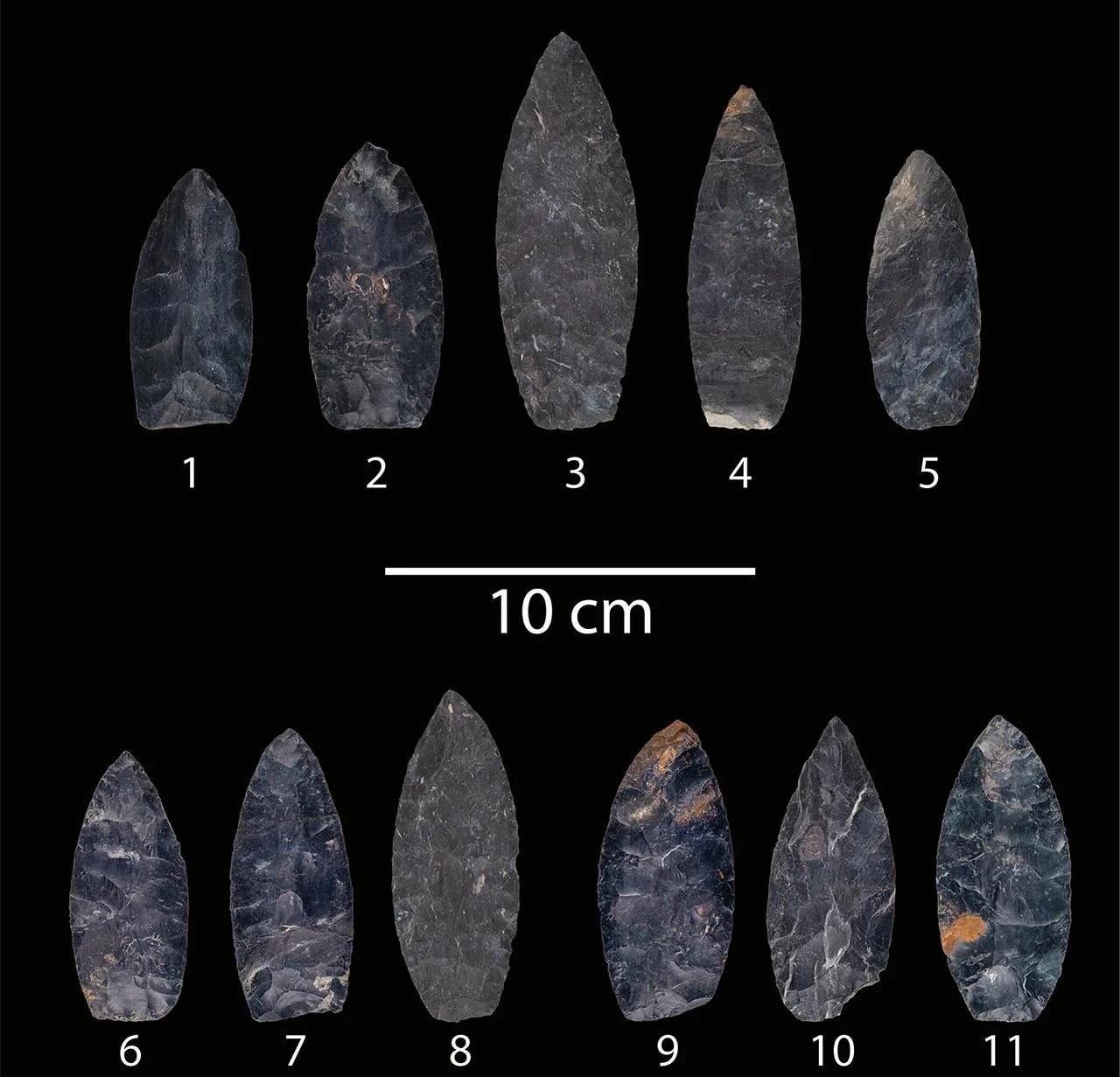
The final count: eleven stone bifaces, now known as the Joshua Cache, donated to the Cleveland Museum of Natural History and the subject of a study published in 2026 in the Journal of Archaeological Science: Reports1 by Eren and colleagues.

What the team found when they looked closely at these tools is genuinely puzzling. And the puzzle has layers.


