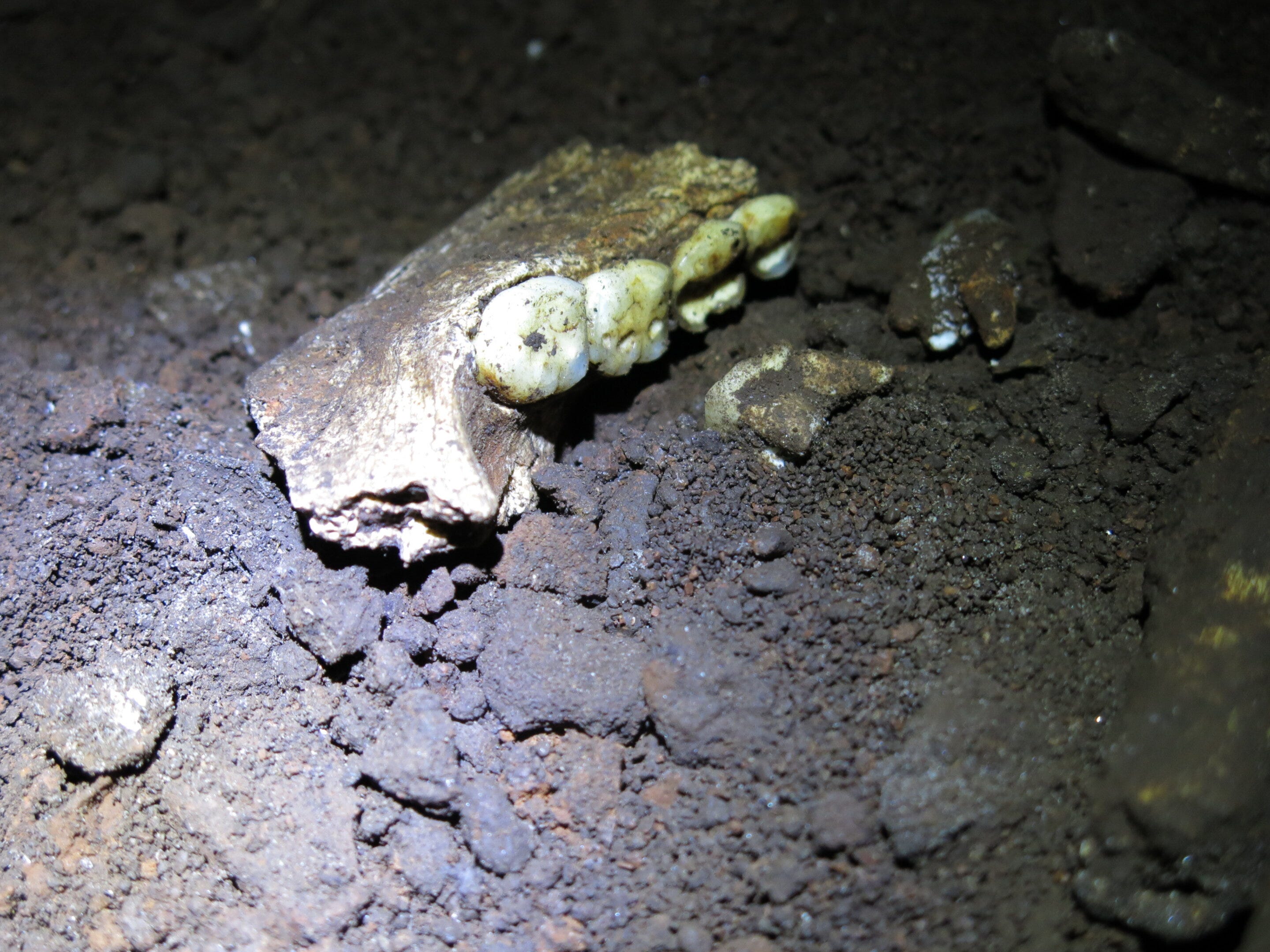
One of the specimens known as “Neo” — a partial skeleton recovered from the Lesedi Chamber of South Africa’s Rising Star cave system — had been provisionally classified as a probable male. The reasoning was morphological: relative robusticity, cranial size, cranial proportions. These are the standard tools for estimating sex in fossil hominins when DNA is unavailable, and they pointed in one direction. The proteins disagreed.
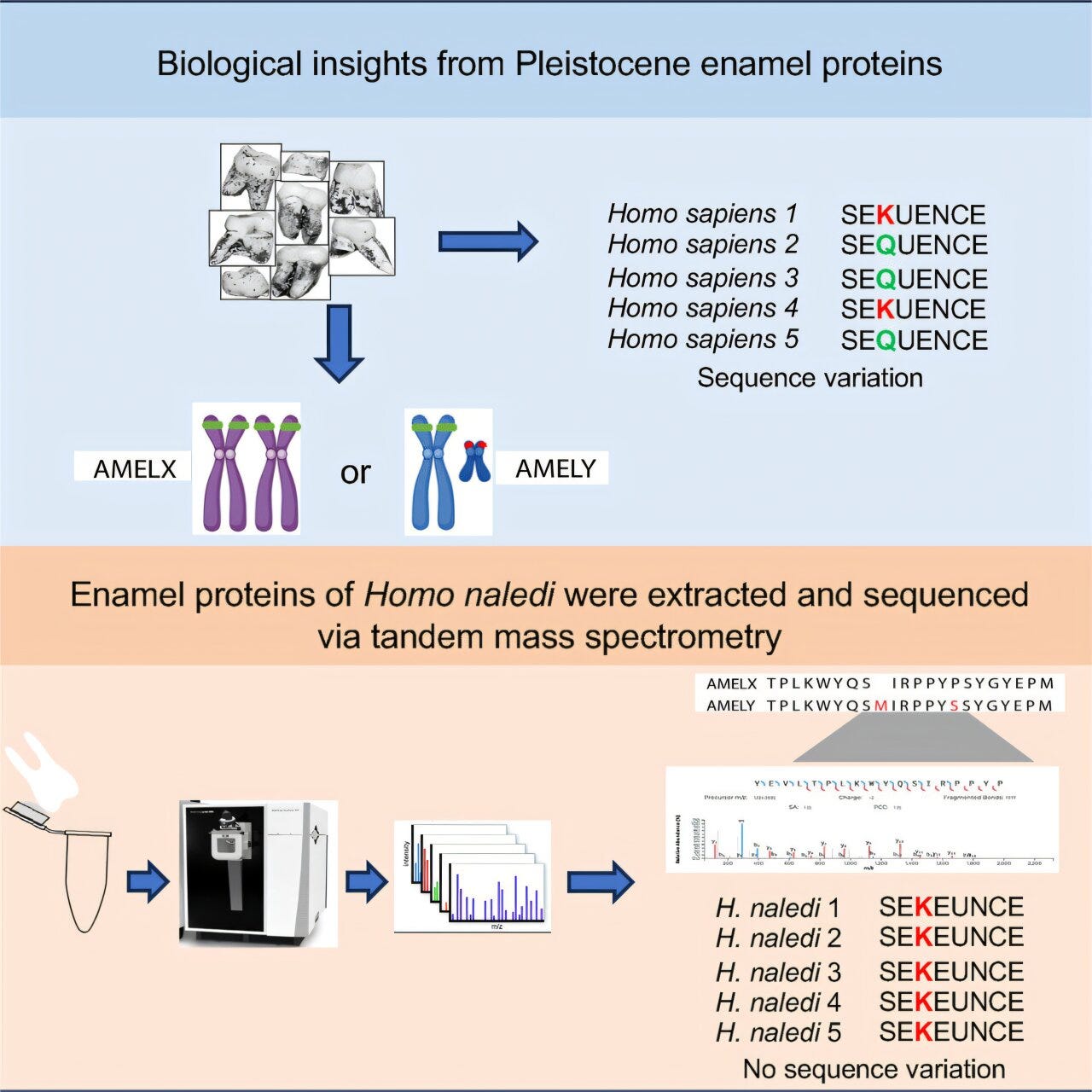
A new study published in Cell1 applied paleoproteomics to dental enamel from 23 Homo naledi specimens representing a minimum of 20 individuals, drawn from four separate localities within the Rising Star cave system. The question was whether biological sex could be determined from ancient proteins preserved in H. naledi teeth. The answer was surprising enough that it reframes much of what researchers thought they understood about this collection.
No male markers were found. Not in Neo. Not in any of the 20 individuals. Nineteen were confidently assigned female with a probability above 95%. The twentieth was consistent with female attribution at a probability between 50% and 95%. The sensitivity of the method was sufficient to have detected male markers had they been present. This is also the first published ancient biomolecule analysis of any kind for this species.